

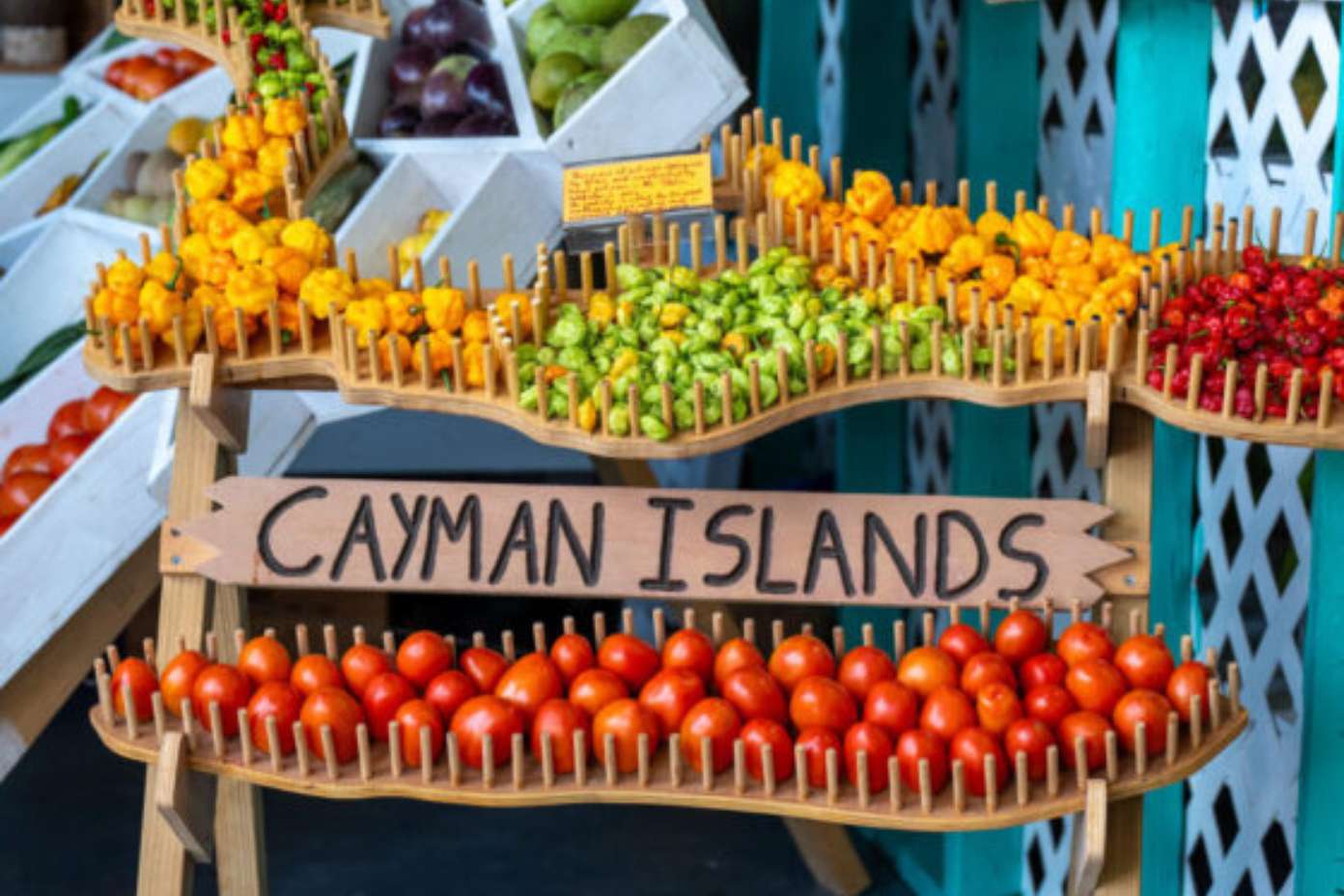
Local production of fruits and vegetables represents one of the biggest opportunities for the Cayman Islands to strengthen its food system, according to data from the Ministry of Agriculture.
Materials produced by the ministry as part of the ‘Grown in Cayman: What Cayman Grows’ awareness campaign – aligned with the Cayman Islands Food and Nutrition Security Policy 2022–2036 – reveal that Cayman continues to import the vast majority of the fruits and vegetables consumed locally.
At the same time, the cost and accessibility of fresh produce remain part of the broader conversation around public health and affordability. Cayman currently pays a 17% duty on imported fruits and vegetables, adding to the price of items that are already largely imported and require shipping and refrigeration. Rising global oil prices, which increase shipping and transportation costs, can further push up the price of imported food.
Data from the 2023 STEPS National Health Survey also points to dietary concerns. The survey found that 14.2% of Cayman residents reported not eating enough fruits or vegetables.
In 2024, the Cayman Islands imported approximately $68.7 million worth of fruits and vegetables, a 10.5% increase over 2023, making produce the country’s largest food import category. Fruits and vegetables also represent some of the most accessible opportunities for expanding local production, as they can be grown at both commercial and household scale.
Local production
Cayman farmers currently produce a range of vegetables and fruits including tomatoes, lettuce, cucumbers, callaloo, seasoning peppers, hot peppers, mangoes, avocados, coconuts and citrus. However, local production still accounts for only a small share of consumption for some of these items.
Tomatoes, for example, account for roughly $2.36 million in annual imports, even though local farmers already supply about 21% of demand. Analysis within the policy framework suggests that a relatively modest 12.5% increase in local tomato production could replace approximately $920,000 in imports.
Lettuce represents an even larger import category. Cayman imported approximately $4.7 million worth of lettuce in 2024, yet only about 3% of the lettuce consumed locally is currently produced locally. Increasing local production to around 25% of consumption could generate more than $1.3 million in local production.
Fruit production also holds significant potential. Mangoes and avocados, both widely consumed in Cayman, are currently part of an import category worth roughly $1.96 million annually. Expanding local production of these crops by 75% could create $4.45 million in additional value while strengthening domestic food supply.
These examples form part of a broader analysis by the Ministry of Agriculture, drawing on data from the Economics and Statistics Office and developed in support of the Cayman Islands Food and Nutrition Security Policy. The policy outlines a long-term strategy aimed at improving food affordability, strengthening local agriculture and reducing the country’s vulnerability to external supply disruptions.
‘Grown in Cayman’
The ‘Grown in Cayman: What Cayman Grows’ initiative aims to support that shift by encouraging consumers to identify and purchase locally produced food when it is available.
The policy does not seek to eliminate imports but rather to create a more balanced food system that combines local production with imported supply.
The initiative comes against the backdrop of steadily rising food imports. Cayman imported approximately $286 million worth of food in 2024, with overall food imports increasing by 47% between 2019 and 2024. Over the same period, the population grew by an estimated 26%, suggesting the rise in imports has been driven not only by population growth but also by higher food prices and shifting consumption patterns.
Those trends are also being felt at the household level. Between 2019 and 2024, the share of household spending devoted to food rose from 6.6% to 9.8% in Grand Cayman and from 11.6% to 16.7% in Cayman Brac.
Policymakers say expanding local production – particularly of fruits and vegetables – could help ease some of that pressure while strengthening the country’s food security. The policy highlights several crops already suited to local conditions and widely grown in Cayman, including peppers, callaloo and a range of tropical fruits.
Commodity analysis conducted by the ministry suggests that achievable increases in production across selected foods could replace more than $8.4 million in imports while generating over $16 million in additional economic activity locally.
Alongside commercial farming, the campaign also points to the role of small-scale production. Backyard gardens and school gardens can contribute to local supply by producing commonly consumed foods such as tomatoes, peppers and herbs.
Related Videos










Food on Little Cayman is the most expensive in the Cayman Islands because it is all from the U.S. How can Little Cayman access food grown on Grand Cayman?