

The detection of avian influenza in birds in Cayman has prompted reassurance from health officials that the public faces a low risk of contracting the disease, while a multi-agency response has been launched to prevent the virus from spreading.
H5N1 avian influenza was confirmed on 28 Nov., after several turkeys were found dead at a farm on Cemetery Road. Laboratory testing the following day identified seven more infected birds, triggering a multi-agency response to isolate the site and contain the outbreak.
So far, there have been no confirmed cases in humans in the Cayman Islands.
Health officials say the virus remains primarily a disease of birds and does not spread easily to people without close contact with infected animals.
Public health response
“It is important for the general public to know that the risk of avian influenza to the general population remains low,” said Chief Medical Officer Dr. Hilary Wolf, who urged residents to avoid touching wild birds, including feral chickens, and to stay away from animals that appear sick or dead.
Human infections, when they occur, are typically linked to direct and prolonged exposure. In the United States, cases in people have largely involved farm workers and have mostly been mild. Since 2024, there have been 71 reported cases of human bird flu in the United States and two deaths, according to the Centers for Disease Control and Prevention.
In Cayman, authorities say anyone who may have been exposed to infected birds has been placed on preventive antiviral treatment as a precaution. Medical Officer of Health Dr. Samuel Williams-Rodriguez said the Cayman Islands Molecular Biology Laboratory can test for the virus locally and deliver results in less than 24 hours, allowing health teams to respond rapidly to any suspected cases.
Officials have outlined what residents should watch for if exposure does occur. Symptoms usually appear two to 14 days after contact and can include fever, cough, sore throat, congestion, runny nose, breathing difficulties and red, irritated eyes.
Health Minister Katherine Ebanks-Wilks said the situation highlights the close links between animal, human and environmental health and urged the public to remain vigilant.
“Please make sure you are practising basic hygiene, such as handwashing, and you’re continuing to properly prepare and cook poultry, meat and eggs before consuming them,” she said. “As we enter the festive season, and with Cayman Thanksgiving around the corner, let’s work together to keep our families and our communities safe.”
How the virus is transmitted
Avian influenza is caused by a family of influenza A viruses that circulate naturally among wild birds and poultry.
Humans rarely become infected, and when they do it is almost always after close, unprotected exposure to infected animals or contaminated environments.
According to the CDC, infection typically happens when virus particles from saliva, mucus, droppings or raw animal products enter the eyes, nose or mouth, either through direct handling of animals or contact with contaminated surfaces, or by eating or drinking something that is contaminated. In some situations, the virus can also be breathed in through droplets or dust in enclosed or heavily contaminated spaces.
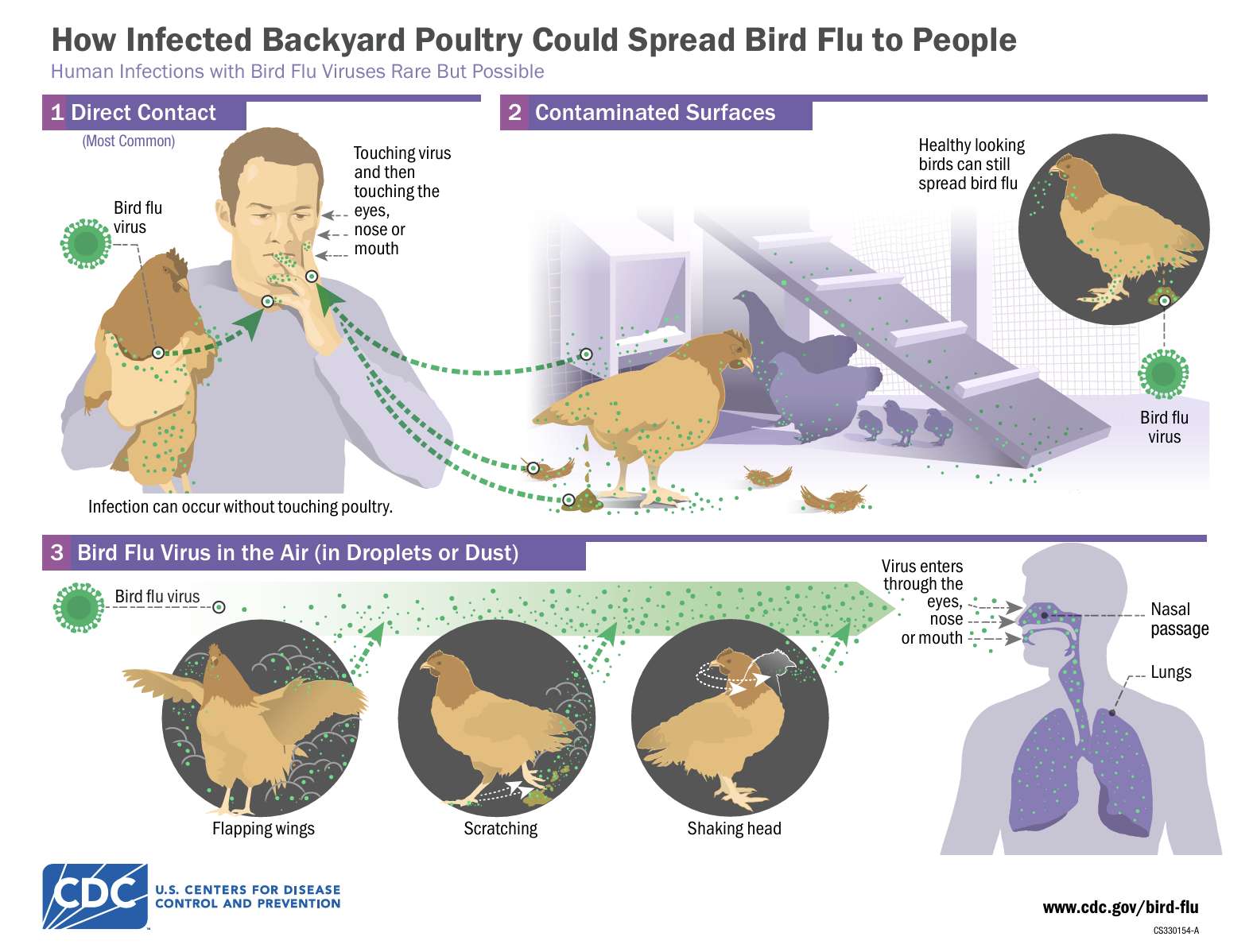
Several strains of bird flu have infected humans over the years, with the H5 subtype responsible for most known cases globally.
Scientists are also tracking bird flu closely because of its ability to move between species. In the past two years, the virus has expanded beyond birds into mammals, including cattle in the US – increasing the chances it could evolve further.
Researchers in the United Kingdom have found that bird flu viruses are better able to withstand the high body temperatures caused by fever than human flu viruses, a trait that may help explain why some strains can cause more serious disease.
What experts say
Health authorities stress that vigilance is the right response. Monitoring animal outbreaks, testing suspected cases quickly and limiting exposure remain the most effective ways to reduce risk.
For now, simple precautions remain the strongest defence, such as avoiding contact with wild or sick animals, practising good hygiene and handling food safely.
To protect yourself and others, local health officials recommend the following precautions:
- Avoid contact with sick or dead animals, including poultry, wild birds and mammals, and stay away from areas that may be contaminated by droppings.
- Do not try to catch, handle or cull wild chickens or birds on your own.
- Wash hands frequently, especially after contact with animals or potentially contaminated surfaces.
- Eat only thoroughly cooked poultry and consume pasteurised milk and dairy products; avoid raw eggs and ensure meat is cooked until juices run clear.
- Anyone who develops symptoms after possible exposure is advised to seek medical care promptly.
- Farmers are being urged to maintain strict on-site biosecurity and to report any suspected cases without delay.
- Contact the Public Health Department at 244-2889, 244-2621 or 244-2561 if you develop symptoms, such as a fever, cough or irritated eyes, after possible exposure.
- Anyone who sees sick or dead birds or livestock is urged to contact the Department of Agriculture on 916-7146.
Related Videos









I see the Regiment out there trying to keep us safe and clean. Stay clean guys! Thanks