

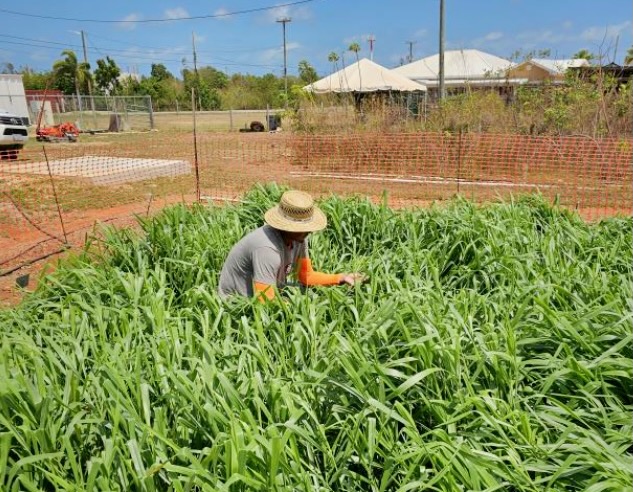
Importing ‘high rise’ grasses could help Cayman farmers adopt new methods of raising cattle and significantly increase local food production.
That’s the view of West Bay farmer Paul Rivers, who wants to bring elephant grass, which can grow as high as four metres (13 feet), to the island.
He believes growing the forage locally would allow him and other cattle farmers to shift to a more intensive cut-and-carry system and potentially quadruple livestock production on limited land.
Agriculture officials say they are willing to consider working with conservation officials to see if the invasive species could be imported to Cayman. But officials say significant research has already taken place on a number of similar species that could already provide the same options.
Department of Agriculture trials have already identified tall, high-yielding varieties suited to Cayman conditions – including Mombasa grass which reached more than two metres (6.5 feet) in local tests.
In farming terms, taller grasses mean more feed grown on the same footprint.
Skyscraper grasses
Elephant grass, also known as Napier grass, is currently listed as invasive, meaning any import would require careful ecological review and field trials in partnership with the National Conservation Council to assess both environmental risk and local performance.
Claudette McKenzie-Bowen, an agronomist at the Department of Agiculture, said she understood why farmers might want to bring in tall-growing grasses like Napier.
“Napier grasses have been used traditionally, not only in Africa, in the Caribbean as well,” she said.
“It is useful in situations where you may not have a lot of land, but you can grow the grass to feed the animals.”
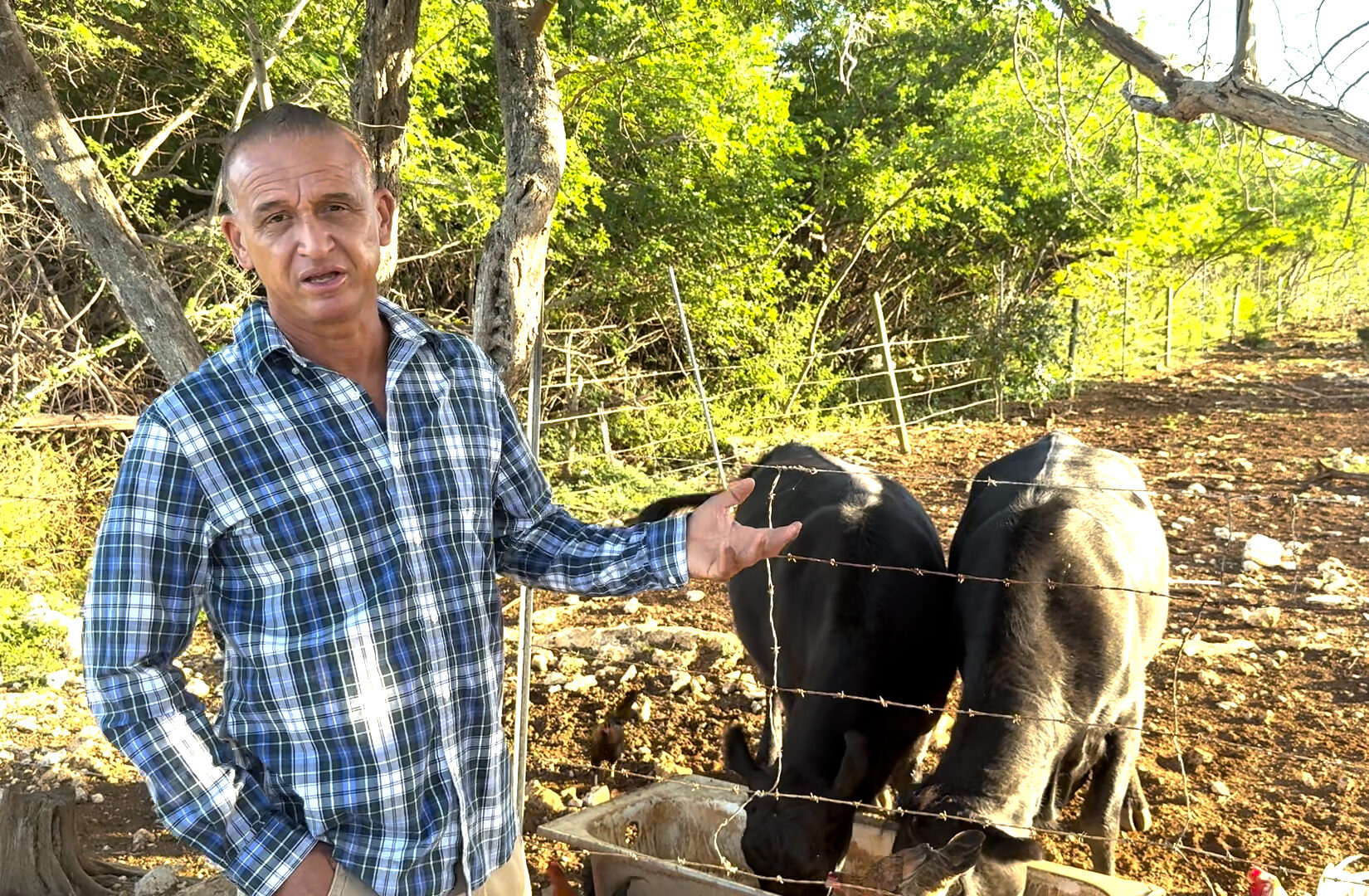
Rivers, who currently grazes cattle on rented land in West Bay, said he would be able to farm more intensively and provide more and higher quality beef with the cut-and-carry methodology. Right now, he says, beef is a once-a-year payday at Christmas for farmers.
McKenzie-Bowen cautions that importing a new species is not something that can be done at the stroke of a pen.
“If that’s not managed well,” she said, “then you could end up in a situation that’s not good for the local ecosystem.”
She said they would need to know the specific cultivar of Napier grass and determine whether it was feasible before investigating further alongside environmental regulators.
Trials show potential of different species
The department has already conducted structured preliminary trials for five different grass types in partnership with the Caribbean Agricultural Research and Development Institute (CARDI).
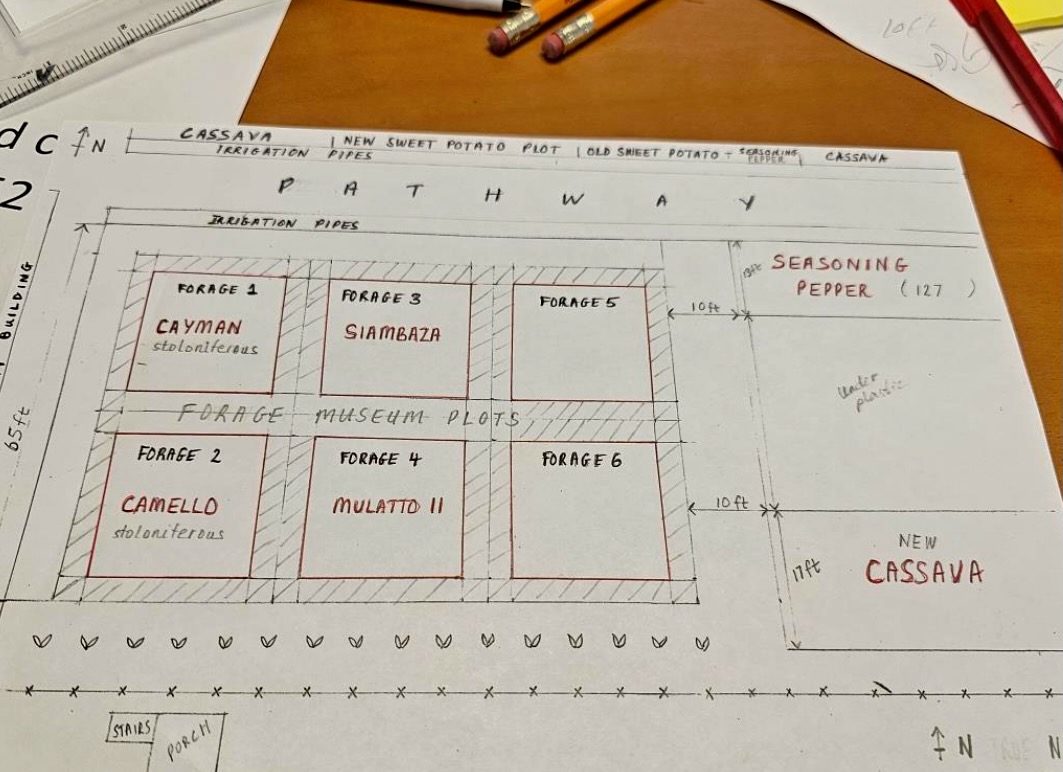
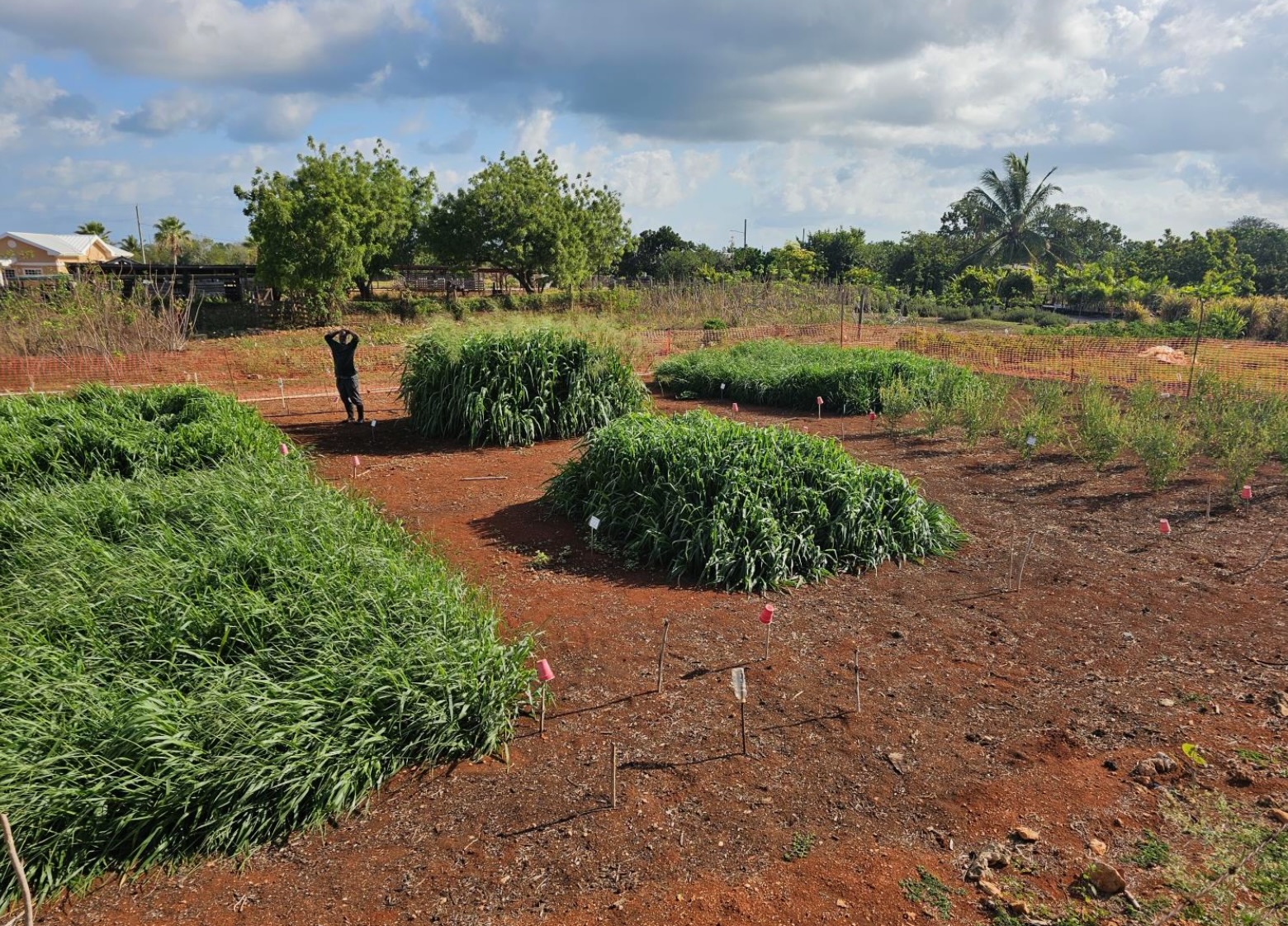
The trial evaluated five forage varieties – Cayman, Camello, Siambaza (Mombasa grass), Mulato II and Cobra – in controlled plots at the Lower Valley facility.
Researchers assessed multiple indicators, including plant height, fresh and dry biomass yield and regrowth rates, under Cayman conditions.
Preliminary findings identified Mombasa grass as the tallest of the trial grasses, reaching an average height of more than two metres and delivering the highest biomass per harvest.
Officials said the trial was conducted against a backdrop of climate change, supply chain disruptions and broader food security concerns, with the aim of strengthening domestic resilience and reducing reliance on imported feed.
They stressed that it is not just environmental concerns that must be reviewed – viability in Cayman’s alkaline soils and tropical weather conditions is equally important.
Paul Lucas, the CARDI country representative who worked closely with the Department of Agriculture on the forage trials, said the appeal of taller grasses was understandable in a land-limited country like Cayman.
“Because of the height … it would translate to higher biomass,” he said.
Demoy Nash, deputy director at the Department of Agriculture, encouraged farmers to take advantage of the research and use what is already approved and proven in Cayman conditions.
“There’s a wide range of grasses that are already on the list that are adaptable to Cayman … Why not grow what is proven to Cayman already?”
Seeds from approved varieties are available through the department’s commercial centre, and plans are in place to establish a forage ‘museum’, so farmers can view established plots and access planting material.
Nonetheless, officials insist the department is willing to assess new options.
Last year, a farmer imported Katambora grass, which grows to around 1.5 metres (five feet) and is widely used for grazing and hay in tropical climates.
The seeds were confiscated because there was no permit for that species.
Instead of disposing of the blacklisted seeds, Nash said the department worked with the National Conservation Council to establish a research framework and subsequently received approval for the farmer to introduce the species for expanded field trials.
Making farming a bigger business
Officials say the limiting factor is not just agronomy; it is farmer consistency, business mindset and, eventually, standards and certification systems.
The long-term goal is to accelerate the professionalism of local farming. Cayman currently has around 300 registered farmers, but relatively few treat it as a full-scale business.
Nash said Cayman was growing and changing, and the Department of Agriculture is doing its part to help create the conditions for farmers to run successful businesses.
He believes the market already exists for local food and there is increasing opportunity for farmers to expand their offering.
Events like Cayman Cookout have helped link farmers with hotels and restaurants, and supermarkets such as Hurley’s buy a significant amount of their meat locally.
While Cayman’s food security policy necessarily focuses on trade, as well as homegrown food, Nash believes there is room to expand and reduce dependence on imports.
Once the local supply is there, he said, government could work with retailers and Customs on seasonal import restrictions to ensure farmers had an advantage in their own market.
Land-use challenges
Rivers wants to grow Napier on his own land and use a cut-and-carry feeding system to increase stocking rates and reduce reliance on imported feed.
But he cautions that farming faces other challenges, including the loss of land to development.
As government contemplates a new development plan, he is anxious that some land is preserved for agriculture.
“Food security is everybody’s business,” he added.
Related Videos






Growing food locally is important but raising cows is not. Producing beef is a land intense form of farming and Cayman does not have a lot of land.
Instead the focus should be on growing food that grows on trees like breadfruit, plantain, papaya, coconuts, jackfruit, mangoes etc. The solution is not to bring invasive grasses to the island, the solution is to keep cattle farming to a minimum on this island. There are other forms of farming much better suited.