

By Simon Cawdery
‘Cayman’s cost of living crisis’ is a headline that few would think to argue with. Everyday products are expensive and at risk of getting even more costly if a global trade war with tariffs breaks out.
What’s perhaps less understood, and should warrant much closer attention by policymakers, is the depth of the crisis, because beneath the surface, things are much worse than they might appear.
A carton of milk costing $7 may seem extraordinary to some, but for many thousands of people on this island, that is basically a rounding error, or loose change, if you will. What’s $7 against an income in the mid six figures?
For many thousands of others, however, it’s a potential poverty-inducing problem. Income inequality in Cayman is so extreme that, while some barely notice the rising cost of essentials, others face a direct threat to their health and well-being. Nowhere is this more evident than in the struggle to afford healthy food.
Widening wealth gap
Over the past 20 years, many of the world’s rich countries have seen widening gaps between the rich and the poor. Although, in aggregate, most western countries have got better off, the lion’s share of that improvement has gone to the wealthy, partly at the expense of the poor. The ability of individuals to transition from a low-income household to a higher-income household has worsened, meaning that many families are stuck in a poverty hole, the sides of which are getting higher and ever more difficult to climb out of.
Not only does this cause entrenched and lasting poverty, but it is leading to some of the political uprisings being witnessed around the world.
Perhaps the most well-known data point to evaluate the gap between the rich and the poor is a statistic known as the ‘Gini co-efficient’. Although this has its faults, its simplicity is its key attribute.
In essence, it distills down to a single comparable number the degree of equality versus inequality in a country. Imagine a country of two people where 100% of the income was owned by one person and the second person owned zero. That country’s Gini co-efficient would be 1. At the other extreme, in a country where everybody has exactly the same income, the Gini co-efficient would be zero.
Commentators frequently therefore look at the direction of change in a country’s Gini co-efficient to identify trends in income equality or inequality. A Gini co-efficient that is rising indicates worsening equality, while a figure trending lower is suggestive of more equality of income.
A Gini co-efficient is best evaluated over longer-term time periods to be most instructive.
Cayman doesn’t publish a Gini co-efficient, but a quick look at our closest neighbour, the US – a country we possibly reflect more than we might expect – gives a strong sense of what’s happening.
Effectively, over the past 50 years, the divergence of income earned and controlled by the top 20% of the population has grown at the expense of those in the bottom 20% of the income bracket. Societies have become more unequal and less ‘fair’ for those on low incomes. Not only has their share of the proverbial pie shrunk, but the poor in society’s ability to climb the income ladder has diminished.
Poor feeling left behind
In many ways, the recent political flux in the US (and other countries) is a symptom of this.
The poorest of society feel ‘left behind’ and ‘lacking opportunities’ and have elected politicians who have seized the opportunity and sensed the mood. Poverty is something that should be treated far more seriously, not only the symptoms but the causes, since if we can manage the causes, we can likely avoid some of the highly-charged situations other parts of the world currently find themselves in.
Poverty exists in Cayman, often hidden but real. The amount of money the government spends of poverty alleviation through the Department of Financial Assistance is instructive of this. The government’s 2025 Plan and Estimate budgets $15 million dollars for financial assistance. That’s a substantial number for an apparently wealthy country.
It is both incredibly difficult, and as shown by the Gini data, becoming ever more difficult, for people to climb out of poverty. That’s destructive to the economic and human potential of those caught in poverty. Ensuring education opportunities for all is one crucial (and often discussed) step. One, perhaps less obvious, but equally crucial step, is that of healthy eating.
There is a huge amount of evidence showing that giving children nutrient-deficient meals restricts their capacity to focus at school, learn important facts, concepts and reasoning, as well as causes disruptive behaviour. If children aren’t learning, because their diet prevents it, then they won’t have the same opportunities and they will leave school with lower grades and less knowledge.
Poverty alleviation often focuses on spending money on schools, teachers and education, all of which are important. But what it often doesn’t do is address some of the smaller, perhaps less obvious factors, such as diet.
Building a school is often more tangible and voter-friendly, after all, than a 10-year programme to improve diet, but they are both necessary. Neither is sufficient on its own, and part of the reason we have widening inequality in various countries is the focus often goes to one, at the expense of the more-difficult-to-observe other.
With this mountain of evidence, it is appalling therefore that the cost of eating healthily in Cayman is so high.
In a previous column, I explored, with a registered dietitian, Taryn Stein, the implications of having an overly sugar-rich and fat-rich diet and how taxation can nudge people to healthier behaviour. In this column, I have partnered again with Taryn and asked her to investigate the cost of eating healthily. Her column explores the nutritional content of fast food versus a balanced meal, prices it out, and makes some policy suggestions.
The sad reality is that you will probably not be at all surprised by the outcome of this research. It will likely be intuitive to you, and yet how can we consider that acceptable?
Cheaper to eat fast food
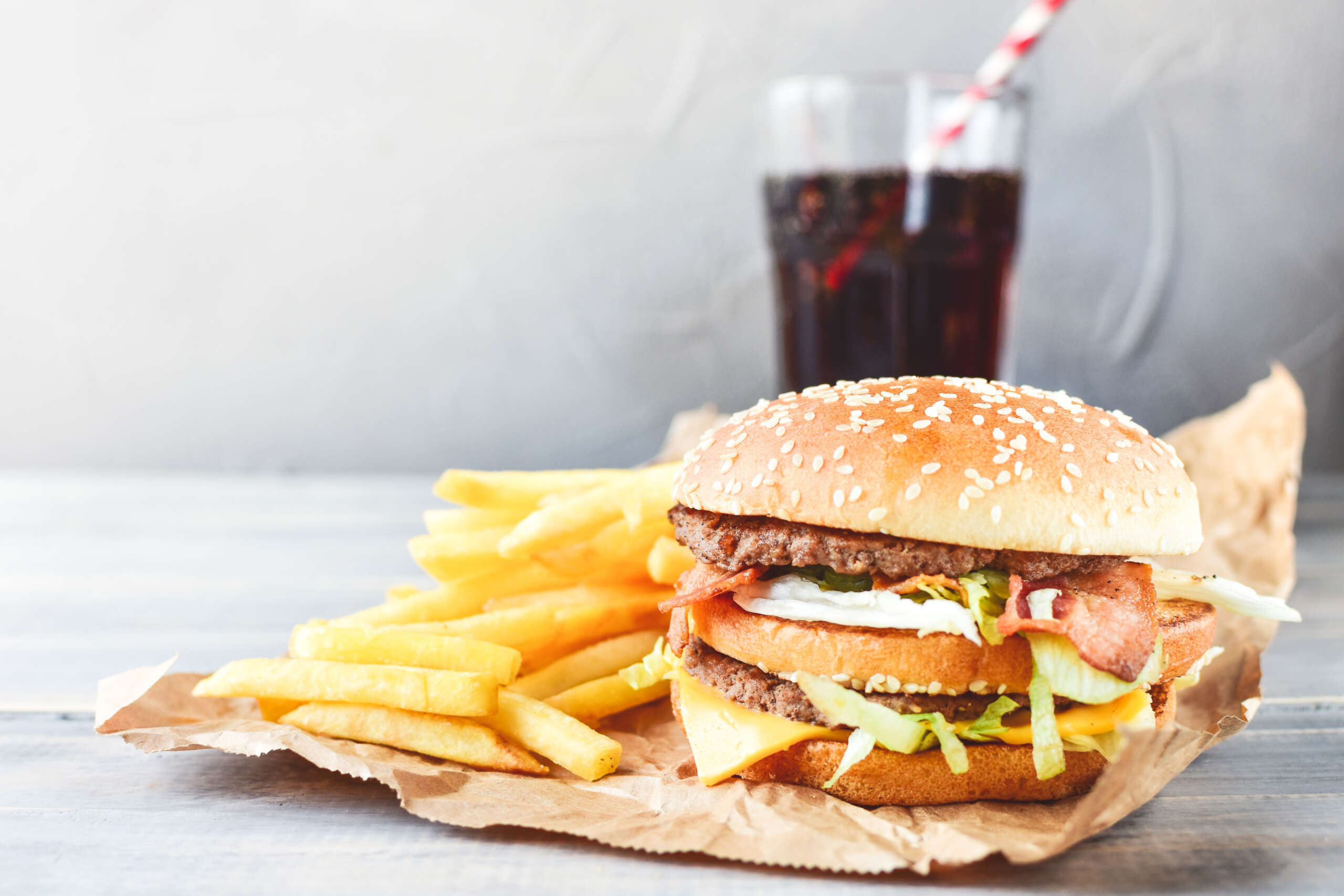
It is cheaper for a low-income family to go to fast-food restaurants for breakfast, lunch and dinner, each day. This will save them money. Money, remember, that is in short supply.
Good intentions sometimes have to take a back seat to the hard reality of home economics.
A lower-income family may well want to eat healthily and consume vegetables and fruit, but if those ingredients are out of reach financially, what options do they have?
Of course, the only rational choice is to select the lowest-cost route, despite the well-researched, well-publicised and well-appreciated risks to the health, development and opportunities of that very family. It’s a horrendous state of affairs that doesn’t need to exist.
Government policy
Indeed, never forget that it is explicit government policy to have this state of affairs. Before there is the inevitable flailing of arms and gnashing of teeth from some, just pause and reflect.
Government sets tariffs and import duties.
Government has the ability, if it wishes, to zero-rate all healthy produce, such as fruits and vegetables.
Government has the ability to fund and support on-island organic vertical farming (which would dramatically bring down the costs of foods manufactured here).
But consecutive governments have consciously (either deliberately or through neglect, chosen to not exercise that ability, and chosen to do nothing to improve the health and opportunities of the most vulnerable; it’s within the power of every government to make meaningful immediate improvements to the state of health of the poorest Caymanians and yet they haven’t.
Cayman and its elected representatives should be collectively embarrassed that we have policies that specifically harm the most vulnerable of society, hurt their economic prospects, and explicitly restrict the ability to achieve their potential.
The solutions are clear and within reach – yet they remain ignored.
It’s time for policymakers to take meaningful steps to make healthy food accessible to all.
Therefore, an open challenge to the next government and every person seeking election in April: If you care about reducing Caymanian poverty and Caymanian opportunity, start by reducing the cost of healthy eating and making unhealthy choices more expensive. Cut taxes on fruit and vegetables and raise taxes on sugars and fats.
Poverty reduction doesn’t require grand slogans, doesn’t require dramatic tax policy adjustments or a socialist agenda, and doesn’t get solved by criticising segments of society, but rather by small, meaningful and constructive steps, often out of the limelight, but vital nevertheless.
It’s within your power to make it happen, and while the next generation of Caymanians may not be able to vote for you today, they will thank you for their future health and for their future prosperity.
Simon Cawdery, CFA, is an investment manager and governance professional who lives and works in the Cayman Islands. He writes regularly for the Compass.
Related Videos










Excellent article. Thank you. Sadly those who could follow that advice will either not be able to read it or not afford vegetables/fruit. They may also not vote, as so many people who live in Cayman have no rights and thus no vote. The island is in a serious mess.
“Widening gaps” are natural and desirable, it’s the only driver of progress. Putting a negative spin on it risible.
“At the expense” rhetoric, repeated here over and over again, is untrue as much as it is divisive. Nothing is stopping the poor to make more money, except their own flaws. I.e.: everyone is getting exactly what they deserve, when there’s no pernicious artificial redistribution of wealth from lifters to leaners, which distorts the natural justice and motivations of a healthy capitalist system. Governments must not interfere in this.
Sorry Simon but I disagree.
60 years ago or so the Cayman Islands may have had much more equal income. Because almost everyone was poor. We had a subsistance economy. Cows were choked by mosquitoes, men went away to sea and women cooked on fires because there was no electricity. Children came home from one room schools swinging a smoke pot.
Today everyone, even the poorest, is better off. A result of the miracle of capitalism. A side effect of that capitalism is that incomes become less equal.
Who would want to go back to the days of almost everyone being equally poor?
Nor is it true that the rich people in Cayman have become rich at the expense of the poor. Almost all of the extremely rich people living here are retired and made their money elsewhere. We are lucky they have chosen to live here and spend their money here. Providing employment to cellphone providers, restaurants, CUC employees, banks, insurance companies, car dealerships, security guards etc.
The key to reducing costs is never based on manipulating the tax structure to benefit one class of society. Costs come down when a healthy level of competition exists in the marketplace. Limiting competition will always increase costs.
The crux of the article is that whoever forms the next Government can and should take a couple of steps to make eating good quality food more affordable as well nudging people away from eating foods that are known to be unhealthy. Overall, this is a pretty modest proposal, so I’m surprised by some of the earlier comments.
@Larry T. nothing is mentioned about manipulating the tax structure to benefit one class of society. Presumably that class that benefits would be “People who eat”, as the cost of healthier options is reduced. On the flip side, unhealthy foods would have a small “sin tax” applied. This might nudge people like myself, and others away from cans of sugary drinks and Kit-Kats at the local grocery stores. I’m not sure how this limits competition in the marketplace, or if this really is a hill to die on making full-sugar Coke more expensive than Diet-Coke as has been done in some countries makes all soft drinks more expensive.
@Norman L. – No one is suggesting or wishes to go back to being equally poor. The timeframe in the article was 20 years, I won’t argue that baseline living standards in the Cayman Islands are significantly higher now than it was 60 years ago. That being said the standard of the working poor (often migrant/guest workers from other countries) on a relative basis is now worse than it was 20 years ago. At some point in the past two decades, it became common or at least more common to need to rent substandard housing, share crowded rooms with strangers and in some cases sleep in shifts as they share a bed rental with someone working different hours. There is a message for all of us that the growth in clients for the NAU, people accessing Food Banks/Pantries and charities like ARK and Feed Our Future has surpassed the growth in our total population.
I would also mention that 30 years ago even the wealthiest among us likely didn’t feel they needed security guards. The fact this has been a growth industry in Cayman is not a sign of progress.
@Alexander P. widening gaps are not desirable, history tells us that it can lead to revolution and that just isn’t fun. It also isn’t the only way or even a great way to drive progress. For a number of reasons, a much larger Middle Class emerged in the United States post WWII, the wealth gap narrowed significantly over this period of time. By 1960 a majority of Americans lived in family-owned homes for the first time since before the Industrial Revolution in the 1800s. This has reversed since then. The middle-class has shrunk with some moving up the share of adults that are upper income has climbed from 14% to 20% which is good. On the other side the share of lower income adults has grown to 29% from 25%. There is a reason why Donald Trump’s MAGA slogan has been successful.
But in Cayman your argument that “Nothing is stopping the poor to make more money, except their own flaws.” is especially hollow. A large section of our working poor have come from other countries and are living in substandard conditions and struggling with the cost of living so they can send money home to support their families and educate their children. Whether we need to be importing adult labour to work at $6/hr is another debate. What isn’t open to debate is that making healthy options more affordable and nudging people away from less healthy options with a sensible tax policy is not a “pernicious artificial redistribution of wealth from lifters to leaners” as this would as previously defined affect all “People who eat”.
The author has suggested a fairly narrow and easily applied option that might make it easier for the poorest among us to eat a little healthier. It is interesting that the majority of comments so far read as if Mr. Cawdery is suggesting the rapid implementation of progressive income tax system by June.