

A cruise-berthing project, similar to the one proposed in 2019, would likely cost in excess of $300 million in up-front capital costs, according to analysis for the Compass.
The actual cost, over 25 years, could be far higher if you include interest on any bank financing, associated infrastructure and the budget-blowing tendency of major projects, with some analysts predicting an overall expenditure closer to $700 million.
Advocates of the project, including Tourism Minister Kenneth Bryan, point out that new piers would also bring a revenue stream.
“Even if a project costs $400 million, who pays for it is a totally different question,” Bryan told Radio Cayman last week, suggesting piers could essentially fund themselves through per-passenger fees that currently go to the tender boat operators.
Economists and major project experts, who spoke with the Compass, agree this formula could help offset the massive upfront expenditure, but dismissed suggestions it would entirely fund the project with no cost to government.
And as the islands head to the polls for an advisory referendum on the issue of cruise infrastructure, politicians, economists and analysts have warned that, no matter what the result, there is no guarantee the country can afford it.
With a variety of pressing infrastructure demands – from the cargo port and the landfill to beach replenishment and the road system – competing for dwindling government funds, there is no certainty that the project will be prioritised in this election cycle.
All three party leaders told the Compass that a ‘yes’ vote in Wednesday’s referendum won’t change the difficult economics of the berthing project. And all three said cruise would need to be factored into an overarching infrastructure plan that prioritises Cayman’s needs.
Meanwhile, economists and analysts caution that the upfront costs involved in any public project have skyrocketed over the past five years.
Post-COVID inflation and uncertainty around global supply chains in the wake of the US president Donald Trump’s global trade war mean there will be an extra premium to pay for anyone putting shovels in the ground in the short term.
What would a cruise pier cost?
One of the key criticisms of the referendum at this point is that there are no clear details on the size, scope or location of any infrastructure – all factors that could influence public support and affect the cost.
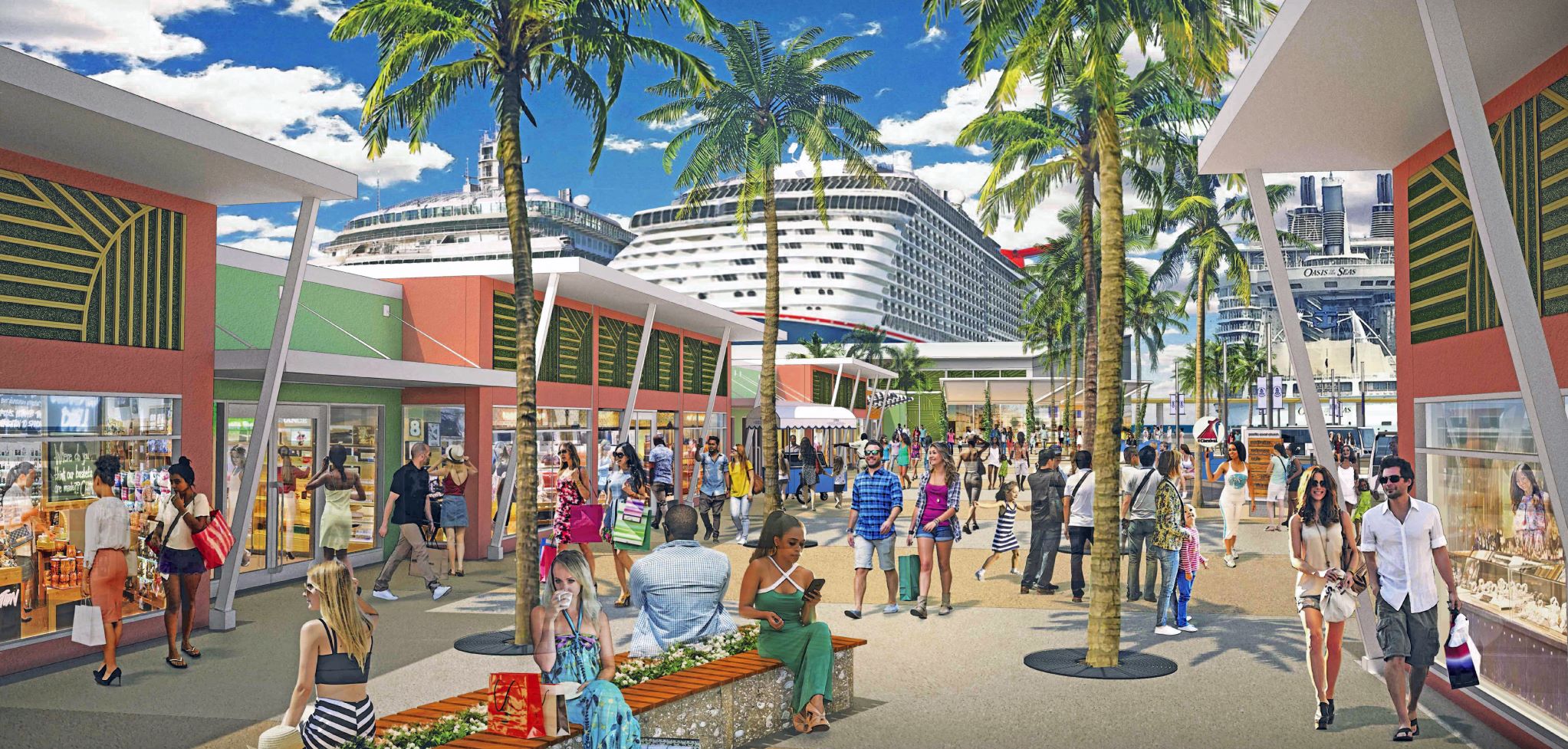
Working from the 2019 plan – which was projected to cost between $200 and $250 million and involve two piers that could accommodate large ships in George Town – analysts estimate a price tag upwards of $300 million.
Simon Cawdery, an economist and Compass columnist, warns, “Public works are notorious for overspending and seeing prices far exceed initial targets.”
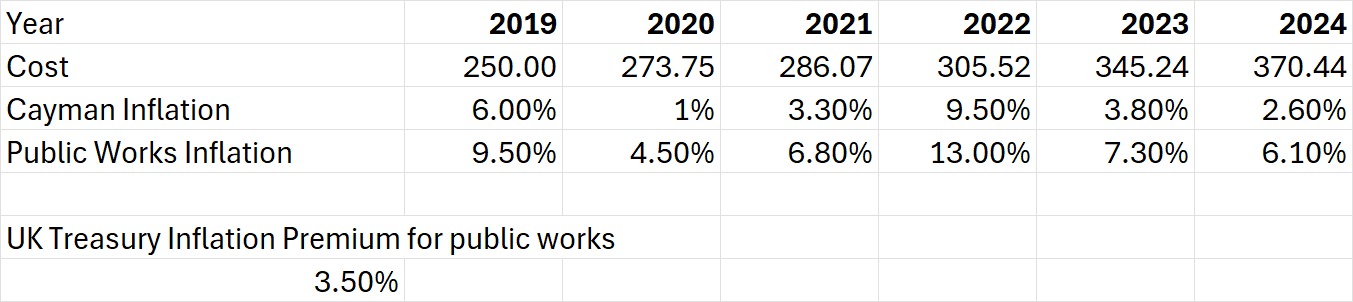
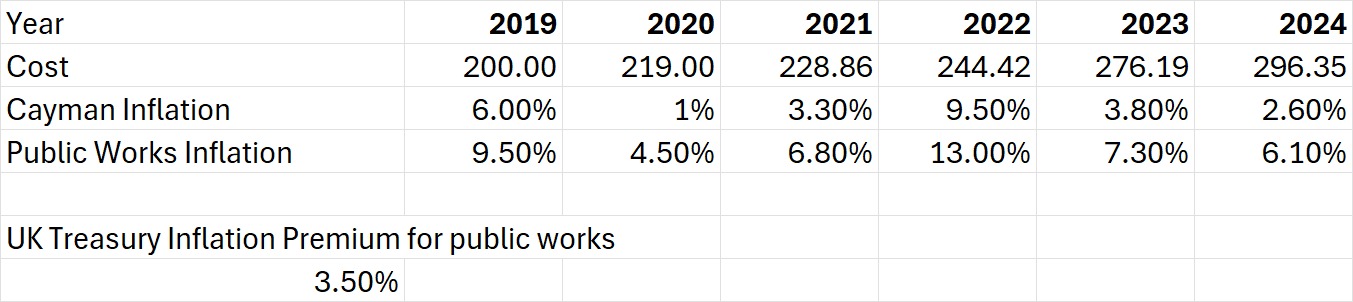
The UK Treasury has an explicit factor that it incorporates to account for this. They expect that cost inflation in public-sector works will be 3.5% greater than the general level of inflation.
Using that figure on top of the year-on-year inflation statistics in Cayman, Cawdery calculates that a project priced at $250 million in 2019 would now cost $370 million.
The lower end figure of $200 million would translate to $296 million in today’s money
“That’s a far greater cost increase than even cauliflowers in the supermarket and reflects the nature of construction run by the public sector,” he said.
A more conservative estimate comes from plugging the figures into the Turner Construction Company’s index – a widely respected inflation indicator for major projects in the US.
The index – geared for high-rise construction but useful as an indicator – was at 1156 in 2019 and was up to 1426 at the end of 2024.
In simple terms, that means a $200 million project in 2019 would have cost $246 million in 2024 and a $250 million would be up to $308 million.
Roy McTaggart, who was finance minister at the time the Verdant Isle bid was accepted in 2019, acknowledged those figures were likely accurate, saying he expected the same project now to be $300 million plus.
Revenue streams can make a difference
He added that was a “sweetheart of a deal” which would have involved the cruise companies funding it and retrieving much of their costs through an increased passenger head tax.
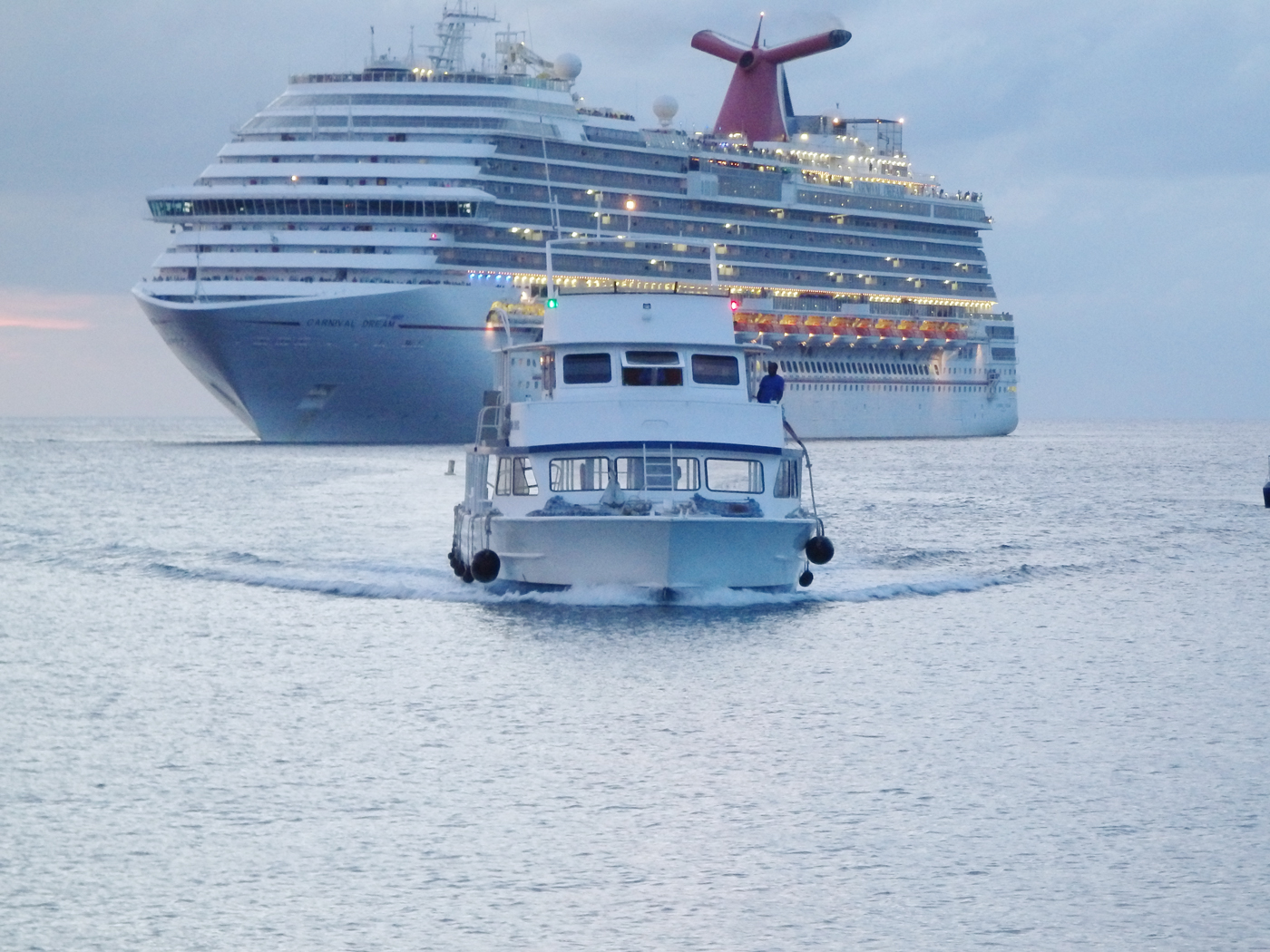
Details of the deal – reviewed by the Compass at the time – indicate Verdant Isle would take a $6 per passenger fee – increasing with inflation – to help pay for the capital costs of the port for a 25-year period. That was expected to net the partnership, which included Carnival and Royal Caribbean cruise lines, around $12 million a year to offset their capital expenditure.
“It really would have been the ideal outcome for the country in terms of financing a project of that magnitude,” McTaggart claimed.
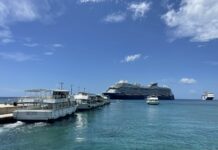
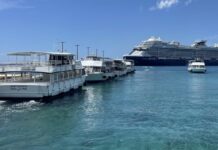
Current Tourism Minister Kenneth Bryan, who is now running with the PPM, told Radio Cayman that the government could transfer the $5.25 per passenger fee that currently goes to Caribbean Marine Services to operate a tender service to help refund the costs. With two million passengers, he said, Caribbean Marine Services was making $10 million per year.
“There is a sentiment that this would cost the country $400 million, and that, magically, the government has to find $400 million. I think that is irresponsible,” he said.
While he accepted that no financial model had been created, he suggested all past proposals had envisaged a per-passenger fee, with the cruise lines bringing enough people to fund the capital costs. He went on to suggest that the Cayman Islands people might not have to come up with any money.
Possible financial models
Sam Story, a managing director at Teneo, who has advised on business cases for a variety of Cayman infrastructure projects, said the ability to generate revenue from increased passenger fees, or concessions and other third-party revenue streams, could serve to mitigate some of the large upfront investment.
He said public-private partnerships on projects of this nature could be successful if the project served to generate sufficient funds.
“If the outcome of the referendum was to be in support of cruise berthing infrastructure, the Green Book business case process – required in Cayman for all major projects – would assess and evaluate the most appropriate procurement route and how the project could be funded,” he said.
In this case, the Compass analysis suggests, generating sufficient funds would depend on charging a significantly higher per-passenger rate or growing the number of cruise visitors substantially – meaning a partnership with the cruise lines to offer passenger guarantees would be necessary.
For example – increasing the per passenger fee to $10 would generate $20 million a year if Cayman’s cruise numbers went back up from one million to two million as a result of the dock. Over 25 years, that would net $500 million. However, there is no guarantee that would be enough to pay for the capital costs, interest on any bank loans and the operating expenditure of the project.

Cawdery calculates that if the pier is funded through borrowing, it will end up costing closer to $700 million over the lifecycle of the project. Even in a public-private partnership, where bank loans are usually necessary to cover upfront costs, interest and a profit margin for the private partner would have to be accounted for as well as operating expenses of the new piers.
Either way, he says, government would likely have to kick in significantly from public funds on an annual basis – either by foregoing existing revenue streams from cruise passengers or in annual cash contributions for repayment of the capital costs and interest. He argues that these calculations need to be done before government or the people can decide if it is an affordable or desirable option.
“The question that needs to be better investigated, and resulting data presented to voters and the public, is the maths behind how to fund the repayment of debt associated with the cruise project. The sums involved are material for public finances and yet the path to repayment is entirely unclear,” Cawdery said.
The initial outline business case for the cruise pier project – developed in 2013 – that provided the basis for the bid process that ended in the Verdant Isle deal, explicitly acknowledged that the piers could not pay for themselves and that government would need to give up some revenue to a private partner.
“As a result of the significant capital costs involved, the project is not financially self sustainable based solely on the berthing fees it could generate,” according to the report prepared by consulting firm PwC.
Could a Verdant Isle-type deal be resurrected?
Cline Glidden, chairman of the Cayman Islands Port Authority board, believes the sort of deal negotiated in 2019 is likely off the table for now.
Glidden was minister of tourism when a previous cruise-berthing project was negotiated with Italian firm GLF in 2011.
He believes the industry has committed its dollars elsewhere and will remain faithful to the ports and routes it has spent the most money on.
“Unfortunately, having spent much of my political life on this matter, I think the ship has sailed. Regardless of the outcome of the referendum, I think we have missed the opportunity to get the cruise lines to finance the project,” he said.
“I think the options that were available before with little or no risk to Cayman have changed as the lines have made investments and commitments elsewhere.”
Cruise or cargo?
Of bigger concern to Glidden is the state of Cayman’s cargo port.
While the attention has been on cruise, he said Cayman’s population has grown to the extent that cargo was now a far bigger issue.
“We made a presentation that shows we have, at best, 10 years left on the current cargo facility and that it will take 10 years to build a new one,” he said.
“It is strange to me that this has not been a bigger talking point in the run up to the election.”

There remains the possibility of combining the two projects – as envisaged in 2019. But Cayman’s population has grown by 20,000 since then and the cargo needs have increased proportionately.
Glidden argues the far-more-pressing infrastructure priority right now is to ensure Cayman’s port can keep up with demand for imports.
“We can make a choice on cruise, but we don’t have a choice on cargo,” he added.
Cayman’s population was projected to hit 250,000 by 2074 in a series of presentations around tentative plans for a new cargo port.
Glidden acknowledged that controlling that growth is another way to deal with the issue, but said he had seen nothing from any political group suggesting they had a plan to do that. Either way, he believes some growth is inevitable and Cayman’s demand for imported goods is a vital lifeline.
Story said no project should be considered in isolation if Cayman wants to ensure that appropriate supporting infrastructure is in place, especially when considering access, traffic and passenger flows. Whatever solution is pursued for the cargo port will have an impact on cruise and vice versa – particularly when considering the existing constrained site.
Grand plan needed
Story believes Cayman needs a long-term, multi-layered infrastructure plan interlinked with a development plan and zoning map, to plot the way forward for each of the islands.
With limited funds available, he said government would either have to prioritise some projects and mothball others, or find ways of generating new revenue streams to finance them.
Not all public projects are created equal. As the previous iteration of the cruise project showed, there is a potential revenue stream there – albeit one that is unlikely to cover the significant capital expense.

Similarly, the landfill project could have generated revenue had collection fees been imposed, but this would likely be an unpopular move in the context of the current cost-of-living issues experienced around Cayman.
But Story cautions against using public-private partnerships as a panacea to avoid upfront costs – unless a clear payback mechanism is attached.
“Affordability on all of these projects is absolutely key. We cannot just say we will get the private sector to finance it because if the project doesn’t generate revenue in its own right then government or the people will always end up paying for it in one form or another.
“The project’s revenue streams and government payments over the term of the arrangement (typically 20 years or more) must cover not only the initial capital costs, but the ongoing operating expenditures, and the financial returns to the investors.”
A question of priorities
Story also cautions that none of these things can be evaluated in isolation.
“You need an overarching plan not just from a budgeting perspective but because what you do in one area has implications for others, and our road infrastructure, in particular, is already over-stretched.”
Building cruise piers outside of George Town, for example, would require expenditure on roads and transport and potentially new environmental concerns. Moving the cargo port to Breakers – as has been posited – would open up different options for the revitalisation of George Town. All of those projects impact traffic and transport infrastructure.
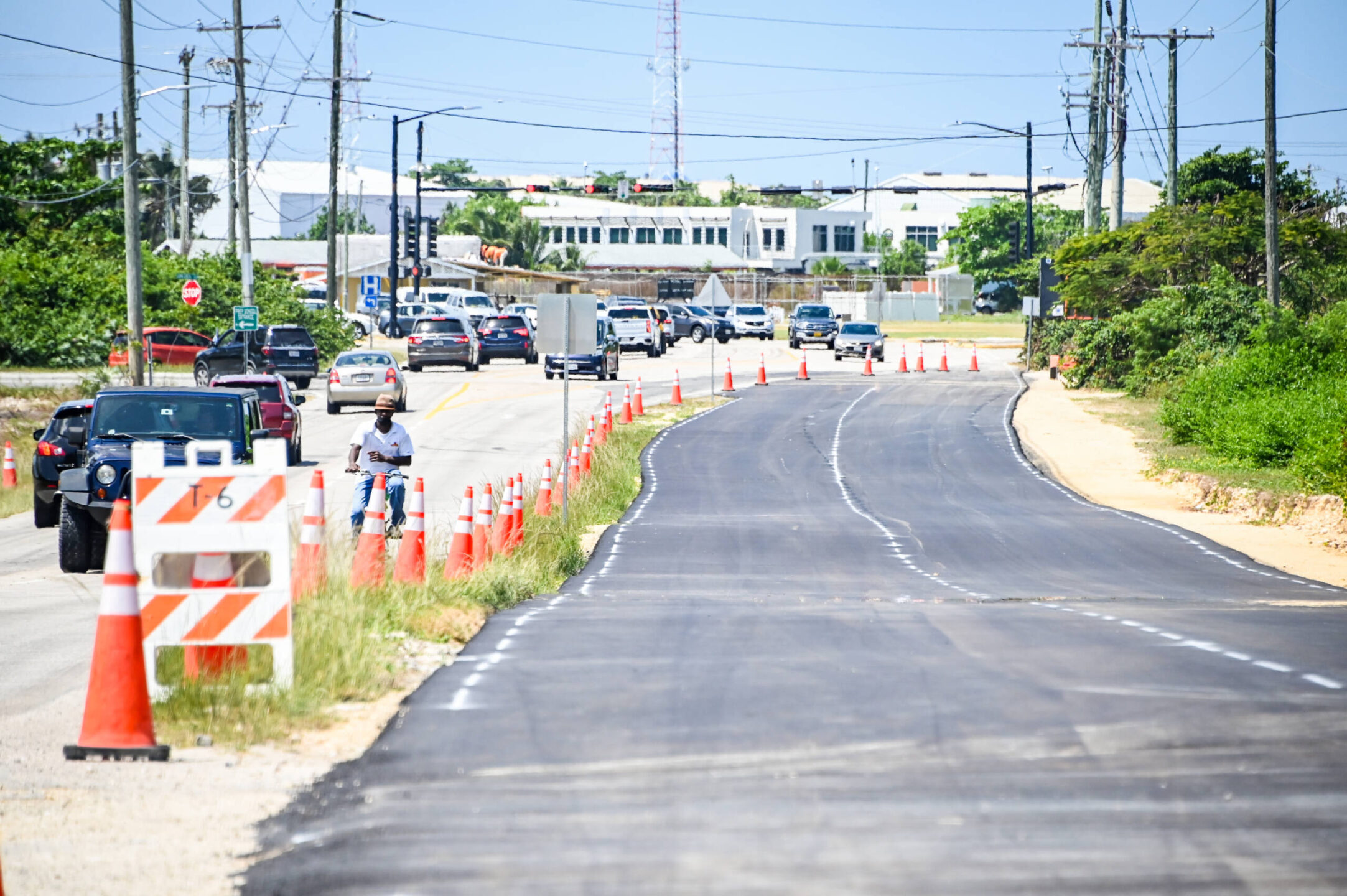
Beyond that, there’s the airport, sub-sea internet cabling, a massive erosion problem on Seven Mile Beach, a new school, public transport and healthcare infrastructure – all essential to keep pace with population growth.
Story believes that what is needed is a well-structured long-term plan that involves input from all sides of the political spectrum, considers the thoughts and ideas of all stakeholders, and can span election cycles.
Where do the party leaders stand?
The leaders of the three main parties vying for election seem to broadly agree with that analysis.
Scott: ‘We have to look at what we can afford’
Dan Scott, leader of the Cayman Islands National Party, said the referendum was “ill advised” and had not been done with sufficient specificity for people to make an informed decision.
“It is not a binding result, so I think, yes just means that we would have an interest in cruise tourism and we would have to have a look at what we can afford and where it fits into our other priorities. It doesn’t elevate it above other projects because those projects are not on the ballot,” he said.
Citing road development – particularly the East-West Arterial, public transport and the landfill, among other areas in need of capital investment – he said the next government would need to carefully examine what was affordable.
“You could have had a referendum on any one of those issues and probably everyone would have voted for investment, so we have to see, given the state of the country’s finances, what we can do and what the priorities will be.”
Hew: ‘We need road map for infrastructure’
Joey Hew, the leader of the Progressives, said he considered the referendum to be a ‘temperature reading’. He said the vote could be helpful in advising government on whether to go down the road of exploring a fresh business case analysis for the port.
He said the cruise industry had dwindled from a peak of 2 million passengers, when the last project was mooted, to around half that now. And he said it was possible that a new project could contemplate a single pier or simply upgrading what currently exists.
“I think a yes vote is giving the next government an opportunity to go out and start talking and having dialogue about it again,” he said.
But he said it would not elevate it above other projects.
“One of my goals once we get Plan Cayman restarted, is to then move into a national infrastructure plan and include public consultation on that as well,” he said. “I think we need a road map for infrastructure that consecutive governments can follow.”
Ebanks seeks to balance economy and environment
André Ebanks, leader of The Caymanian Community Party, said he didn’t think the issue should have been put to a referendum. Instead, he said, it should have been explored as part of an overarching tourism policy that looked at the needs of the industry across the board.
“The question is, what is the medium balance that we can strike that protects the environment, is within the budget, but then can still sustain cruise tourism?”
He encouraged people to vote, nonetheless, and indicated his support for the businesses that do rely on cruise.
However, he said, no new government could make any guarantees on major infrastructure expenditure without addressing the financial situation, which he said was “frightening” following the pre-election projection that government would be in deficit by the end of the year.
Related Videos








You don’t have to be a futurist to understand the knock on revenue benefits far outweigh the present day costs at virtually any price (including costs over runs). Inflation assures everything will pencil out in the wash. Don’t believe me? Take any major finished asset on this island: our Electric utility for example. Say to yourself in 1960 that it will cost an unthinkable 300 million to set up. Now ask your present self would you unwind it and make it go away and shut down in exchange for the money back? The real question is do we want it?, not what it costs or could potentially cost. We’ll find out the answer to that question on Wednesday. If the answer is yes, the price is cheap at any cost and the revenue to support it will follow from increased activity, shore excursions, docking fees and the vibrancy of commerce, that organized, efficient cruise tourism will bring our future generations. The only people who don;t want a pier are thunder operators getting their 10 mil a year +
I continually hear about the importance of the revenue from cruise for local business. Here Bryan is clearly stating that the Tender operator will effectively be put out of business. I propose we not let Politicians propose nonsense like this. How about roads, medical care, housing, pay down the debt and return the country to a surplus. Remove Politicians that only propose putting us further behind
Yes, many Caymanians derive employment and income from the Cruise industry on island.
However, you can’t put 10lbs of stuff in a 5 lb bag.
Current tender service of visiting Cruize boats keeps a lid on overpopulating the island with tourists.
Unless of course you find a way to expand the island…maybe start by replenishing 7 Mile Beach…just saying.