An IT expert has said that artificial intelligence can be applied to help cut household bills and save time and cash on consumer purchases like flights.
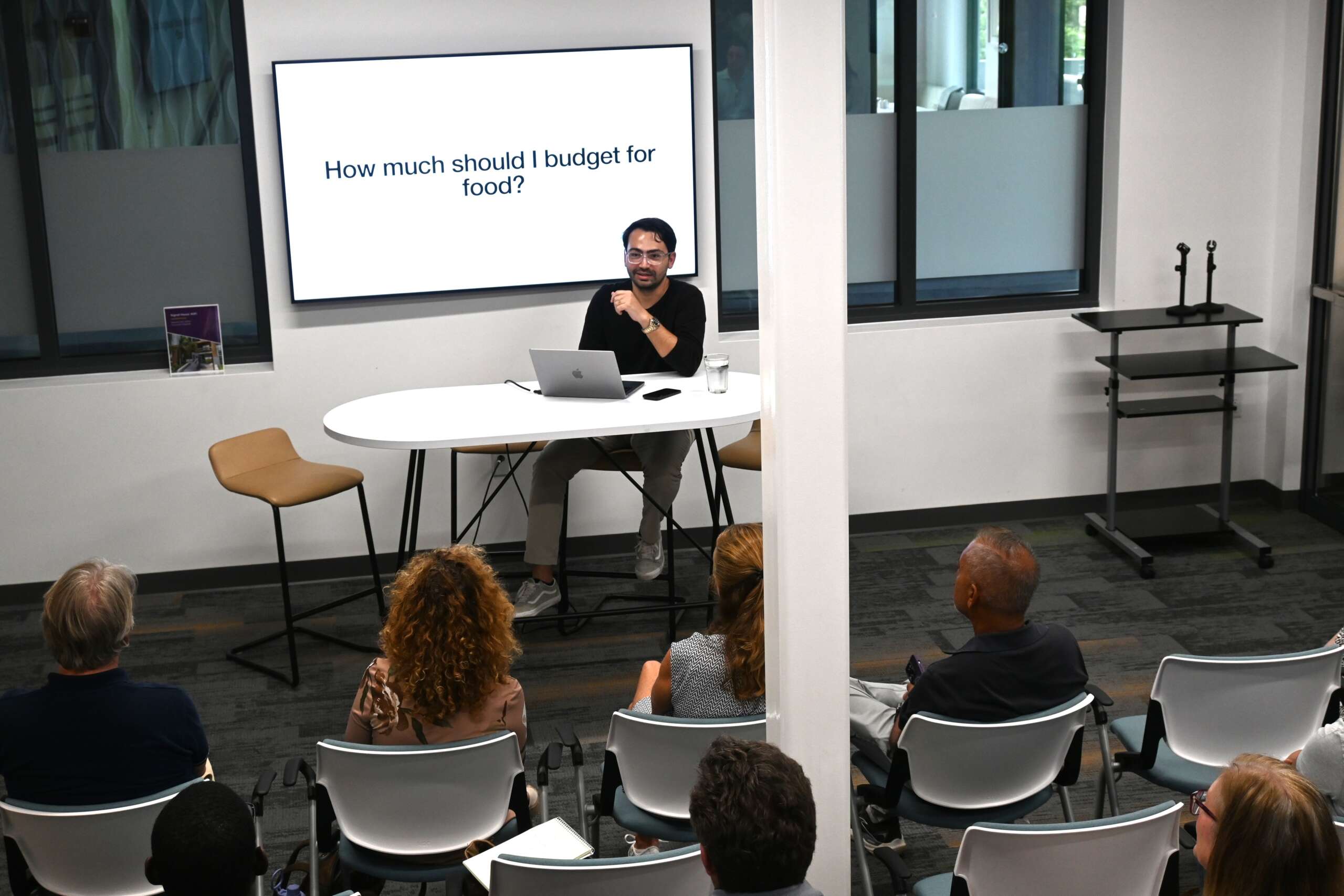
Speaking at an Enterprise Cayman ‘Cyber Sandbox session’ on 23 July, David Manouchehri, director of Cayman-based tech firm ai.moda, said that use of AI assistants, such as Claude or ChatGPT, had applications beyond the business world.
He told an audience at Cayman Enterprise City’s Signal House that Claude, developed by US firm Anthropic and now in its fourth version, could find the cheapest prices for food items in Cayman among supermarkets and help plan complicated flight itineraries.
“Where I use it a lot is if I actually want an opinion, I will ask,” he said.
But Manouchehri, an expert in cyber security and code auditing, warned afterwards that AI tools had to treated with caution.
He explained, “I think it can be useful, but one of the things I mentioned earlier is that they are all geared towards giving you the answer you want.
“It’s like your friend who always agrees with you.”
Manouchehri said Claude and other AI assistants were good for checking price per unit at supermarkets so shoppers did not have to do the sums themselves.
He added, “Claude can be used to come up with a budget for a healthy grocery plan for a couple for $250 to $300 a month.
Manouchehri demonstrated how Claude could help with planning a barbecue for 100 people and prepare budgets for food and drinks – the AI assistant costed two burgers and two hotdogs for every attendee at $430.
He added, “Claude will even give you advice on comparing business class and first class on flights, because some first-class seats are smaller than business class seats.
“It can find business class a better deal with similar levels of comfort for a third of the price of first class.”
Manouchehri said, “It can also advise whether it’s cheaper to do two one-way trips rather than a round trip.”
He added, “I wanted to use it for groceries because I wanted to figure out things like the price per unit. I’m going to start using this when I go to supermarkets. For flights, I already use it.”
Manouchehri predicted that everyone would have to use AI in their everyday lives and at work, even if they were suspicious of it.
“I think you have to embrace it in some way,” he said. “You should definitely question things – it’s like in high school when you can’t just quote Wikipedia, you have to quote Wikipedia sources.
“If you avoid using it, you run the risk of not being replaced by AI, but being replaced by someone who can use AI.”
Manouchehri said that everything he knew was knowledge he had heard from someone else or read, which he had absorbed, rewording and combining it with other information.
“AI is pretty much similar,” he said. “It’s just taking a bunch of information and combining it into an answer.”
Manouchehri said that humans and AI could get things wrong and give poor advice and that AI would repeat back “what most people are saying”.
He added, “It’s the same with people – you have to have your sources. If you said Cayman should declare war on Mexico, you would have to show me why that’s a good idea.
“It’s the same with AI. It has to show you why that’s a good idea. You should have a healthy skepticism with both.”
Related Videos