

Cayman’s biggest propane gas suppliers have united to call for stricter safety regulations and tougher enforcement.
John Corallo, the general manager of Home Gas, said propane gas is a safe and reliable fuel source, but equipment must be delivered safely and installed and maintained properly.
“We are aware of non-compliant operators who may compromise safety through inadequate training or equipment and we urge the authorities to enforce standards to protect the public,” Corallo said.
“We offer personalised safety guidance with every installation, including proper appliance use. During deliveries, we perform leak checks and visual inspections.”
Corallo said that his firm was also lobbying gas industry regulator – the Utility Regulation and Competition Office – the fire service, the government’s planning department and the Building Control Unit to introduce the mandatory installation of gas detectors, a requirement for propane installers to be certified, and a tank ownership register.
He also called for a “red tag process” to declutter areas of unneeded tools, equipment, and supplies and a simplified system of permits designed to “balance safety with affordability, while treating customers and staff with dignity and respect”.
Dylan Merren, the plant and service manager at Clean Gas, said his company did not comment on specific other businesses.
“However, we do encounter installations that fall short of current requirements.
“In those instances we document the issues, decline connection or delivery and work with households and businesses to bring their systems up to standard.”
Recent incidents
The two were speaking after Roy Bodden, a former MP, Cabinet minister and the former president of the University College of the Cayman Islands, highlighted the dangers of careless transport, installation and use of propane gas.
Bodden’s warning came after two recent gas incidents.
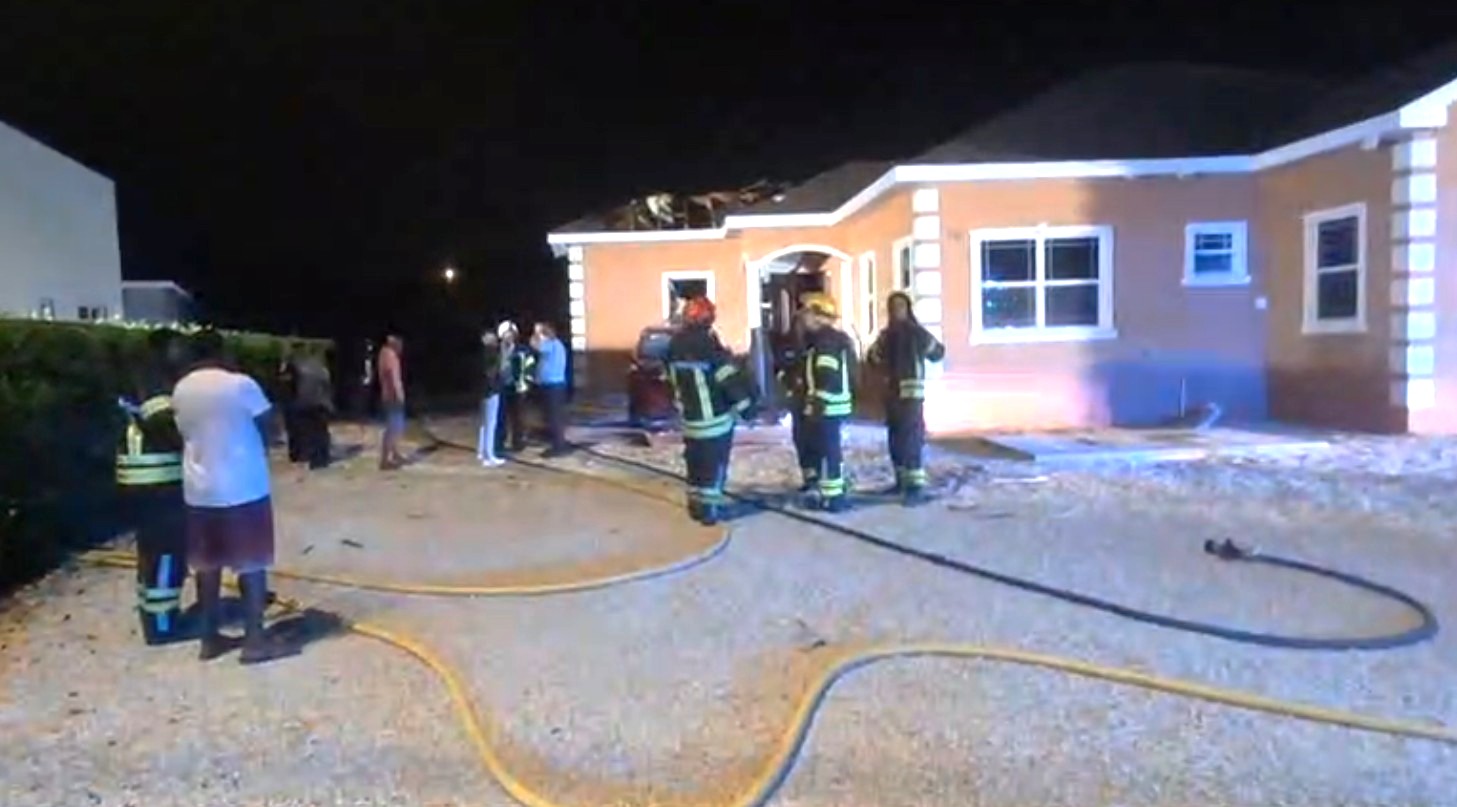
A 52-year-old woman suffered “serious but non-life-threatening injuries” after an explosion blew part of the roof of her Bodden Town home off in July. The cause was later found to have been an unlit stove burner that allowed gas to escape and build up.
A barbecue grill with an improperly connected cylinder a few weeks later caused a fire in a yard in Savannah that spread to the house.
Bodden appealed for a clampdown on transportation of propane cylinders in unsuitable vehicles with “no obvious industrial fire extinguisher positioned on an easily accessible part of the transporting vehicle”.
He added that the vehicles were often only single-crewed, with operators not equipped with fire-retardant clothing.
He added, “The tanks are handled in a manner which indicates absolutely no training of the handlers and one is left to wonder how much training is afforded such persons or is it a case where cheapness of the labour is the motivation for hiring?”
Bodden said, “It is high time for the government regulator, the fire department and the suppliers of this fuel to collaborate on drafting protocols and procedures for handling what is becoming a common commodity in our domestic use.”
He said the government regulator, the fire service and propane suppliers should collaborate to draw up new rules for propane handling.
Local standards
Corallo said customer safety was “our top priority” and that all the company’s vehicles were equipped with suitable fire extinguishers and drivers were trained to US-based Propane Education & Research Council standards.
He added two-man crews were not mandated by the Massachusetts-based National Fire Protection Association, unless required for physical assistance with unloading or when operating in high-crime areas.
Corallo, also the international director for the National Propane Gas Association, based in Washington DC, said, “Home Gas balances safety and affordability by ensuring our well-trained and competitively compensated drivers follow rigorous protocols to protect our community.”
He added that new customers were given safety guidance, including safe use of appliances.
Corallo said delivery staff also carried out leak checks and visual safety examinations during drop-offs.
He said that, in response to the latest incidents, the company had launched “initiatives with the Cayman Islands Fire Service, free safety workshops across the islands, subsidised gas detectors and a BBQ safety campaign promoting metal hoses and outdoor-only use”.
Merren said Clean Gas also followed internationally recognised standards and that the commissioning of new or modified systems involved a walkthrough inspection and documented leak and pressure testing.
He added that the firm’s drivers and technicians completed Propane Education & Research Council training, with regular refresher courses.
Merren said Clean Gas vehicles were also fitted with suitable fire extinguishers and that equipment was inspected on a regular basis.
He added that personal protection equipment, including clothing with fire protection, was used when conditions required it.
Merren said customer education was “practical and safety focused” and the firm carried out checks of exterior piping and visible equipment and recommended annual system maintenance by qualified technicians.
He added, “We also recommend the installation of approved gas detectors near propane appliances. We reinforce these safety practices through seasonal reminders and online resources.”
A spokesman for the Utility Regulation and Competition Office said there was a strict regime in place for the transport and handling of propane cylinders and that vehicles had to meet specific requirements.
He added that drivers of propane trucks were also required to carry out safety checks on cylinders before they were loaded and that they had to be fastened in an upright position. Drivers are also trained in how to deal with any leaks in transit.
The spokesman said that any alleged breaches of the rules brought to the regulator’s attention would be investigated.
He confirmed no complaints of breaches had been made and no investigations had been launched over the past three years.
Related Videos











Professionals in the field say that a propane tank explosion is possible but not likely if (!!!!) regulated by very strict safety guidelines.
They say propane leaks are easy to detect. This is because a chemical is added to propane during its production process that smells like rotten egg.
Propane tanks are intentionally only filled to about 80%. This leaves room for the propane that goes in your tank to expand.
Propane happens to have the lowest flammability range when compared to all the other alternative fuels. It doesn’t ignite until the air hits a temperature of 940 degrees Fahrenheit.
So how “non-compliant operators who may compromise safety through inadequate training or equipment” can even exist, let alone get licensed?
While a spokesman for the Utility Regulation and Competition Office says there is a strict regime in place for the transport and handling of propane cylinders, how do they monitor the compliance with this strict regime?
Do they conduct inspections of propane facilities, including storage, and transportation?
When Home Gas applied to have the storage tanks on Walkers Rd more than doubled in capacity, it was revealed that some time previously Govt recd an external report stating that it was imperative the facility be removed to a more isolated location. Nothing was done.
Gas suppliers and Gas contractors need to have building permits submitted when a current customers wants to modify or move gas appliances to a new location in their current home. Propane Building inspections are needed to insure these modifications or new renovation locations meet current safety standards.