

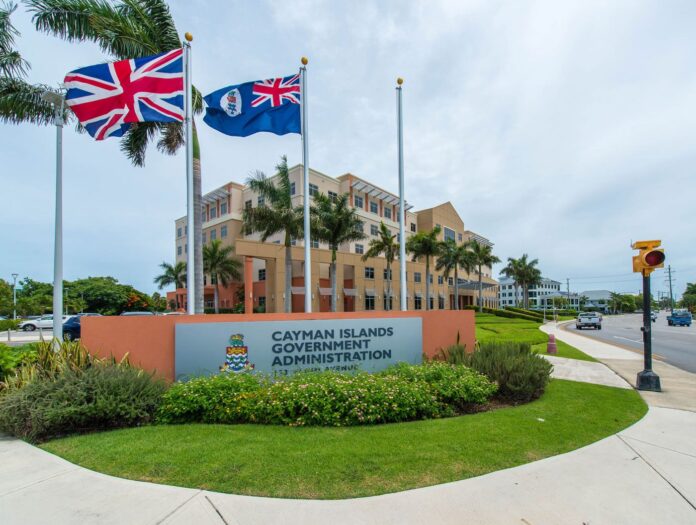
The latest report on government finances from the Office of the Auditor General highlighted “fundamental weaknesses in financial oversight that must be addressed urgently”.
In a 3 Oct. press release accompanying the report, Auditor General Patrick Smith warned that unreliable financial reporting “undermines effective governance and decision-making”.
“Public bodies collectively made 336 adjustments valued at $150 million to their financial statements after submission for audit, which raises serious questions about the reliability of financial information used for decision-making throughout the year,” said Smith.
The report follows controversy in September’s sitting of Parliament’s Finance Committee, when Kenneth Bryan, deputy leader of the opposition, challenged Finance Minister Rolston Anglin about inconsistent government finance projections. In August, Wayne Panton, who serves as parliamentary secretary across a number of portfolios, had quoted a $60 million projected deficit for 2025, but by late September, the government said the year would actually see a $10.3 million surplus.
To be clear, ‘Financial Reporting of the Cayman Islands Government’ for 31 Dec. 2024, analyses the year before the current administration took office.
Yet speaking on Compass TV’s Forefront on 11 Sept., Premier André Ebanks acknowledged that weaknesses in public-sector financial management persist. “We need to modernise how budgets are produced,” he said.
“Government chief financial officers produce it on large spreadsheets. We need to improve that process and go to outcome-based budgeting and have numbers the country can rely on – that’s one of the things we want to achieve in this term. We need clarity for the executive, so that you can make decisions and be confident in those decisions when you make them.”
Growing bureaucracy
Another strong warning to emerge from the report is the growing cost of Cayman’s government apparatus. The total expenditure of core government entities hit $639 million in 2024, up 41% from $453 million in 2020. And the lion’s share of that government spending went to civil servants, with personnel costs making up 68% of the total.
But the true cost of the state machinery is even greater, as the report highlighted a growing problem of unfunded healthcare for retired public-sector workers.

“Post-retirement healthcare obligations for Statutory Authorities and Government Companies total $394 million in 2024, representing a 10% increase since 2020,” said Smith. “These unfunded liabilities create extreme volatility and severely hamper effective financial planning.”
The problem is set to get worse, explained Smith in a 13 Oct. follow-up interview with the Compass. “The healthcare liability will continue to grow due to demographics factors e.g. people living longer, more persons becoming Caymanian and eligible for the benefit, the general rise of health care and inflationary factors,” said Smith. “Some entities have started funding plans to offset their respective liabilities, and this is a practice I hope would be employed across the public sector.”
Cayman’s bureaucracy isn’t just growing more expensive; it’s also becoming more complicated – to the extent that some state entities don’t follow the government’s own rules.
“I am disappointed that violations of the Procurement Act occurred in 20 public bodies, accounting for 80 per cent of all compliance breaches,” said Smith in the press release. “These violations persist several years after the Act came into force.”
The auditor general cited one example, where the Ministry of Education spent $2 million on ‘emergency’ campus refurbishment for a need that had been known for years. He called it “a clear misuse of emergency procurement provisions”.
One source from a local business, who asked to remain anonymous, said: “If a private sector company failed so consistently to meet its statutory obligations, heads would be required to roll and leadership changes required, and yet nothing changes in government.”
“It’s a really good report,” said another business source, “but I worry it will just be ignored.”
Related Videos











Congrats to the new Auditor General for coming out of the gate is fine style, upholding the standards of the OAG. Please keep the pressure on the Civil Service to uphold the standards of the PF&M Laws, regulations, rules, etc. and others that it continually ignores, or otherwise fails to achieve.
This report, on the heels of previous OAG findings, should simply embarrass senior officers to follow their DG into retirement/resignation. In any other self-respecting Civil Service that would happen. Same in the SAGCs which repeatedly fail.
But what will it take? Franz Manderson has allowed and ignored these failures by chief officers and senior financial officers throughout the CS for his enture tenure! Repeated audits and OAG Reports show this.
So, will the public have to await his successor to get some fiscally responsible culture in the CS? It seems so.
Pray to God it’s not Eric, folks.
NCFC needs to address this in the best interest of our islands.
There is little accountability in the government right now. Every one keeps kicking the can and doesn’t address financial issues. Heck, that won’t ever happen as long as politicians pockets are lined. Can’t even fix the traffic on island so how will they fix something more complex like budgets.
Private sector businesses would need to shut down or be fired if they operated like this government administration. They should call in some of the professional accountants on the island to help with the budget, frankly you have some of the best professionals in the financial world here but the government itself can’t run a balanced budget.
Why Premier André Ebanks is talking about budgets and spreadsheets?
Does he understand what Auditor General Patrick Smith is talking about?
Public sector financial management includes the collection of revenue, such as taxes, and the management of public spending and debt to deliver public services.
Key components are the entire budget cycle (planning, formulation, execution), public procurement, accounting, and auditing, ALL OF WHICH ARE GOVERNED BY LAWS, RULES, SYSTEMS, AND PROCESSES. It encompasses areas like fiscal risk management, financial reporting, and ensuring transparency and accountability.
Can someone,/anyone, tell us what Cayman Airways cost the public pocket for the year ended Dec 31 2024?. Has the airline produced their financial staements yet, if so where are they??.