

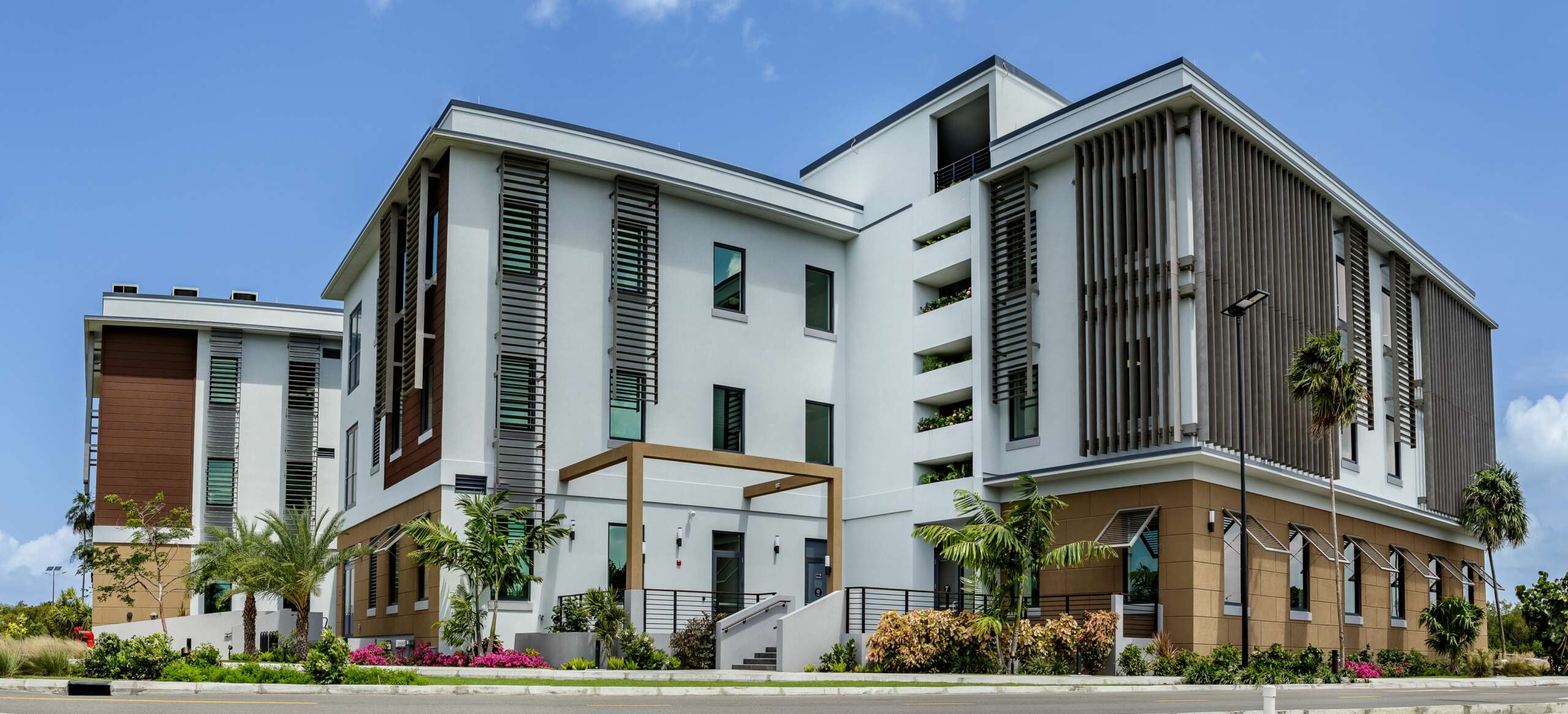
Cayman Enterprise City, the special economic zone that was born from the economic crisis and forced to overcome early challenges, has grown to host more than 450 tech companies.
In 2010, with Cayman’s economy reeling from the impact of the great financial crisis, the UK encouraged Cayman to diversify its economy by creating a special economic zone.
The Special Economic Zones Law was passed in 2011. It created an advantageous fiscal and visa regime for companies based in the zone on the condition that they did not do business within the Cayman Islands. Then Cayman Enterprise City, a privately-owned group led by Caymanian entrepreneurs Charlie Kirkconnell and Cindy O’Hara, was granted the concession to develop and operate the zone and its physical infrastructure.
“The special economic zone itself is commercial, but you need ancillary pieces to make it a globally competitive product,” said Kirkconnell. “We realised that just putting in an office park would get us part of the way there, but not all the way.” The masterplan involves developing the “City Centre”, which will be a knowledge and technology focused ecosystem.
Today the zone is centred around Signal House, which sits within a 53-acre site off Fairbanks Road in George Town. But until the full plan has been developed on the main campus, some clients are temporarily housed in other locations, such as Strathvale House, BritCay House and Breezy Castle.
Early challenges
Today Cayman Enterprise City is home to more than 450 knowledge and technology companies, but at the beginning it was a tough sell.
“The most difficult period was probably 2012 and 2013,” said Kirkconnell. “Cayman was not really seen as a place to launch a tech project. People knew Cayman for financial services and tourism, not technology.”

Those teething problems were compounded by the departure of a number of members of the founding team. “Cindy and I were in this project for the long haul. We took a long-term view, relishing the opportunity to develop the project from nothing into something we and Cayman could be proud of. A quick flip was never part of our agenda and this put us at odds some members of the team,” reflects Kirkconnell.
Other challenges were external, for example the COVID-19 pandemic in 2020. “At the start it was nerve-racking,” said Kirkconnell, but there were also some positive consequences.
“One of the reasons CEC was created after the global financial crisis was to help create some additional economic resiliency, to be the proverbial third leg that has been long talked about,” said Kirkconnell. The importance of that diversification was evident during the pandemic.
The working from home trend also strengthened Cayman’s pitch to tech firms. “Many people realised they could run their businesses from anywhere. If you can run it from your spare room during lockdown, you can run it from Cayman.”
Unexpected VASP visitors
Tech is a fast-moving sector and the emergence of digital asset businesses, such as cryptocurrencies and decentralised finance, created a boom for the Cayman tech scene.
“What changed is that virtual assets arrived and became a major asset class, which very few people foresaw in 2011,” said Kirkconnell.
Part of that boom was down to happenstance. In 2017 Cayman passed the Foundation Companies Act. Although originally intended as a tool to help Cayman’s family offices offer compete with Swiss foundations, it has since become popular with Web3 companies.
“We saw our first virtual asset client in 2015,” said Kirkconnell. “At the time it looked like an outlier. In 2017, during the ICO [initial coin offering] boom, it became clear something bigger was happening. Clients started setting up Cayman exempted companies, sending people here and launching blockchain projects from Cayman.”
“It put Cayman on the map as one of the few places with legislation and local expertise that could support the launch of projects leveraging new technology and new methods of raising capital,” said Kirkconnell. “It became another thing Cayman was known for and another area where Cayman was seen as a leader.”
That was followed by another piece of key legislation, the Virtual Asset Service Providers Act, which was passed in 2020 and amended in 2024. “Now well over a hundred virtual asset focused businesses are based in the zone,” said Kirkconnell.
Economic impact
Not everything emanating from government is welcome. On 14 Nov., the government announced increases to the Special Economic Zone Trade Certificate Fees. Yet with the top fee coming in at $750, the changes are unlikely to deter international companies.
“Every country in the world wants to attract knowledge and technology businesses,” said Kirkconnell. “To compete you need to offer a globally competitive product that is cost-effective and that features fast-tracked set-up.”
But it would be misguided to judge the zone’s economic contribution only on the fees it generates for government, said Kirkconnell. He points out the zone brings hundreds of people to live in Cayman who all spend money on the island yet can’t compete with local businesses.
Related Videos







The Cayman Islands are already a special economic zone. It is only because WORC is slow and inefficient that CEC is needed. Other than fast work permits what advantages do you have?