

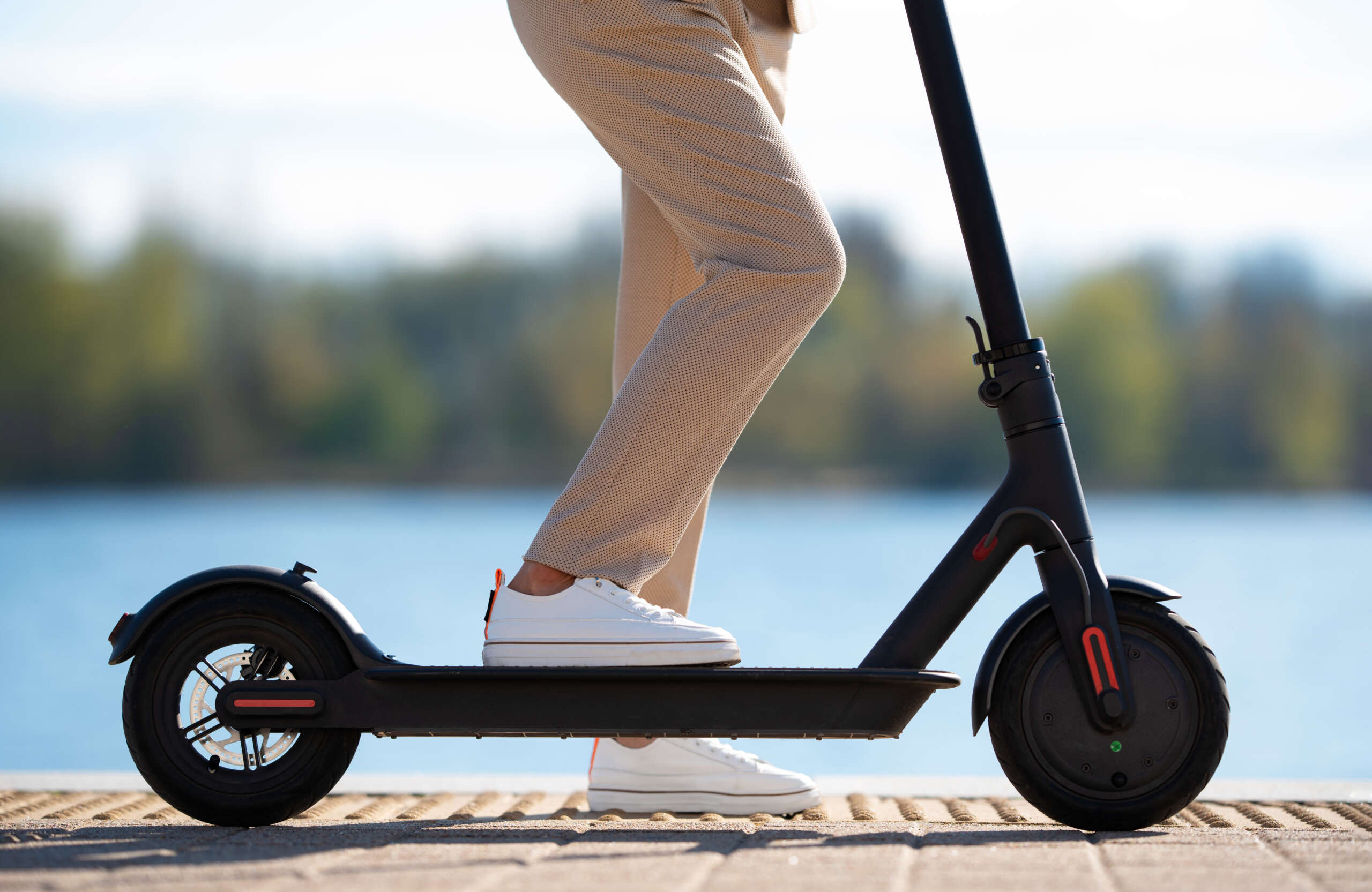
Owners of e-bikes are having difficulties getting the insurance required before a government crackdown on the machines and e-scooters starts on 16 Jan.
A string of major insurance companies confirmed to the Compass that they did not offer insurance policies on the machines.
One man, who asked not to be identified, confirmed his grown-up son, who had bought an e-bike to commute to work, had been refused insurance.
The man said, “He can’t find any local company as yet which will insure it. I imagine that’s the case with most of them currently on the roads.
“I’m not surprised that government entities imposed a mandate which isn’t possible to meet. Cart before the horse again.”
He highlighted that e-bikes in particular categories could be imported and duty charged on them.
But the man asked, “Thereafter they are essentially illegal. How is that supposed to be normal?”
Education campaign
The news came despite last month’s launch of an education campaign by the National Road Safety Committee in the run-up to a crackdown on unlicensed and unregistered personal e-bikes, e-scooters and conventional scooters, as well as other ‘mircromobility’ machines, such as Segways.
A Compass staff member asked two people at the Department of Vehicle and Drivers’ Licensing if there were any forms to register an e-bike or scooter but was told they had no information on the vehicles or received any instructions on how to register them.
No insurance cover available
The Compass called a number of local insurance companies to ask if insurance was available for e-bikes. Most responded that they did not, with an agent at one company saying, “We are not actually insuring these at the moment – not anything with pedals.”
A staffer at Saxon Insurance said, “Unfortunately, at the moment we are not insuring e-bikes.”
Government-owned insurance firm CINICO told another Compass journalist who enquired about e-bike insurance: “We don’t offer this type of coverage currently, but it’s something that is under review.”
A CINICO employee said, “It’s not something insurance companies here offer.
The staff member added, “You’re not the only person asking these questions.
“If we do provide this cover, it will be made public knowledge as soon as we have information.”
Only one company – Indigo Insurance – that the Compass contacted confirmed it provided insurance for e-bikes.
The confusion in the private and public sectors was at odds with the official government line.
A spokeswoman for the Ministry of Planning, Lands, Agriculture, Housing and Infrastructure insisted, “Insurers do not offer products labelled specifically as ‘e-bike’ or ‘e-scooter’ insurance and initial inquiries can sometimes result in a refusal where a device has not been clearly classified or assessed.
“In practice, insurance is issued on a case-by-case basis under existing motor insurance frameworks, in the same way motorcycles and mopeds are insured, once the device’s specifications are confirmed.”
The government later insisted, “Several local insurance providers already offer coverage options within this framework.”
The crackdown and information campaign announcement emphasised that legal requirements already in place would be enforced.
Enforcement phase
Eric Bush, chief officer at the ministry and also chairman of the National Road Safety Committee, said the campaign was designed to ensure “fairness and understanding ahead of enforcement”.
He added that, after the 16 Jan. enforcement phase started, “riders are expected to be compliant”.
The Traffic Law rules that riders of e-bikes, e-scooters and similar personal transport machines must be aged 17.
They must also hold a group 0 (moped and scooter) or group 1 (up to 125cc motorcycle) licence, a 1A (motorcycle over 125cc) licence or a full group 2 (private car) driving licence and ensure the vehicle is registered, licensed and insured.
Riders must also follow traffic signals, signage and road markings in line with other road users and only use the machines where allowed by law.
The government said, “These requirements are not new and reflect the principle that e-bikes and scooters operate in the same traffic environment as motor vehicles and must follow the same rules of the road.”
A spokeswoman for the Cayman Islands Insurance Association added, “Regarding the new regulations, this is an issue the CIIA is actively reviewing and will be discussing over the coming weeks.
“We also plan to engage with the relevant government entities to better understand the implications for insurers and the wider community.”
Editor’s note: This story has been updated to remove the inference that CG BritCay responded in an official capacity to this article.
Related Videos










A Reasonable, Lawful and Practical Approach with Simplicity
A practical approach to e‑bike regulation should start with what these vehicles actually are. Most e‑bikes on our roads function essentially as bicycles with an electric assist—not as motorbikes or scooters. Because of that, the requirements should remain simple and proportionate.
1. Licensing
It’s reasonable for an operator to hold a valid Cayman Islands driver’s licence or be at least 17 years old with such a licence. That ensures basic road awareness and accountability without creating unnecessary barriers.
2. Insurance
Mandatory motor insurance isn’t necessary for e‑bikes. If a rider crashes, the responsibility for their own injuries falls on them—through personal health insurance or out‑of‑pocket costs. E‑bikes are unlikely to cause significant damage to other vehicles, and in the rare case of injury to another person, the matter can be resolved privately or through the courts, just as with any other civil incident.
3. Registration and Inspection
We don’t require bicycles to be registered with DVDL, and e‑bikes—being bicycles with a battery—should not be treated differently. Requiring registration, inspection, or roadworthiness testing would be disproportionate and burdensome for both the public and the Department.
4. Traffic Compliance
What is essential is that riders follow the rules of the road. A licensed operator who obeys traffic laws provides the level of safety and accountability the public expects.
In short, the goal should be clarity and practicality. E‑bikes are not motor vehicles in the traditional sense, and the regulations should reflect that while still promoting safe and responsible use. All traffic laws and violations already apply to these e-bikes even a regular bicycle such as but not limited to DUI (Alcohol and/or Drugs), as-well-as driving or operating recklessly.
Be safe!
Yep- can import it then it’s illegal. Can’t insure it. Can’t register it. Then. You need all this but not for bicycles. It’s a blatant joke.
The government took this approach to their new immigration policies. Rush, no proper review, hardly a clue what they are doing but pass something to make it look like they are doing something without thinking of any impacts.
This is why it is critically important for the Government to come up with the long- overdue Transportation Policy/Strategy! And, what is happening with the promised improvements in the Public Transportation “system”??!!
We are bringing in low-paid workers from across the globe, they cannot afford proper motor vehicles ( to clog our roads even more!), and the Buses are too small and unreliable…so we have a perfect storm here! C’mon Minister for Transport…
The Police aren’t enforcing the traffic laws for vehicles, sufficiently, which is much more problematic.
This seems (like the ban on vehicles between 7 – 20 years of age) to provide optics that something is being done to address traffic safety issues.
Both of these new areas of new laws will have little to no practical impact!
The practical impact of that import ban was to run prices up for all cars by shrinking supply.
It also causes more waste to be created overall as new cars are manufactured, as opposed to giving perfectly well-maintained, efficient, but slightly older Japanese imports a new lease on life.
A cynic might say it keeps the new car dealerships busy, too.
This is typical of public service ignorance…and arrogance. Clearly, no public entity checked with insurance companies before this (presently) unenforceable mandate was imposed. Insurance companies are clear, yet some know-it-all in the Ministry of PLAHI attempts to speak for and contradict the insurance companies. The Ministry’s CO speaking of “understanding” before enforcement would be laughable it it weren’t so moronic.
Do these people have any shame? They screwed up and implemented a requirement that presently cannot be met by the public and won’t admit their mistakes!
This is representative of many questionable practices and processes in the public sector…implemented without thought or research. So, as of January 16, e-bikes will be illegal, yet Government has collected a fair amount of revenue from their importation. How is that right?
Perhaps this is the issue which will prompt a class-action lawsuit against Government, as often called for in some local online forums. I encourage every and any e-bike owner/rider to quietly accept any ticket issued by CIPS, then take them to court!!
Eric Bush should have to pay all compensations from his own pocket.
It’s beyond too late to address sheer stupidity in the public service but unaccountability has to stop!
The cost of the group 0 license is the same as that of a group 2 auto driving license. So now $600 for a non-Caymanian.
I assume it would require a road driving test. How can hundreds or thousands of tests be administered over the next 8 days?
And apparently the owners can’t get them insured.
I completely agree that some of these e-bikes and e-scooters are driven carelessly. But the goals are impossible to achieve at this time and a hold must be placed on enforcement for the time being.
Let’s start by recognizing the difference between a class 3 e-bike, which is almost an electric motorcycle compared to a pedal bike with electric assistance and a lightweight scooter with a maximum speed of 20 mph.
There should be a maximum speed limit of 20 mph for these later two classifications and heavy fines and confiscation of any devices that have been altered to exceed 30 mph.
I worry for the safety of escooter riders who drive on the wrong side of the road in the cycle lane. A serious accident is waiting to happen
Govt bureaucrats live in another world, driving luxury vehicles bought by the taxpayer, in some cases with a chauffeur provided.They need to come back down to earth and admit these new regulations relating to scooters and e bikes need to be put on hold until the insurance issue is settled.They have been on the road for years, so another 3 month delay should not be a problem. My feeling is that the cost of insurance will be prohibitive to many of the low income owners unless the rider is a civil servant (unlikely).