The Mosquito Research and Control Unit has new tools with which to fight Cayman’s mosquitoes: drones.
Far from being a novelty, the Mosquito Research and Control Unit (MRCU) says this technology is now operating under a tightly regulated framework and is already proving its worth in places where traditional methods struggle.
A press release issued 6 Jan. stated that the MRCU has spent several years preparing for the deployment of drones through training, testing, developing pilot skills and fine-tuning operational procedures. It said that this work has culminated in a programme that will allow MRCU drones to be deployed safely, legally and with a high degree of precision.
Drone flights conducted under approved framework
In response to follow-up questions from Compass Media, MRCU Communications Officer Kevin Watler confirmed that, unlike manned aircraft, drone operations do not require a traditional flight plan before every mission. Instead, all flights are conducted under an approved operational framework with the Civil Aviation Authority of the Cayman Islands.
“That framework defines where drones can operate, the safety requirements that must be met, and the risk assessments and standard operating procedures that govern every mission,” Watler said, adding, “Each flight is still planned, logged and monitored, and coordination with Air Traffic Control takes place whenever required, particularly near restricted or sensitive airspace.”
Watler also said drone pilots are authorised by the Civil Aviation Authority to operate only within the scope of MRCU’s approved operations. “This is not a blanket permission to fly anywhere. Every mission must fall within defined parameters, with site-specific assessments and additional permissions completed when necessary.”
Regarding possible concerns about privacy issues, particularly involving the use of drones in built-up areas where Aedes aegypti, the species associated with disease transmission can breed, Watler said: “While the drones are equipped with cameras, these are used strictly for operational purposes such as navigation, situational awareness, mapping and verifying treatment coverage.
“They are not used for surveillance of individuals, private property or personal activities. Any imagery collected is limited to what is necessary for mosquito control and public health operations, with data handled under established internal controls and regulatory requirements.”
Drones: Flexibility and precision
The MRCU maintains that the value of drones lies not simply in access, but in flexibility and precision. They said that in some cases, they can reach areas also accessible to fixed-wing aircraft, however, their real advantage is the ability to operate at low altitude and treat very specific sites that are impractical for planes.
“Small breeding areas in built-up communities, narrow corridors and localised flooded sites are all ideal candidates for drone treatment,” Watler said.
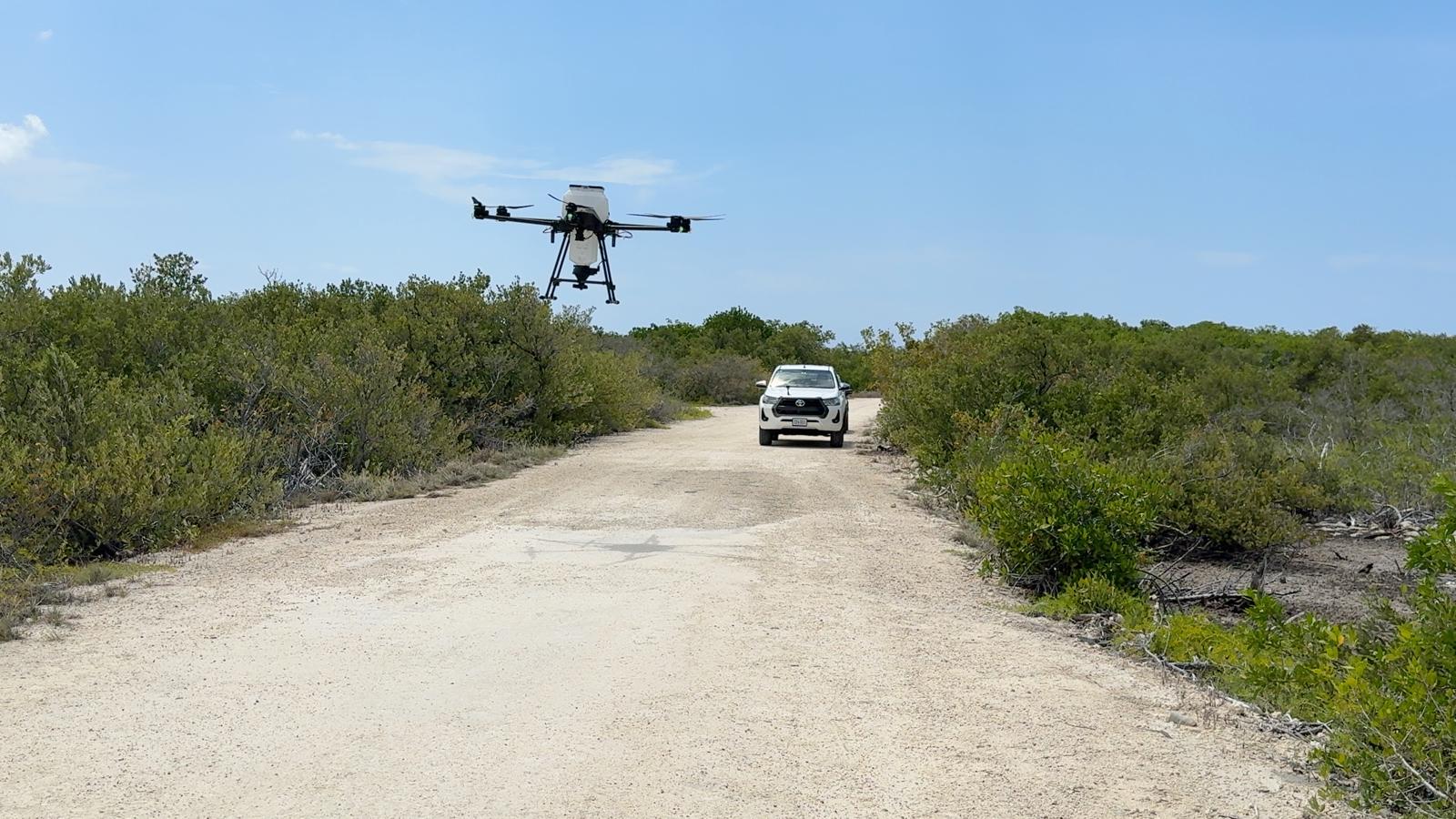
Earlier this week, the MRCU used a drone to treat a small, flooded area in West Bay, a site that would have been unsuitable for aircraft to treat because of its size and its location within a residential neighbourhood.
The drones will not replace fixed-wing aircraft, but instead strengthen the MRCU’s overall capability, allowing large-scale aerial treatment to continue while enabling highly targeted responses on the ground.
In November 2025, Parliament approved $1.8 million for a new MRCU fixed wing aircraft, acknowledging that the existing planes have exceeded their optimal service life. In a Compass article written at the time of the announcement, the MRCU said, “Aircraft remain the most efficient way to cover large areas affected by Aedes taeniorhynchus; the black salt marsh mosquito,” but drones will now fill an important operational gap.
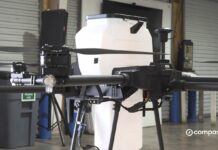
The MRCU currently operates two types of drones: a smaller platform used for mapping and assessment, and a larger application drone capable of carrying loads of up to 40 pounds of mosquito control products. At typical application rates, that allows several acres to be treated in a single flight.
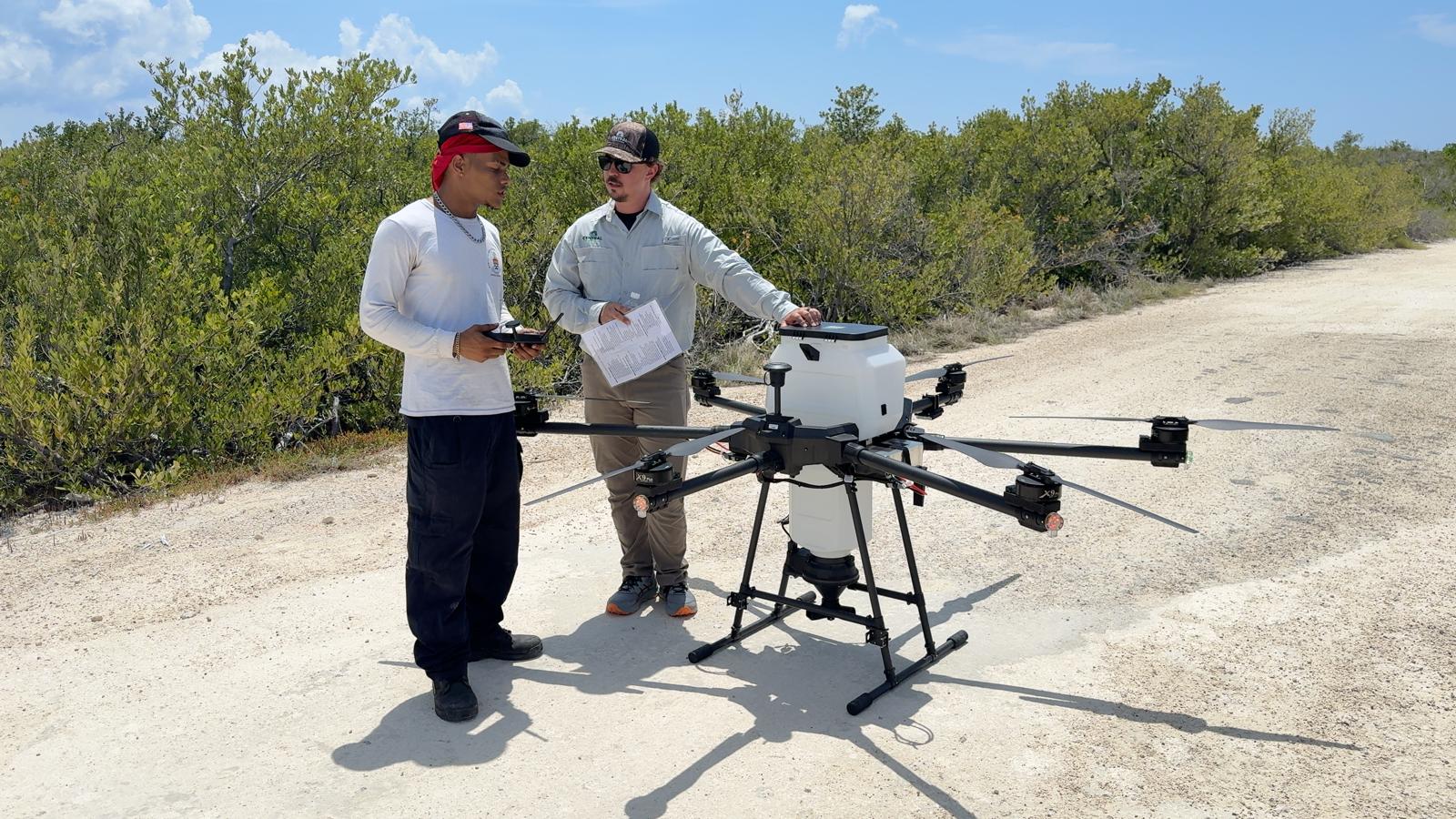
Training remains central to the programme. Drone pilots undergo rigorous instruction, including overseas certification, to ensure compliance with both Cayman and international standards.
This week, the MRCU has conducted additional training and calibration exercises to fine-tune equipment and pilot proficiency before wider operational use.
Related Videos