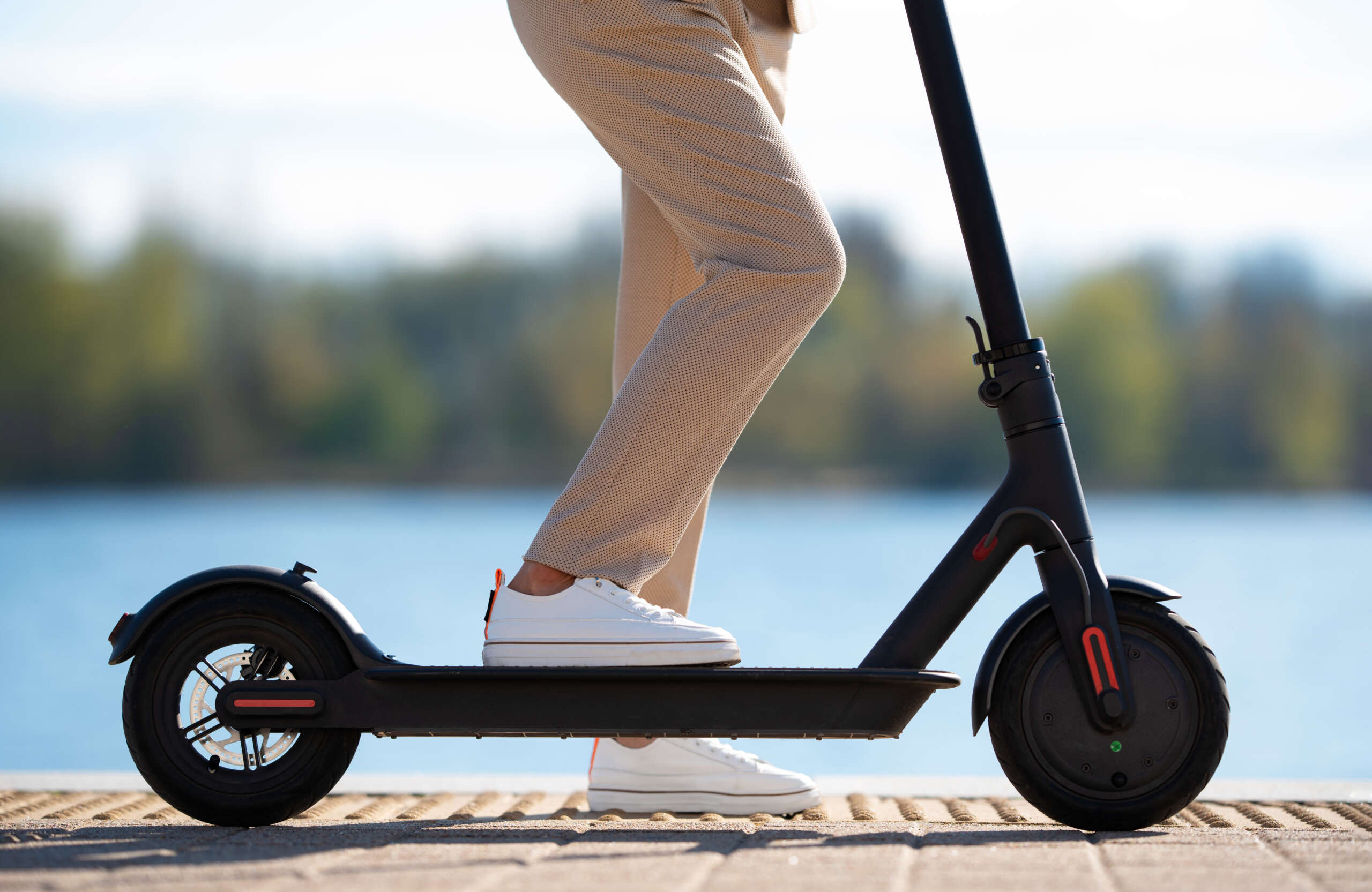
The National Road Safety Committee (NRSC), chaired by the chief officer of the Ministry of Planning, Lands, Agriculture, Housing & Infrastructure (MPLAHI), welcomed the announcement by the Royal Cayman Islands Police Service (RCIPS) confirming that the commencement of enhanced enforcement of existing legislation governing e-bikes, scooters and other micro-mobility devices will now begin on 1 March 2026.
The additional time is intended to support compliance by riders, owners and businesses, allowing sufficient opportunity to complete the required steps under the law, including securing insurance coverage, completing inspections, and finalising registration and licensing.
As part of its responsibility for oversight and coordination of national road safety efforts, the NRSC met on 11 Jan. with the Cayman Islands Insurance Association and participating insurers to clarify the application of insurance requirements for micro-mobility devices and to confirm the availability of coverage for compliant devices.
Insurance sector participants at the meeting included representatives from Caribbean Alliance, CG BritCay, ICWI, Cayman First, Saxon/Indigo, VRS representing Royal Star & Guardian, CINICO and Island Heritage.
During the meeting, it was confirmed that insurance coverage for compliant micro-mobility devices is currently available, including through Indigo Insurance, and that additional insurers are expected to come online in the coming days and weeks, subject to their individual underwriting processes. As with all motor vehicles, insurance availability depends on a device meeting the relevant legal and safety requirements.
As part of that engagement, the Department of Vehicle and Drivers’ Licensing (DVDL) has provided the Cayman Islands Insurance Association with the inspection and roadworthiness criteria applied to micro-mobility devices. This is intended to support consistency and clarity across inspection, insurance assessment and compliance processes. Under the Traffic Act (2023 Revision) and related regulations, micro-mobility devices that are mechanically propelled and used on public roads are treated as motor vehicles. To operate lawfully, riders must: be at least 17 years old; hold a valid Category 0 or Category 2 driver’s license; and ensure the device is roadworthy, insured, registered and licensed.
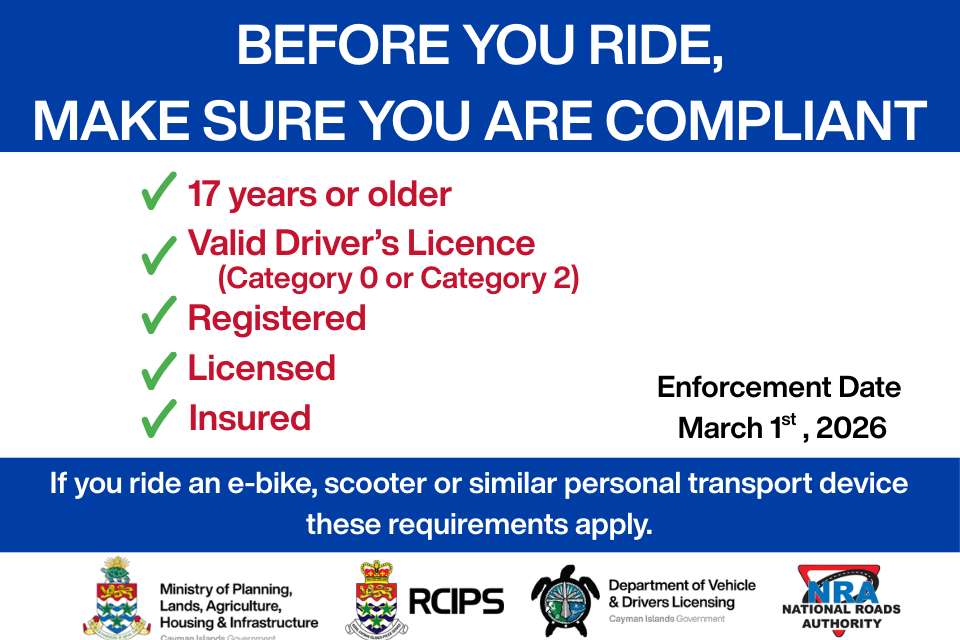
Insurance must be in place before a device can be registered or licensed by the DVDL. Any device not deemed roadworthy by DVDL must not be operated on public roads.
The NRSC emphasises that these requirements are not new, and that the phased approach to enforcement reflects a commitment to education, fairness and public safety. The increasing use of micro-mobility devices on Cayman’s roads has introduced additional risks for riders, pedestrians and other road users, making compliance with existing traffic laws essential.
The NRSC also reaffirms its support for the Commissioner of Police and the officers of the RCIPS, whose enforcement role is critical to improving road safety outcomes and helping to keep Cayman’s roads safer for everyone.
Members of the public seeking guidance on inspection, insurance, registration and licensing requirements are encouraged to visit the DVDL’ s website.
Related Videos