

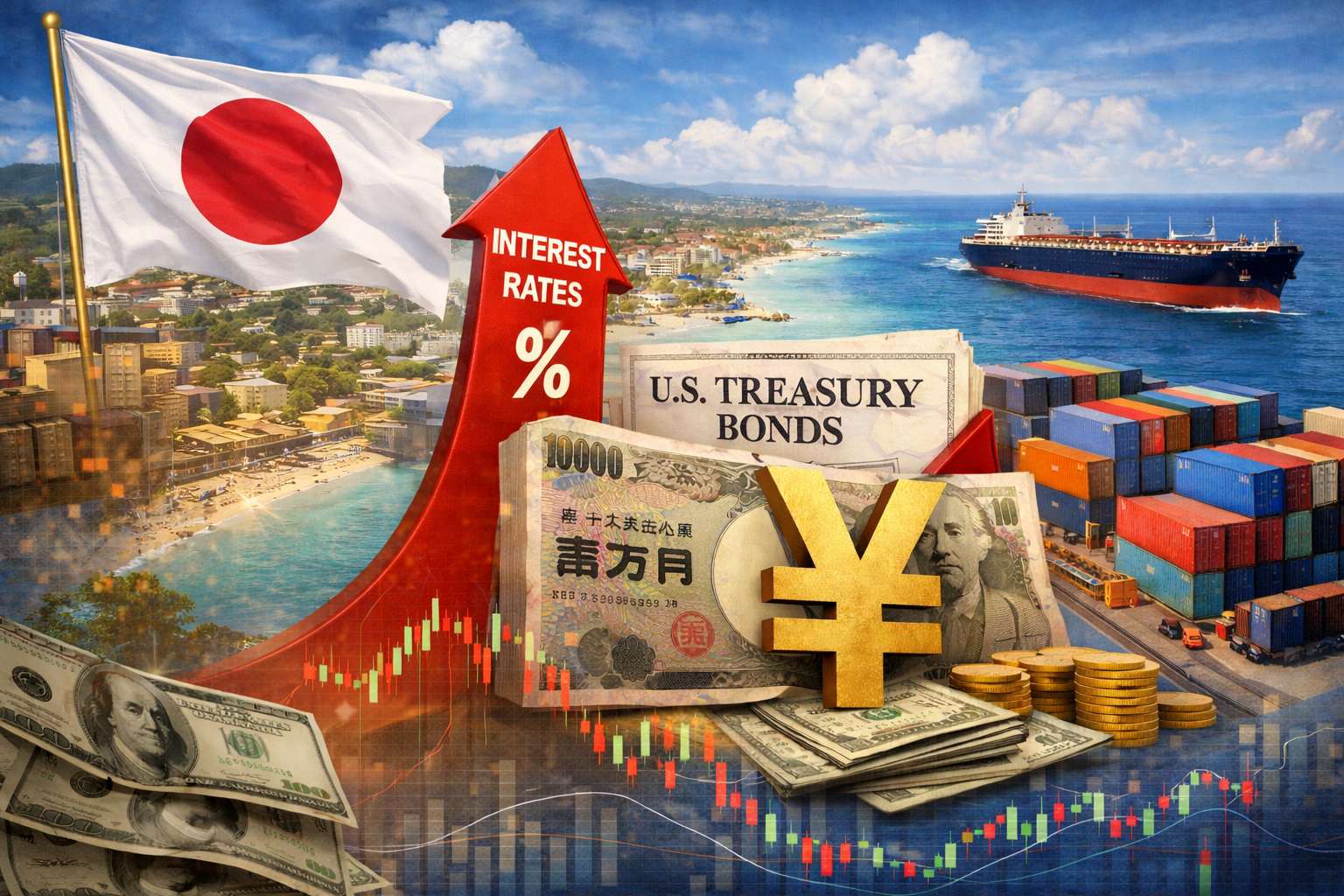

Japan’s 8 Feb. election wasn’t just a domestic political reset – it was a global market event. Prime Minister Sanae Takaichi’s Liberal Democratic Party secured a rare supermajority, winning 316 of 465 seats and giving her the mandate to move quickly on policy. The significance is that Japan has been the world’s anchor of ultra-low interest rates for decades. If that anchor begins to lift, even slowly, it changes the price of money everywhere, feeding through to places like Cayman that sit downstream of Japanese and US government bond markets and global trade flows.
Takaichi campaigned on cost-of-living relief and a more assertive growth agenda, including a politically popular two-year suspension of the 8% sales tax on food, yet relief packages are easy to announce and hard to fund when inflation remains sticky. Inflation has been above the Bank of Japan’s 2% target since 2022, compounded by a weaker yen. At the same time, the BoJ is no longer the unconditional backstop it once was. In December 2025, it raised the short-term policy rate to 0.75% – a 30-year high – and signalled it expects to keep tightening if its forecasts hold, with markets now openly debating whether the next hike comes as soon as April. In other words, Japan is walking straight into the modern policymaker’s dilemma – voters want relief, bond investors want discipline, and the central bank is moving away from emergency settings. The new government has a mandate, but the bond market still has veto power.
Japanese yields have already moved materially higher, but the offset has been a weakening yen, which keeps the incentive to earn returns abroad. The real inflection point is when the currency stops depreciating. If Japanese yields stay higher and the yen stabilises, the relative appeal of buying foreign assets for additional return shrinks. That does not automatically mean that Japan sells its US Treasuries, but it does mean the global demand curve can shift in subtle ways – exactly the kind that matters when the US is running large fiscal deficits and needs reliable debt absorption. If the US Treasury market weakens, almost everything reprices off it: mortgages, corporate borrowing, risk assets, and ultimately financial conditions can tighten for regular households.
What Cayman can learn from Japan
Cayman and Japan don’t share institutions, language, or size, but they do share vulnerabilities that matter economically – import dependence, energy exposure, and reliance on the US as a gravitational centre. Understanding how those pressures play out can help Cayman better navigate the economic cycle. Japan’s energy vulnerability is structural: it has low energy self-sufficiency and remains heavily exposed to global fuel markets and shipping routes, which feed straight into domestic inflation when the currency is weak. Cayman’s economic profile is similar: an import-heavy economy where the costs of energy and goods pass quickly into the cost of living, the US is also Cayman’s largest trading partner.
Cayman, like Japan, also has a new government and is leaning into capital investment and stimulus-style spending, but it’s doing it from a much cleaner starting point. Cayman’s 2026–2027 budget targets average debt-to-GDP of about 8.5% and allows up to $236 million of borrowing, explicitly ring-fenced for capital projects rather than operating costs. Japan sits at the other extreme – gross public debt is roughly 230% of GDP – but it also enjoys an advantage: the Bank of Japan has effectively absorbed around half of the debt, which has kept funding costs far lower than the headline debt ratio would normally imply.
Immigration policy is the other similarity. Japan’s long-term growth problem is demographics and labour supply; Cayman’s is capacity – housing, infrastructure, services – and social cohesion under rapid population growth.
Both are trying to manage inflation and living standards not just through demand but also through the supply side: who can work, where they can live, and what the economy can physically support. If Cayman tightens immigration while simultaneously pursuing fiscal stimulus, you can get a near-term sugar hit and a medium-term bottleneck – higher wages rather than higher productivity. Japan faces a similar risk: stimulus without credible productivity and supply-side reform can turn into higher prices and a more fragile bond market.
One major difference
Similarities aside, there is one major difference. Cayman doesn’t run an independent monetary system. With a US dollar peg, Cayman effectively imports US financial conditions. When US rates rise, Cayman’s borrowing costs and credit conditions tighten. When US inflation is persistent, Cayman feels it through imported prices. So, while Japan is trying to recalibrate the balance between fiscal stimulus and a tightening central bank, Cayman’s economic debate tends to be about fiscal policy, immigration, and supply-side capacity – because monetary policy is outsourced.
Japan is an unusually clear case study of the post-pandemic policy problem: can governments deliver cost-of-living support and strategic investment without undermining investor confidence as central banks step back from crisis-era support? If Tokyo overreaches fiscally while the BoJ keeps tightening, global yields can shift and volatility can rise; if that spills into US Treasuries, Cayman feels it through tighter financial conditions and a higher cost of funding local development. The chain from a Japanese election to a Cayman grocery bill isn’t linear, but it is real – energy prices, shipping, the US dollar and US bond yields are the transmission lines. Japan just reminded everyone that politics can still grab those wires.
Disclaimer: The views expressed are the opinions of the writer and whilst believed reliable may differ from the views of Butterfield Bank (Cayman) Limited. The Bank accepts no liability for errors or actions taken on the basis of this information.
Reece Jarvis is VP, Group Head of Fixed Income, Asset Management at Butterfield
Related Videos











Because Cayman effectively imports global inflation and foreign interest rates, our only real defense is local fiscal discipline and the creation of a Sovereign Wealth Fund. By keeping government small today and saving our economic surpluses like Norway has done, (also using this “ring-fenced borrowing” as it’s true future investment) we can permanently secure healthcare, pensions and productivity investments for Caymanians, creating a powerful and enduring buffer against the very international market shocks in this article.
This creates a powerful and enduring buffer against the very international market shocks warned about in this article. It won’t be a short-term sugar rush, but our children and grandchildren will thank us for it.
Cayman has a 2-point lead, don’t blow it.