

At a glance
- New bill broadens grandfather clauses following landmark immigration changes
- Pending PR applicants won’t be pushed to the new 20-year Caymanian status timeline
- Change clears up uncertainty for long-term residents
Government has tabled new amendments to the island’s immigration laws to allow more long-term residents to take advantage of “grandfathering provisions” before extended timelines on applying to become Caymanian are brought into force.
The changes seek to ensure that anyone who has a permanent residency application in motion before the new rules are brought into force will still be able to apply to become Caymanian after 15 years’ residence.
Under the reforms passed in December 2025, that threshold was increased to 20 years for long term residents.
Grandfathering restored
The headline change relates to transitional protections first debated late last year.
In December, Parliament approved the most far-reaching changes to the islands’ immigration legislation in more than a decade. The Immigration (Transition) (Amendment and Validation) Act, 2025, was originally intended to come into force under the new name of the Caymanian Protection Act on 1 March.
However, implementation has been delayed and government has gone out to consultation on a schedule of associated fees, while making fresh changes to the law.
The December reforms increased the residency requirement for applying for Caymanian status from 15 to 20 years. At the time, government indicated that people already on the pathway to permanent residence would be protected under grandfathering provisions.
However, two immigration lawyers told the Compass the final wording of the Act was significantly narrower than earlier drafts and excluded a large category of people from that protection.
The amended bill passed in December only grandfathered in people who already had permanent residence under the new timelines, excluding those with applications pending.
The new bill appears to correct that and widens protection to cover individuals who had submitted an application for permanent residence before the new rules take effect, provided the application is subsequently granted, ensuring they remain eligible to apply for Caymanian status after 15 years instead of 20.
That distinction is significant because of a backlog in processing permanent residence applications, which can stretch to close to a year. As a result, hundreds of long-term residents could otherwise have been caught by the extended 20-year requirement simply because their applications had not yet been determined.
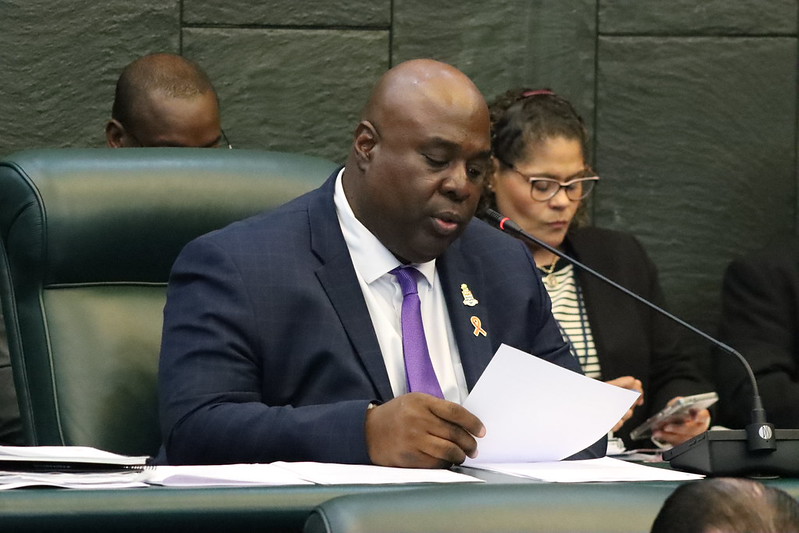
Immigration Minister Michael Myles said in a press release, “We want to honour the original intent of the legislation, which would allow persons who were on track and submitted their application at their appropriate timeline, [to] be processed under the law during the time of their submission.”
Caymanian status confers the right to vote, the right to own and operate a business, and greater freedom within the employment market, among other benefits. While permanent residency also confers significant rights, it restricts individuals to a specific profession and comes with annual fees that can run to tens of thousands of dollars depending on the job title or labour sector.
Alastair David, a partner at HSM who highlighted the discrepancy earlier this year, said the changes appeared to correct a potential injustice.
He said the new bill ensured “the extension of the grandfathering provisions to a wider class of people”.
David added, “Essentially provided that you have PR, or that you have applied for PR, you are now grandfathered in.”
The change also covers government against possible legal action.
A government press release said the changes were intended to protect the “legitimate expectations” of residents who had submitted applications under the previous 15-year rule and whose cases had not yet been reviewed by the Cayman Status and Permanent Residency Board.
The protections also extend beyond permanent residence applicants to certain holders of Residency and Employment Rights Certificates – including spouses of permanent residents – as well as some adult dependents and asylum recipients with indefinite leave to remain.
Express work-permit lane
The bill also establishes a clear statutory basis for expedited work-permit processing. It allows government to prescribe additional “express” fees for faster handling of applications.
The details of how that process will work and which businesses or sectors will be able to take advantage of speedier service will be set out in accompanying regulations.
Premier André Ebanks has previously indicated government was considering a fast lane on permits for businesses that proved they were doing their part to develop and promote Caymanians.
He told the Compass earlier this month that government was seeking to make Workforce Opportunities and Residency Cayman – WORC – and immigration more efficient for businesses as well as better for Caymanians.
“Can we then offer an accreditation system, which has been talked about for ages, to say that these are our good actors? Let’s give them the express lane.”
The legislation also validates the collection of express immigration fees that had previously been charged, for temporary permits, apparently without explicit statutory authority under the Act.
Pre-1977 Caymanians
The amendments also insert a new category of “Caymanian as of right”, formally recognising individuals born in the Islands on or before 26 March 1977.
Immigration Minister Myles said research had determined that earlier nationality statutes historically governed when birth in Cayman conferred status. The exception, he said, was a cohort of approximately 2,618 people born in the Islands between 1 Jan. 1969 and 26 March 1977, for whom no specific statute applied.
Myles said the change would positively impact “all these persons and all of their legal dependents”.
Related Videos













“Premier André Ebanks has previously indicated government was considering a fast lane on permits for businesses that proved they were doing their part to develop and promote Caymanians.”
How about just working efficiently in the first place? No need or excuse for long delays.
I spoke with a family who had been here 7 years on island and can’t put in PR yet. They are likely to be screwed over. They were debating on where to live next because they never planned to be blind sided by this government. While it’s a nice gesture, it’s not that impressive because people came to island and were told one thing. Then overnight everything changed to the point they probably would have never came in the first place.
We find ourselves in this position. My family and I are incredibly thankful for the life we’ve built here since 2020. We’ve tried to be ‘all in,’ staying through the quiet years of the pandemic and doing our part to support local businesses when there were no tourists. Like many who arrived to help strengthen the financial sector during the Grey List era, we’ve grown to love these Islands deeply while contributing to the economy and the community in a meaningful way.
I mainly struggle with what this means for my kids. They were born here and know no other home, yet they now find themselves at a disadvantage regarding their path to status compared to children whose parents may have arrived only a year ago and already secured permanent residency through property investment.