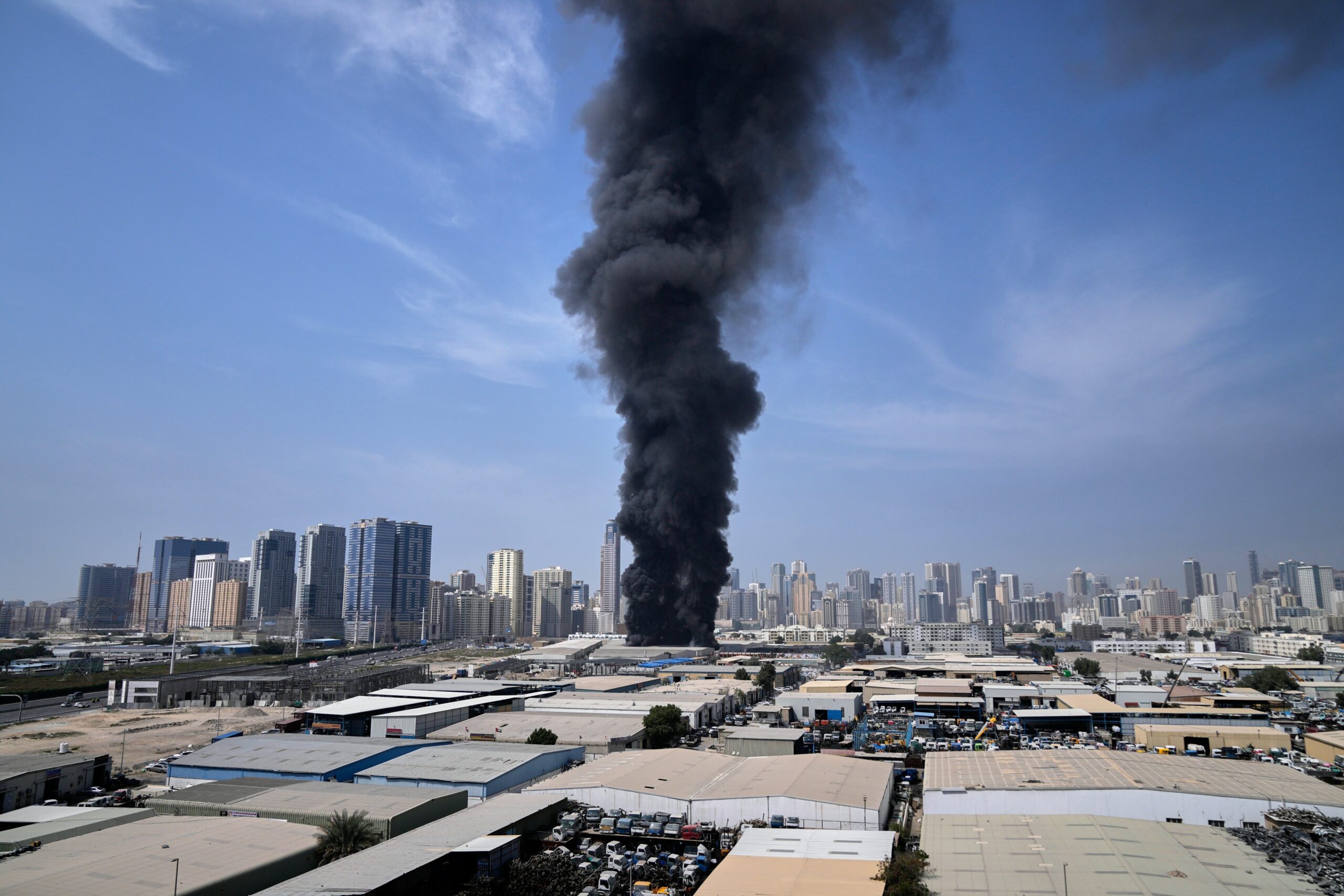
Dramatic footage of Iranian missiles flying over Dubai’s skyline has upset the financial centre’s carefully cultivated image. Yet despite Iran launching more explosives at the United Arab Emirates than Israel, well-placed sources told the Compass that financial firms in Dubai have maintained operations.
“At the moment it’s more or less business as usual despite the difficulties that people on the ground are facing,” said Ingrid Pierce, global managing partner of Walkers, a Cayman-headquartered international legal and financial firm that has an office in Dubai.

“The DIFC [Dubai International Financial Centre] Registrar is open physically, although the government advice remains for people to shelter in place and stay at home,” said Pierce, who noted that Walkers’ staff members are working remotely but operations continue.
“Our foremost priority is the safety and wellbeing of our people in Dubai,” said Pierce. “We remain in close contact with the teams and continue to follow all official guidance.”
Tim Furey, CEO of Tradeview Markets, a Cayman-headquartered financial markets broker-dealer that also has an office in Dubai, said that some of his international staff had chosen to leave but that “our operations haven’t been affected.”
One factor that both Furey and Pierce highlight is that Dubai locals and long-term residents are already accustomed to some level of geopolitical upheaval.
“People have gone through a number of issues in the past – not just economic, but because of geopolitical tension or violence in the region – so they’re pretty robust,” said Pierce.
“The people in Dubai are resilient because they’re outside enjoying life, drinking coffee and watching the missiles go overhead,” said Furey.
Reaction
The scale of Iran’s attacks on the UAE has caused some commentators to predict the country’s status as an international financial centre will suffer. “The UAE spent decades fostering Dubai’s global reputation as an oasis of stability, and that reputation is a keystone of the UAE’s economic approach,” wrote Allison Minor for the Atlantic Council. “But that reputation is also a considerable vulnerability for a country that sits only several dozen miles from Iran.”
Yet Pierce said, “it’s too early to say what the impact of the war is going to be – it’s really early days.”

Furey’s opinion of Dubai also remains unaltered by the war. “No, [the war] doesn’t change my perception of Dubai as a place to do business whatsoever.” He said that in the short term the market upheaval creates opportunities for the ‘day traders’ that his company serves. “When you see volatility in markets – oil prices moving, stocks moving, currencies moving – traders become more active. From our Dubai office we have many traders and we’ve actually seen increased inflows of money.”
Meanwhile Pierce, whose firm has a completely different client base, noted that it’s too soon for longer-term players to start making decisions about Dubai. “If you’re trading securities or commodities, you might think about what stocks you want to be in. But in terms of making major decisions to alter portfolios, the clients we’re speaking to are not taking short-term decisions. They may also be invested in something for a longer duration anyway, which makes it difficult to redeem unless you take a haircut.”
Of course, the extent of potential damage caused by the war, be it directly to Dubai, or even indirectly to far-away Cayman through higher fuel prices, depends on the conflict’s duration. It’s impossible to know how long the war will continue, yet Furey is taking his cue from the markets.
“When I look at the [financial markets] charts, it’s telling me one to two months max,” said Furey. “Wall Street – meaning the markets from the way I see them reacting in the past two days [10 March] – feels it’s going to be short-lived, so one to two months.”
“I’m sure [Dubai] will bounce back and get through this in the way that we expect them to,” said Pierce. “But as I said, it’s early days.”
Related Videos