International natural gas and crude prices rose on 2 March as Iran began targeting energy infrastructure in the Middle East.
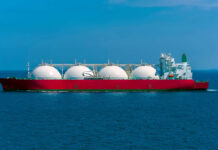
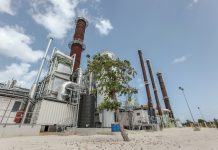
Oil refineries in Saudi Arabia and Kuwait were struck by Iranian drones, causing a partial shut-down in Saudi Aramco’s Ras Tanura plant. In Qatar a drone strike shut down Qatar Energy’s massive Ras Laffan LNG complex. The strikes are significant because Saudi Arabia is the world’s second-largest producer of oil while Qatar is the third-biggest source of liquefied natural gas.
The impact of those strikes on global energy markets was compounded by Iran’s announcement that it would close the Strait of Hormuz to international shipping. Roughly 20% of the world’s oil, and about 20% of its LNG, passes through the strait and its closure would leave much of the region’s oil and gas production stranded locally, unable to reach international markets.
Unsurprisingly, oil and gas prices responded to Monday’s dramatic developments. The global crude oil benchmark, Brent, briefly went above $82 per barrel on 2 March, up 13% from $72.50 per barrel before the US and Israel attacked Iran. At time of publication, Brent stabilised at around $78 per barrel, an increase of 8%.
The price increase for natural gas was more extreme. Natural gas futures rose by approximately 40% in both Europe and Asia on 2 March. Europe had turned to Qatari gas in an effort to wean itself off natural gas piped in from Russia following that country’s invasion of Ukraine. But the impact in North American natural gas markets was more restrained with a rise of around 8%.
Impact on Cayman
The islands are heavily exposed to products made from crude oil, such as petrol and diesel, because in addition to transport use, Cayman also generates most of its electricity from diesel oil. A CUC report notes the “Our generators consumed approximately 40.6 million gallons of diesel fuel and 109,833 gallons of lube oil in 2025 to meet electrical demand.”

“CUC’s largest generating units operate on diesel, which means the company is closely tied to global fuel price movements,” said the company’s VP of Energy Operations Stephen Jay.
“Although CUC does not source fuel directly from Middle Eastern producers, the region’s production decisions and geopolitical stability play a major role in shaping the global crude market that ultimately drives the cost of refined diesel. Because of this, fuel prices in Cayman tend to move in step with broader international market trends,” said Jay.
The global energy increases will also have less obvious impacts on Cayman, said Simon Cawdery, a director at HLX Management. “The cost of shipping increases – as fuel is a major cost of shipment, while the cost of electricity rises so overheads of companies rise, so they have to increase costs.”
All of this will combine to push up inflation in Cayman. It “will be bad news for consumers in Cayman from a pure economics perspective”, said Cawdery.
However, there are some silver linings for Cayman, said Jay. “While crude oil prices have increased recently, current market conditions for diesel show only a small increase.”
Unlike Europe or Asia, Cayman is not a heavy user of natural gas, which insulates it from the most extreme price increases. Although there is some domestic and industrial use, the fuel isn’t used for power generation or road transportation.
Another factor cushioning Cayman is that, despite starting the conflict, the US has so far suffered little economic impact. The US is a net energy exporter, which means it won’t be hit by rising import bills. Moreover, its companies are less exposed to oil and gas price shocks, with key US stock markets, such as the S&P 500 rising slightly on Monday.
Related Videos