A legal dispute involving Polish billionaire Zygmunt Solorz could create opportunities for Cayman.
Solorz controlled his sprawling Polish business empire, which includes one of Poland’s largest TV networks, through Liechtenstein foundations. According to media reports, in 2022 he inserted a mechanism into the statutes of those foundations that would allow him to transfer control to his children while he was still alive.
The Financial Times reported that Solorz first transferred some control to his children in 2023, but revoked the transfer months later.
In August 2024, he signed a new declaration transferring control, but when he later tried to revoke the declaration, it was contested by his children. The ensuing legal battle saw a Liechtenstein court rule against Solorz in May 2025 and then again in December 2025 when Liechtenstein’s High Court rejected his appeal.
A key aspect of the case is that Solorz reversed a similar transfer in 2023 without challenge, but his attempt to do so in 2024 failed after his children contested it.
Experts contacted by the Compass believe the case exposes an unpredictability in Liechtenstein foundation structures that could worry other ultra high-net-worth individuals.
Solid foundations
Lawyers interviewed for this article were keen to emphasise that they couldn’t pass judgement on whether the Liechtenstein ruling was correct or incorrect. Yet they believe a similar outcome would be less probable in Cayman, underlining the jurisdiction’s strength as a hub for private wealth.
“This would be far less likely to happen with a Cayman foundation because our legislation provides for great freedom in the way they are drafted, meaning they are generally prepared with appropriate checks and balances between founders, directors and supervisors,” said Shelley White, a partner at Walkers in the Cayman Islands who specialises in insolvency and dispute resolution.
Another reason is that, unlike Liechtenstein, which has a legal system based on civil law, Cayman is governed by common law.
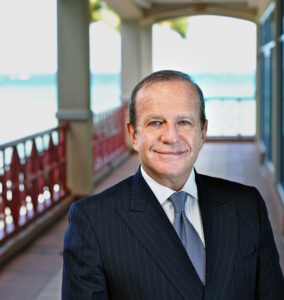
“Lawyers from common law jurisdictions have consistently voiced concerns over many decades about grafting trust structures into civil law and particularly European jurisdictions,” said Anthony Travers, a senior partner at the law firm Travers Thorp Alberga, who played a key role in establishing Cayman’s financial services framework.
“Using past precedent as a predictor of future outcomes is a key tenet of common law jurisdictions, such as the Cayman Islands, and so may give more comfort to founders and settlors when choosing their jurisdiction,” said Ben Palairet, head of Europe and strategic partnerships for Global Partnership Family Offices.
White agrees, noting that “Civil law jurisdictions do also use previous cases, and treat them as persuasive, but they are a bit less important there because they rely more heavily on their legal codes than prior case law.”
In addition to precedent, there is another reason why common law jurisdictions may prove more attractive to trust founders, says Travers. “Civil law jurisdictions and their judiciaries tend to favour the inheritance and forced heirship laws of the domicile of the settlor over and above the dispositive provisions of the trust.”
Travers adds that “Civil law jurisdictions in general allow for greater judicial discretion, which can result in less predictable outcomes.”
Experts cautioned that it’s too soon to expect any sudden outflow of billionaires from Liechtenstein. Yet Travers believes that “for international families, situations such as the recent case in Liechtenstein reinforce the importance of selecting jurisdictions with a demonstrated history of readily available, predictable and transparent judicial outcomes”.
Related Videos