By Cayman Compass contributor Christopher Tobutt
By the time the final evening of CayMusicA’s SoNoRo Chamber Music Festival reached Elmslie Memorial United Church, the music felt like a river that had been gathering for centuries. Not just over the past four days – though the concerts at the George Town Public Library, St George’s Anglican Church, and Cayman Prep Primary School had already formed their own bright tributaries across whole landscapes of history. Moldavian folk springs, Germanic Romantic torrents, Eastern European currents of dance and lament all seemed to converge here, at the finale, as if the audience was standing on a bridge watching the waters meet.
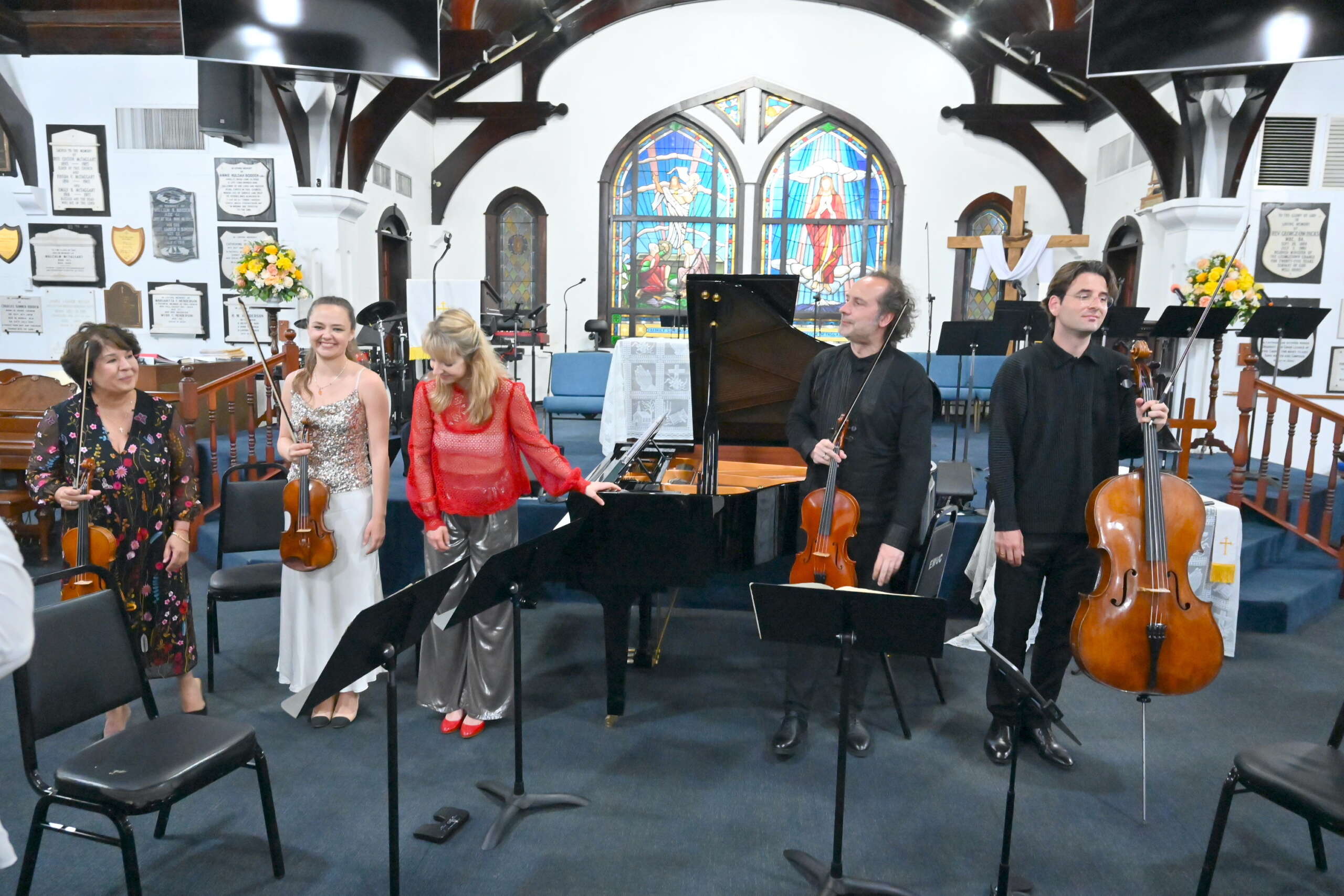
The first notes of Richard Strauss’s youthful piano quartet pieces – “Ständchen Seranade” and “Arabian Dance” – set the flow in motion. They shimmered with the innocence of a composer still discovering his voice, and the musicians played them with that same sense of fresh possibility. Alexandra Conunova and Mihaela Martin’s violins glinted like sunlight on water, Razvan Popovici’s viola added a mellow undertow and Glenn Inanga’s piano kept the current steady. The river beckoned gently: Come with us; there is more ahead.
Then the waters darkened. Valentin Răduțiu stepped forward for the finale of Strauss’s “Don Quixote”, and suddenly the river deepened into something ancient and human. His cello entered like a breath remembered from long ago – tender, resigned, full of the knight’s fading dreams. Each phrase felt like a leaf drifting past on the river, carrying stories of battles imagined, ideals cherished, hopes never quite fulfilled. Inanga’s piano held the space with quiet dignity. Together they created a still pool at the river’s centre, where time slowed to a stop and the audience leaned in, listening for something beyond the notes.
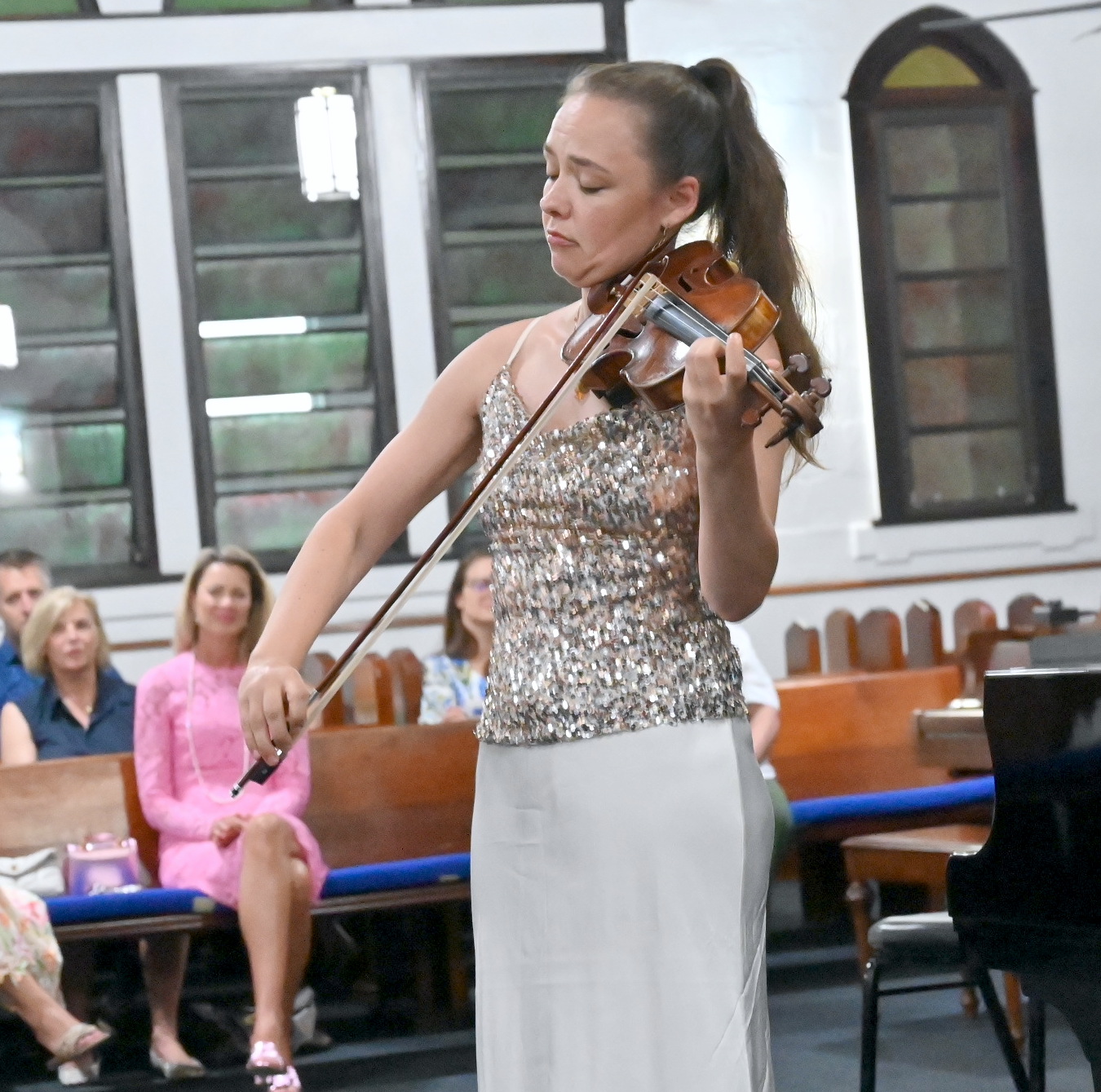
But the current was not finished with us. Conunova returned for Mieczysław Weinberg’s “Rhapsody on Moldavian Themes”, and the river suddenly flashed with fire. She spoke briefly of her homeland, and then the violin erupted into life – sharp, swirling modes, open string drones, rhythms that felt older than memory. These were the folk springs, the mountain streams, the dances of villages long vanished yet somehow alive in her bow. The music didn’t just flow; it surged, stamped, laughed. The river was wild now, unpredictable, full of colour – the full spectrum of life.
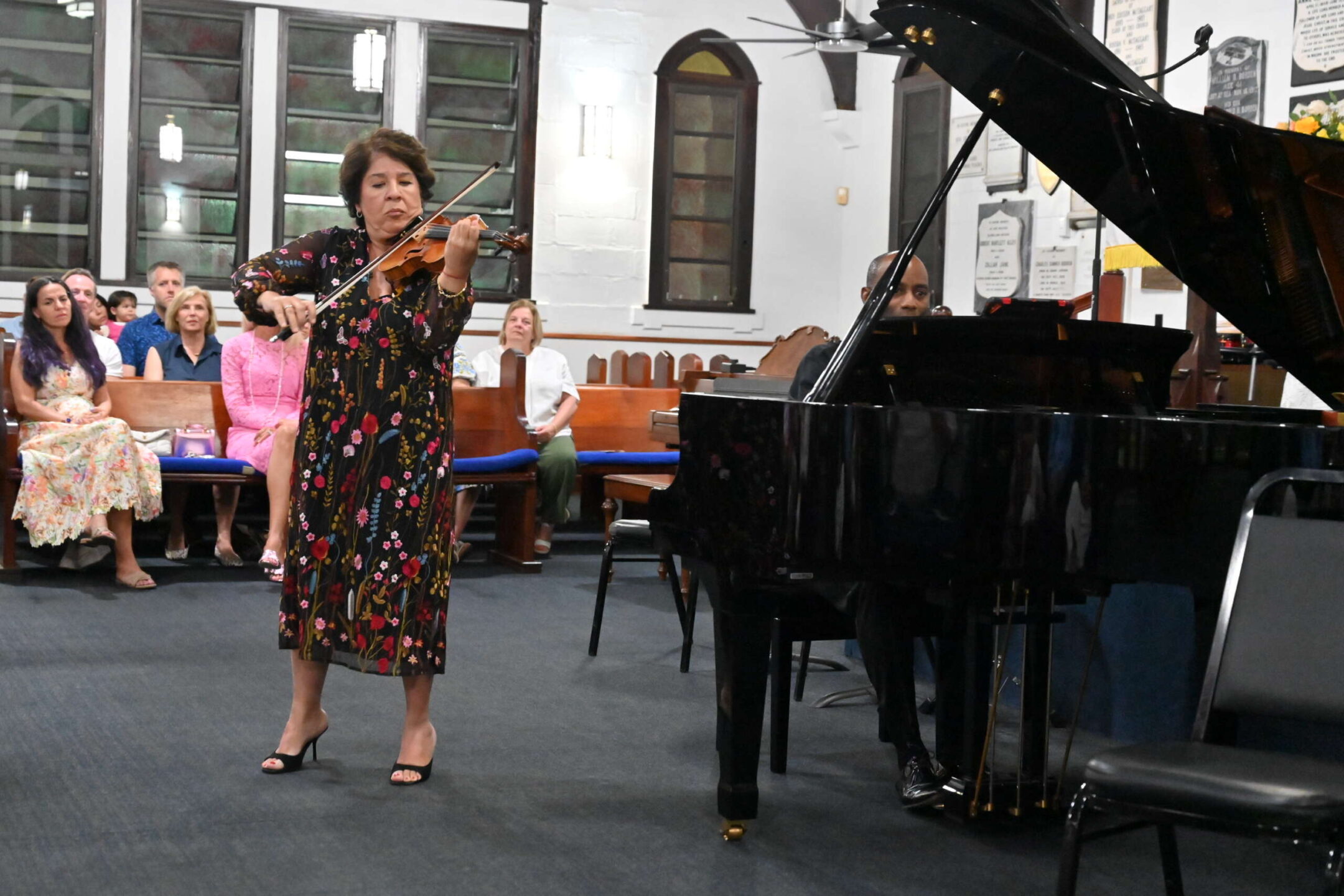
From that blaze, the evening widened into Ciprian Porumbescu’s “Ballade”, played by Martin and Inanga. Here the river became broad and lyrical, a place of open sky. Martin’s violin sang with a warm, human voice, and Inanga’s piano moved beneath it like a soft current. It felt like rediscovering a letter written generations ago – tender, nostalgic, quietly glowing.
Then came the playful rapids: Halvorsen’s “Sarabande con variazioni”, with Conunova and Popovici sparring and echoing through virtuosic twists. An intricate conversation too deep, subtle and nuanced for mere words. The river sparkled; the audience smiled.
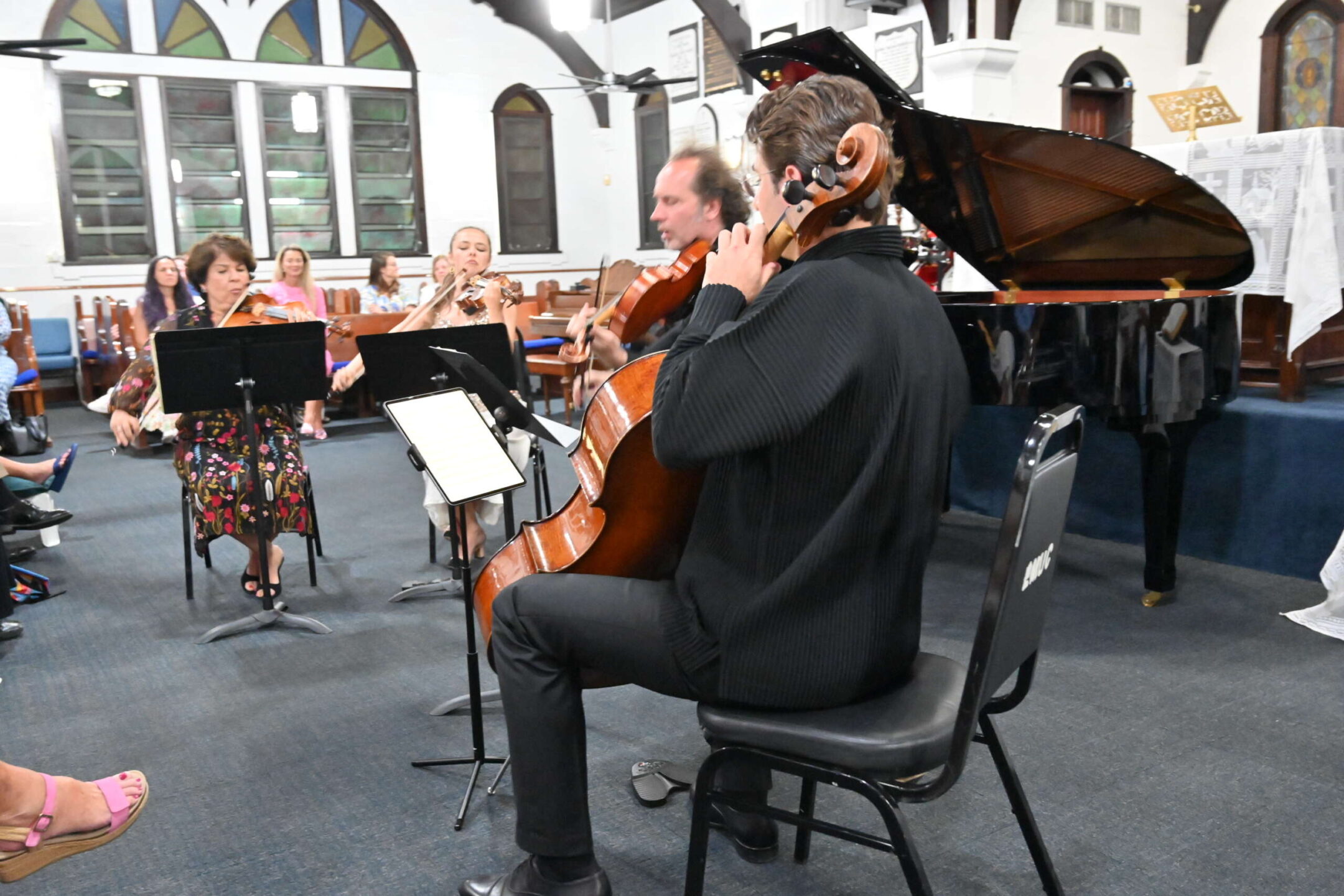
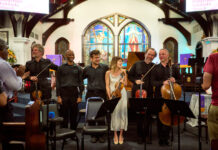
And finally – the great confluence. All five musicians gathered for Brahms’s “Piano Quintet in F Minor”, a work that feels like the whole river system arriving at once. From the first bars, the sound surged with symphonic force. Lise de la Salle’s piano drove the music forward, the strings rising and falling around her like waves. The slow movement glowed; the Scherzo thundered; the finale swept everything before it in a final, exhilarating rush.
When the last chord landed, Elmslie Memorial United Church had become an enchanted bridge, the river had passed beneath us – centuries of music, thousands of lives, a multiplicity of landscapes filled with hills, forests, cities and the ruins of forgotten empires, all crystallised by the magic of music into one unforgettable moment. And we were there to witness it.
Christopher Tobutt is a freelance journalist who has written for various publications in the Cayman Islands since 2003.
Related Videos