

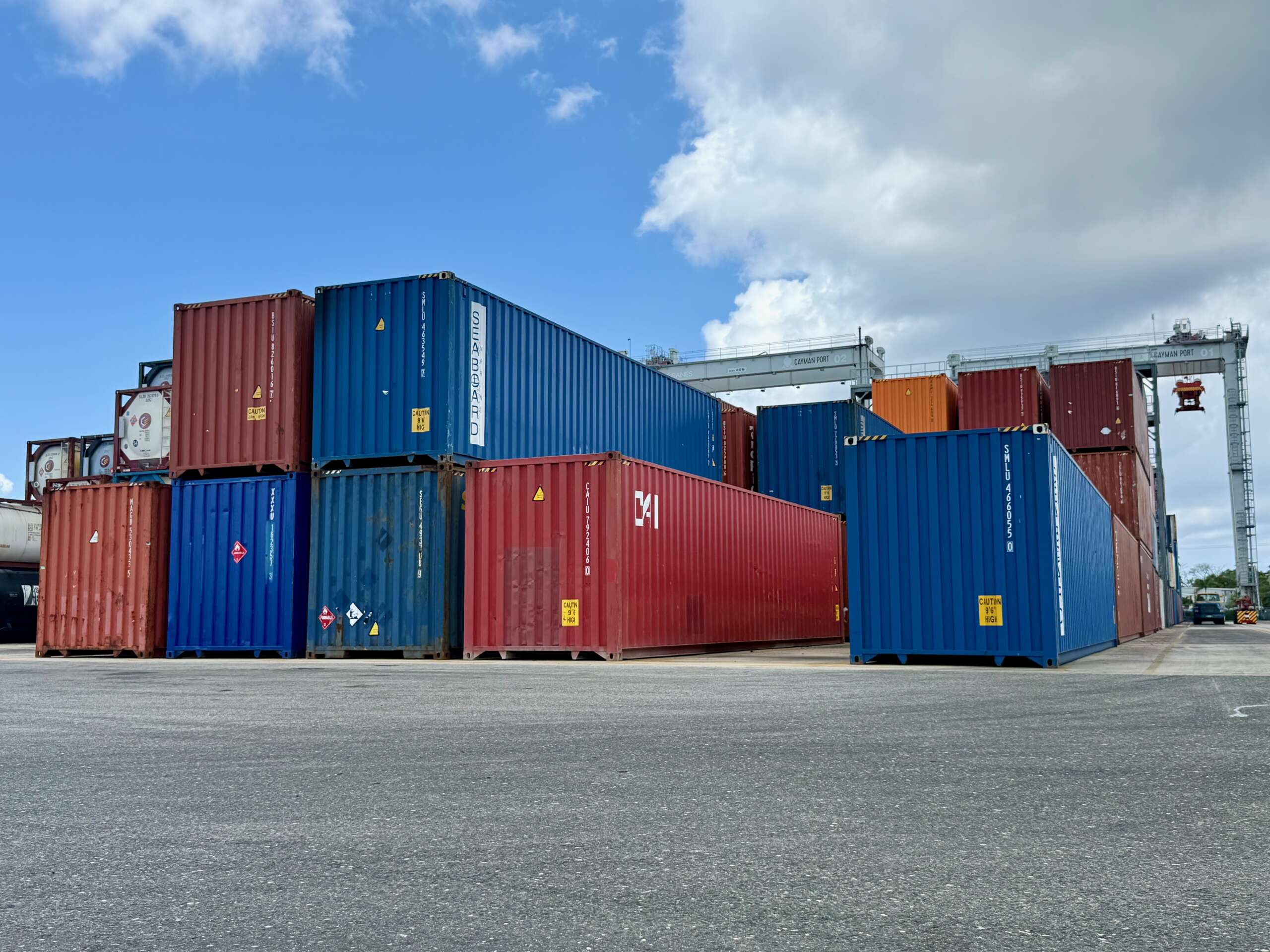
Cayman needs a long-term national infrastructure plan that can survive changes in government, experts and political leaders believe.
The accumulated infrastructure investment required across the cargo port, airport, landfill, roads, energy transition and submarine cables now runs well into the billions of dollars.
And previous efforts to tackle many of these problems have floundered as the clock ran out on their political champions.
Cayman’s annual government budget for capital spending is typically between $100 and $200 million. Given those limitations and the length of time required for legally mandated business cases and open bid processes, tackling even one major project in a four year political term is challenging.
Sam Story, a managing director at financial advisory firm Teneo in the Cayman Islands, said a long-term national development and infrastructure plan that spanned political administrations could be a valuable tool in ensuring progress.
The Cayman Islands Framework for Fiscal Responsibility sets borrowing limits and impacts Cayman’s capacity to self-fund large infrastructure projects.
Story, who has worked on multiple business cases for large capital projects in the Cayman Islands and the wider Caribbean, says that public-private partnerships can unlock funding that government cannot provide alone.

But they come with some trade-offs.
He said PPPs don’t remove the need for governments to fund projects altogether. While they may remove the burden of high upfront capital costs, ultimately the private partner needs to recoup its initial investment along with a meaningful return.
“The model works best where there are new revenue streams created by the project as well as the potential for growth,” he said.
The best case scenario projections in the cancelled cruise project, for example, suggested the funding would be heavily supplemented by increased per-head fees from an increased number of tourists.
For assets such as airports, which do generate revenue, the barrier to using PPPs to finance development can be strategic and political rather than financial, he said, with governments sometimes reluctant to hand control of a strategic national asset to a private operator.
That aligns with comments from Infrastructure Minister Jay Ebanks, who indicated this was a concern for Cayman, stating PPPs were a strategy he was happy to pursue for general aviation but not for the main terminal.
While airports and cruise docks have revenue streams that make them attractive to private sector partners, government schools, roads, landfills and sewage systems, particularly in island contexts, can struggle to generate sufficient revenues in their own right to cover costs.

There is potential for revenue-generating solutions, says Story, but these can involve measures such as toll roads, congestion charges or waste collection and processing fees, which also impact the cost of living for the public.
Story added, “Successful examples of PPPs are typically highly collaborative in approach and are often guided by a central and overarching PPP framework.”
Opposition asks, ‘where is the plan’?
Opposition leader Joey Hew, himself a former government minister, acknowledges the pattern of deferred decisions and rolling deadlines predates this government.
But he argues his PPM administration was close to a solution on the landfill, had a plan in place for the port that included cargo and would have made greater inroads elsewhere but for the COVID-19 outbreak. He criticised the current government for leaving out many of the key projects entirely from its thinking.
“I don’t think they had a clear plan on what infrastructure – other than the East-West Arterial – they identified as priorities,” he said.
Story, Hew and Ebanks all arrive at the same conclusion. Cayman needs a national infrastructure plan – a binding, cross-government framework that prioritises projects by urgency, identifies funding models in advance, and survives changes of administration.
Without it, every government starts from scratch, inherits other people’s half-completed business cases, and spends its capital budget on whichever project has political momentum rather than the one the islands most urgently needs.
Hew said government should collectively “develop a long-term plan, which would have to be reviewed every few years”.
Ebanks acknowledged the same gap and said it was being worked on as part of the Plan Cayman process.
Simon Townend, head of advisory for KPMG’s Islands Group, made the same suggestion to the Compass in 2020 at a time when the island was rethinking its approach in the pandemic lull.
“In many ways, it would be perfect timing for a country like Cayman to think about a strategic infrastructure plan for the next 20 to 50 years.
“What can happen if there is a lot of residential and commercial development going on, and you don’t have a national plan in place for infrastructure, is that you can find yourself behind the eight-ball.”
Related Videos










The issue is the government relies heavily to tax experts on import duties, work permits, and licensing, yet they’re pushing them out at the same time hence I foresee revenues dropping in the coming years. Cayman in this becoming more and more expensive to live and more unfriendly to expats every single day.
We need the branches of government charged with building and constructing port infrastructure and the landfills to run more like our NRA. Look to every other Country in the World (let alone the Caribbean) and see how long and expensive it is to build roads. Here Road magically get done and they are all amazing.. The NRA is outstanding. Let’s run the other branches of government in charge of future infrastructure like them.