

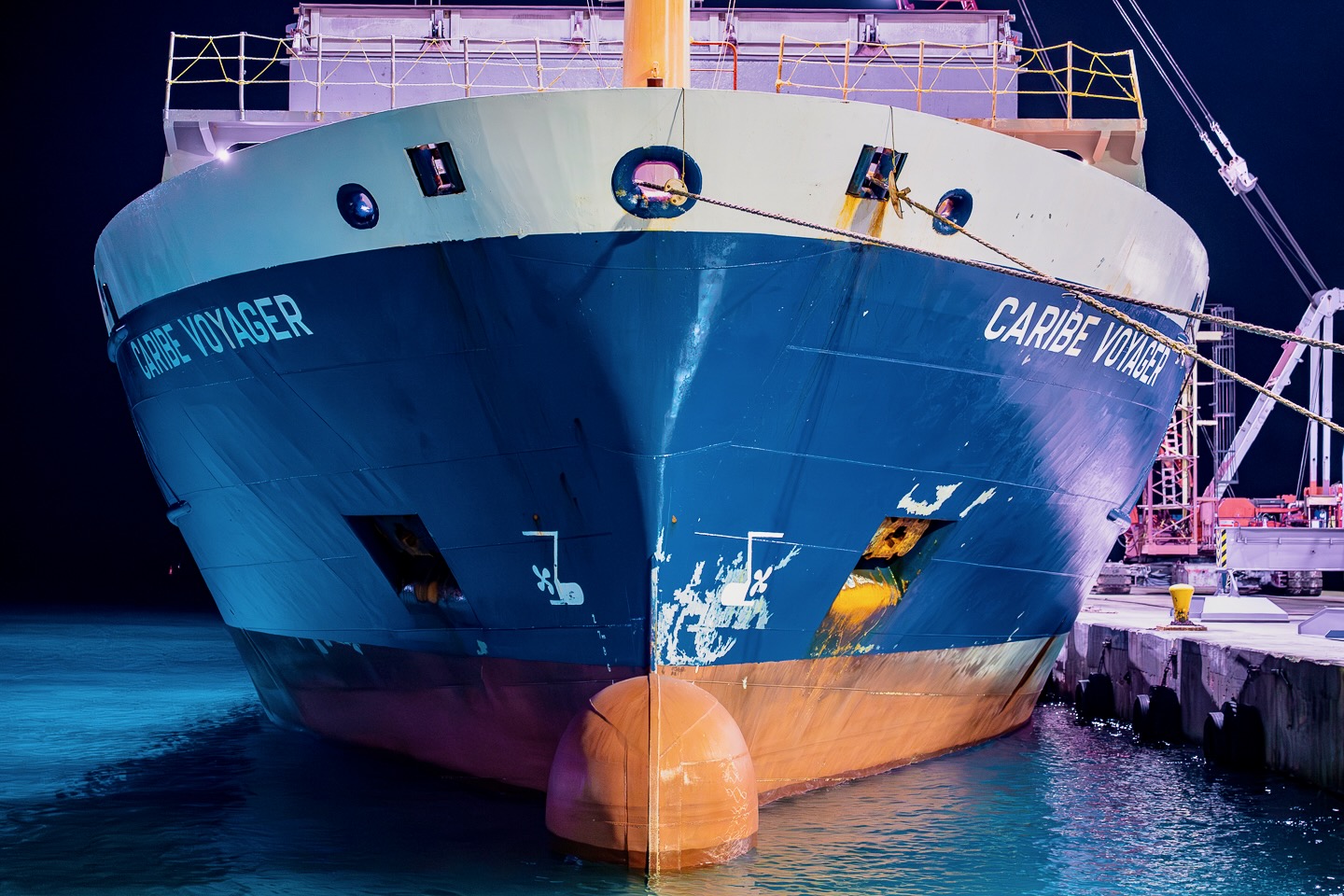
Cayman’s port is running out of space and will struggle to manage the volume of imports if the islands continue to grow.
The Cayman Compass spoke to government and port officials about the challenges on the waterfront and why solving the cargo conundrum could be a $500 million problem.
What is the issue at the cargo port?
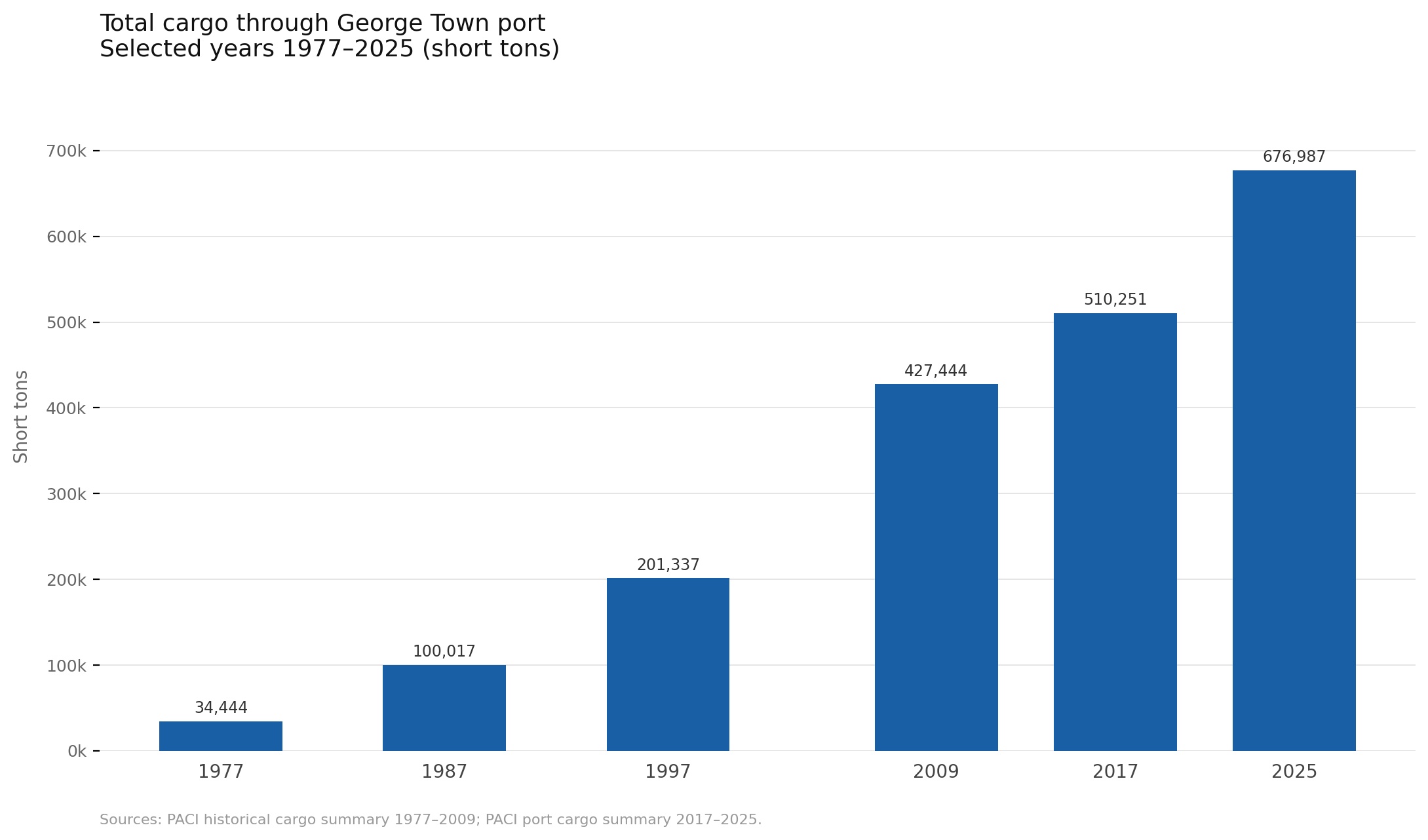
The port was built in the mid-’70s when Cayman’s population was around 15,000, and the level of imports reflected that. In the half-century that followed, Cayman has grown to a business and tourism hub of more than 90,000 people.
“We’re handling probably 10 to 15 times the cargo that the port was built for,” Port Director Paul Hurlston told the Compass.

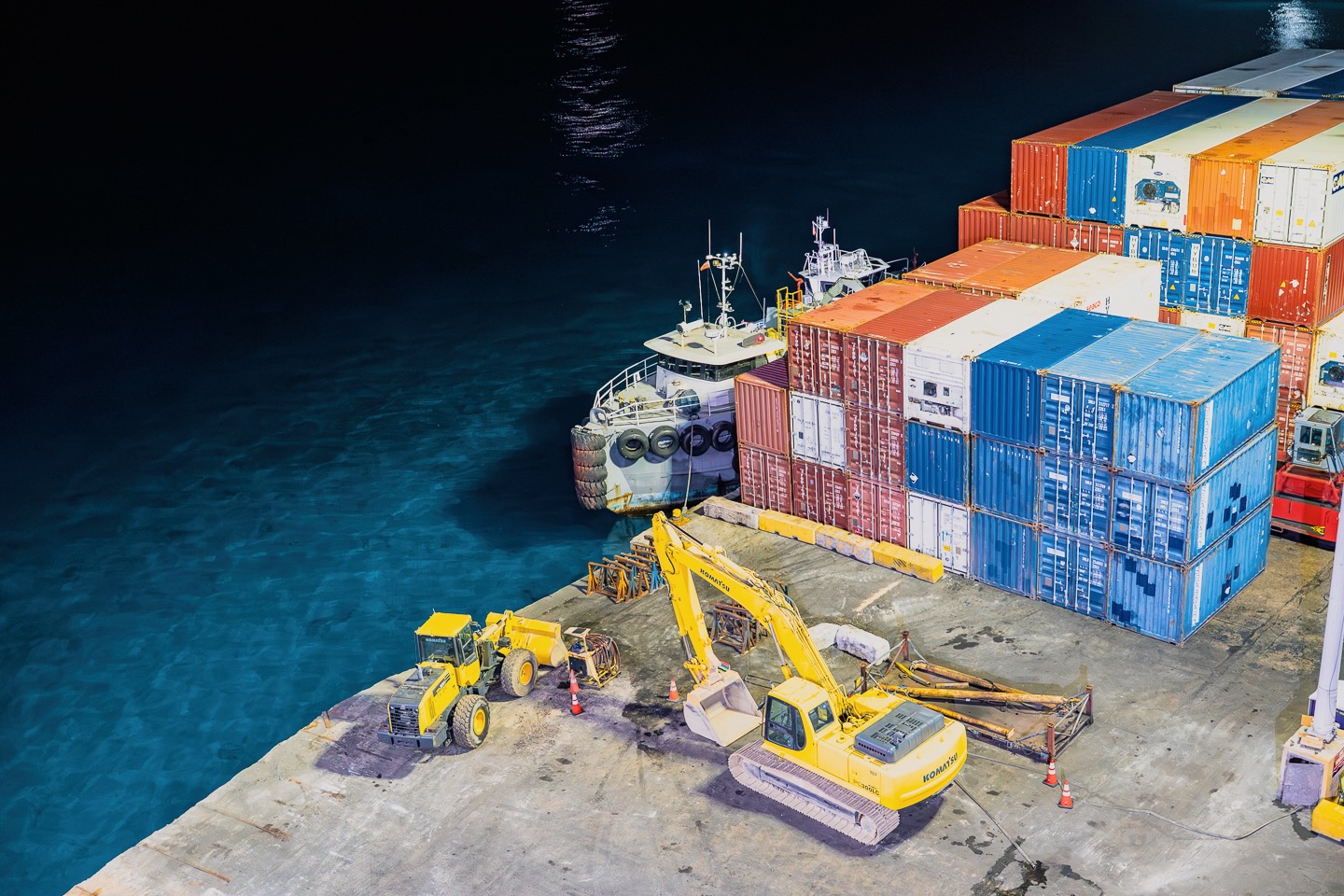
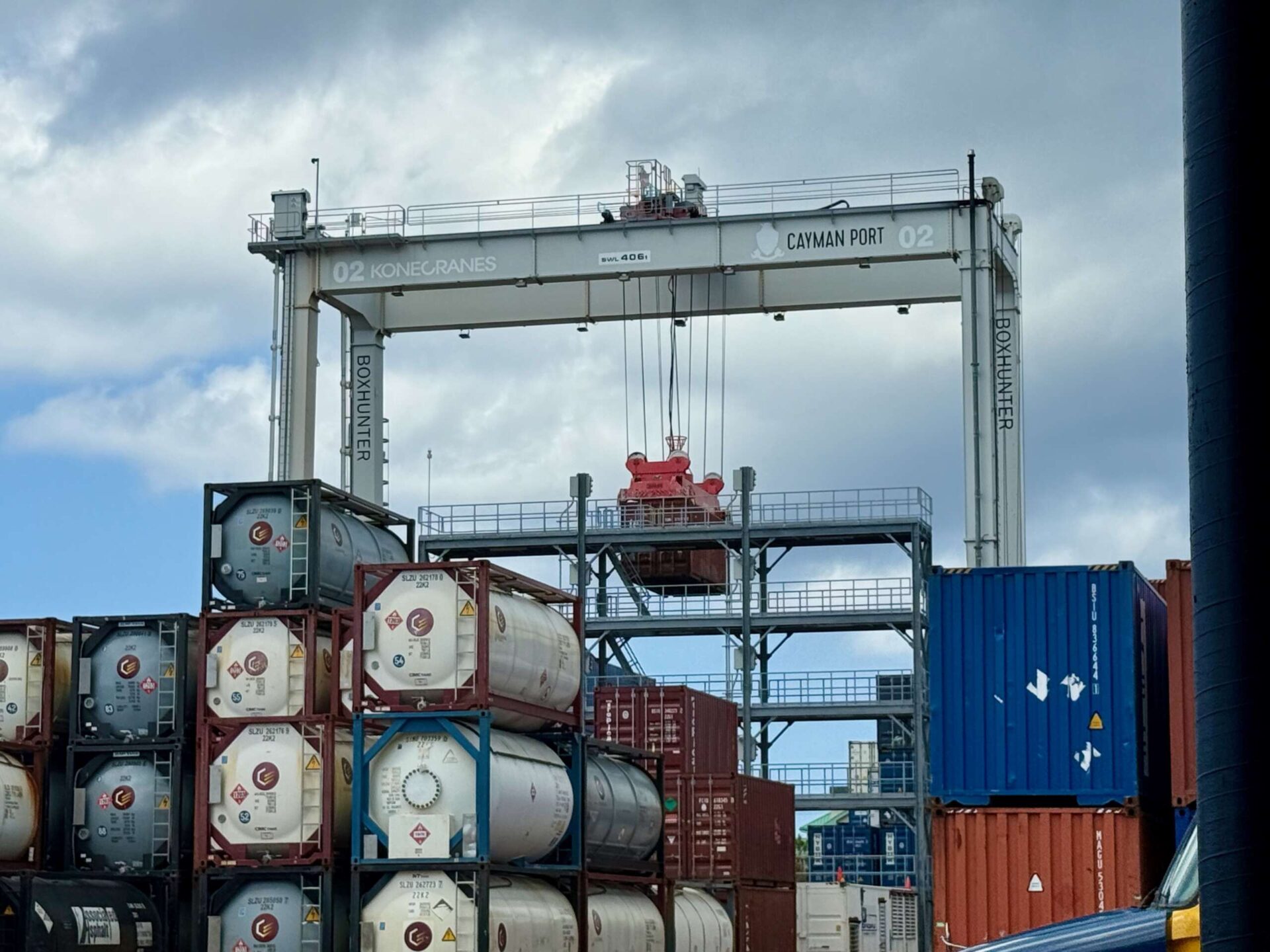
Port officials say the harbour is too shallow for larger vessels, with some of the existing cargo fleet already scraping the bottom at low tide. There is only one acre of space for the container staging area and the port shares space with cruise operations, meaning it has to be cleared overnight to be used by tourists the next day.
The Cargo Distribution Centre on the other side of George Town was opened in 1992 as an overspill facility, and trucks run containers back and forth through the night. But that space is also nearing capacity.
A Strategic Outline Case, published by the Port Authority in 2022, makes the case for a new deep-water port and suggests the current facilities would be at capacity within 10 years or when the population hit 100,000.
What happens then?
As the population increases and import demand continues to grow, the supply chain will be under added strain.
“The port will still operate, but you will see a lot of delays,” said Hurlston.
Eventually, that will start to show at the stores as efficiency decreases.
A glimpse of what could happen is seen already at times when a ship is delayed because of a storm, and supermarket and hardware store shelves empty out.
“We see what happens when we have one or two nor’westers blowing and we can’t get a ship in for a week or so,” said Infrastructure Minister Jay Ebanks. “It will become a crisis if we don’t start to do something to enhance the footprint, because we will have to limit what we bring in through there to the port.”
Can Cayman try to import less stuff?
Imports have risen roughly in line with population, business growth and development. Modelling in the Strategic Outline Case showed that for every 5,000 new residents, another 5,500 twenty-foot containers are imported annually.
Former port director Joseph Woods believes that population growth and, therefore, imports will continue for the foreseeable future.
“Our population is not going to get smaller. I don’t care who doesn’t like it; it is not going to happen,” he said.
Premier André Ebanks has suggested the new immigration legislation can be used as a tool to better manage population growth, saying it gives government better capacity to “project out”. He added that the previous rate of growth was “not sustainable”, though he did not suggest it would reverse.
Growth of around 4% per year on average has continued for the past 50 years.
What is the plan for the cargo port?
There is nothing significant in the budget for the next two years to address cargo. A new $5 million crane has helped improve efficiency at the current site, but space issues remain.
Minister Ebanks says the medium-term plan is to extend the current finger pier and complete some reclamation of land from the sea to expand the footprint for shoreside operations.
The precise details of that plan have not been outlined, but the Strategic Outline Case costed dock works at around $25 million to $30 million and land reclamation between the north cargo pier and the Royal Watler Terminal at $35 million.
Port and ministry officials said they are currently in talks with the Department of Environment about the dredging and reclamation elements of that plan.
But that project would require a full business case analysis and would likely buy around 10 to 15 years of additional lifespan for the current facilities, officials believe.
“Sometimes you got to put a Band-Aid on this until we can get to the next section,” said Minister Ebanks.
There is not enough room in George Town for the level of expansion Cayman may need in the long term.
Even with an expansion at that site, Harold Westerman, of government’s engineering consultant Stantec, told a public meeting in 2024 that the port capacity would still max out at a population of 133,000, projected for 2039.
Would the cruise pier deal have fixed the problem?
The final plan for the cruise pier project – a partnership between government and Verdant Isle, a cruise line-led consortium – did include an expansion to the cargo facilities in the harbour.
At the time, then-Premier Alden McLaughlin told the Legislative Assembly in 2019 the project would deliver approximately 30% more usable cargo space and a third berth for aggregate and bulk cargo.
“This redevelopment of our tired and inefficient cargo port can only be funded because it is being linked with our new cruise berths,” he said then.
As presented, revenue from additional cruise passengers would help fund the cargo expansion, as well as repay the upfront costs of the cruise pier. Roy McTaggart, McLaughlin’s successor as PPM leader and now shadow finance minister, described it in the run-up to the last election and referendum vote as a “sweetheart of a deal” that would have helped solve both problems. However, a longer-term plan for cargo would still likely have been required eventually, given capacity constraints in George Town.
Critics of the Verdant Isle deal described the financing as wishful thinking and suggested the cargo element had been grafted on mid-stream to persuade a sceptical public of the wisdom of the project. There was also a backlash to projected increases in cruise passenger traffic that would have been required to make the funding model work.
The public strongly rejected cruise berthing in the referendum in April 2025, with 64% voting against.
What are the long-term options for cargo?
Currently, there is no long-term plan that has been actioned.
The 2022 Strategic Outline Case examined five possible locations for a new port, and identified Breakers as the only viable location outside of George Town.
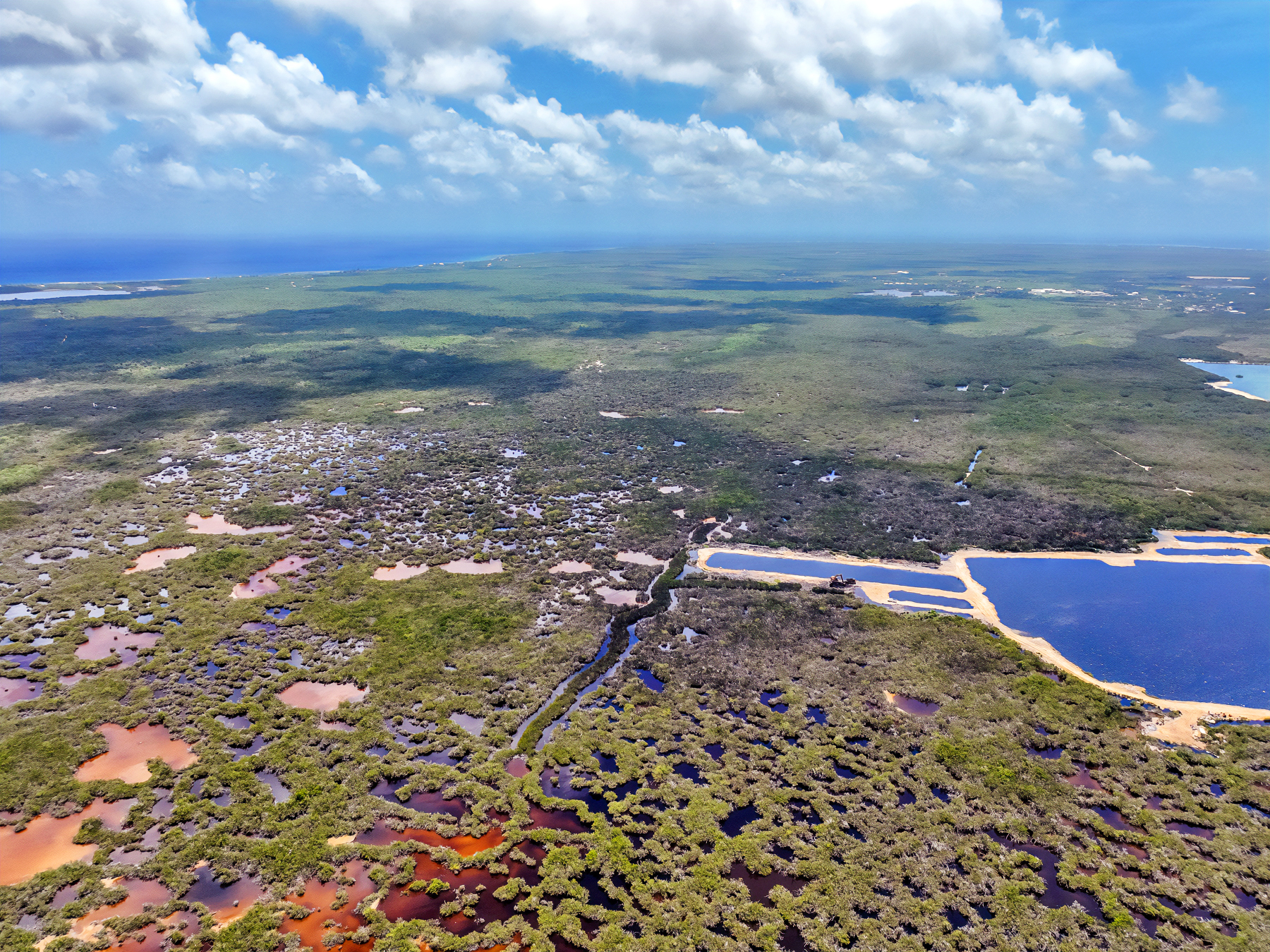
The report outlined a potential project that would involve cutting a channel through to the coast and excavating exhausted limestone quarries, which already sit at a depth of 50 feet, to create a protected deep-water harbour.
Consultants were hired and a public presentation was held in August 2024 where they recommended that a new port outside George Town should be considered.
They suggested planning for vessels that could carry up to 1,000 twenty-foot containers – roughly two and a half times the capacity of the largest ship currently calling to Cayman. But the project has gone quiet since that time.
What would happen at the current site if cargo is moved to Breakers?
The area would most likely be used for cruise.
Shifting cargo would create the opportunity to create a dedicated facility on the existing footprint, with space for an improved tender operation, the report stated.
There would also be potential for other commercial use of vacated waterfront land to offset costs.
What would a port in Breakers cost and how would Cayman pay?
A new port at Breakers would be an extremely expensive undertaking. Minister Ebanks estimated the total cost at around $400 million to $500 million.
The Strategic Outline Case recommended immediately acquiring and rezoning land to secure 2,000 acres of space and building out in phases over decades.
Phase one envisaged a modern replacement of the George Town facility, including four cargo berths and 30 acres of storage for containers and aggregate. Phase two included a fuel farm, relocating Rubis and Sol storage tanks from residential areas of George Town, and, potentially, a free-trade zone. Phase three contemplated a mega-yacht marina and cruise homeporting capacity.
Plans were also mooted to make Cayman a regional transshipment hub, but Woods, the primary author of that report, accepts that is probably unlikely and is less viable now, given the investment the Dominican Republic and Jamaica have made in large port facilities that act as regional hubs.
That reduces the likely profits available to any private sector partner in a PPP financing arrangement, Woods acknowledged.
The Strategic Outline Case noted that cargo operations at the existing port barely break even.
What happened to that plan?
The Strategic Outline Case was published in 2022. Stantec Engineering and KPMG were hired among a group of consultants to take it forward. In 2024, a public consultation session was held to help inform an Outline Business Case.
At that session, consultants presented demand forecasts modelled to 2084 and recommended that both the short-term expansion of the existing site and the long-term Breakers project should proceed simultaneously.
Indication of a preferred option was needed from government before a master plan and detailed cost estimates could be produced.
But there has been little public discussion of the project since then. The Outline Business Case, which would contain detailed cost estimates for the Breakers project, has not been published, and the consultants contract is completed. The report remains for government to decide if and when to proceed.
Why does nothing seem to be happening?
Government has limited funds for capital expenditure and has to prioritise projects.
Infrastructure Minister Ebanks acknowledged the cargo port is not top of the agenda for now.
He added that the East-West Arterial Highway – the government’s flagship infrastructure project for this term – needed to come first in order to provide the transport link to the eastern districts.
Woods cautions that delay will cost Cayman in the long run.
“Every delay takes us one day closer to the precipice,” he said.
“You will not know about it until you reach the point when you can’t collect your cargo. But it’s too late then. A port doesn’t take one year to build, and it doesn’t take two years or even five years. It takes a lot longer.”
Related Videos

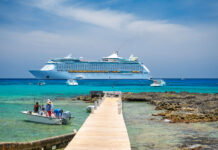









Grand Cayman has transformed from a quiet tropical escape into a major hub with severely strained physical limits.
Rapid population growth—surging from roughly 53,000 residents in 2007 to over 90,000—has pushed its existing public systems to their absolute limits.
The most critical and visible pollution hazard on the island is the Dump.
Population surge growth and tourism have heavily strained Grand Cayman’s waste management systems.
The Cayman Islands’ lifeline—its cargo port—is running out of space.
Compass is trying its best to sound the alarm on these issues, but it seems to fall on incompetent ears – being ignored or dismissed by people who lack the ability, training, or qualifications to understand, act upon, or care about what is being said.
The CIG cannot fix these urgent issues quickly because of political division, tight budgets, slow administrative reforms and the lack of a true visionary leader.
Instead of copying how Bermuda and other Caribbean island countries have solved their major issues (which are universal), the Cayman Islands Government seems stuck in a never-ending loop of consulting and spending millions. Ultimately, they either make poor decisions—such as the recently updated airport—or do nothing at all. THIS INDICATES A LACK OF VISIONARY LEADERSHIP, leaving the territory without ANYONE CAPABLE of resolving the escalating crisis.
As an example, without Singapore’s transformational leader Lee Kuan Yew—his uncompromising integrity, extreme pragmatism, and long-term vision—the country would have remained a resource-poor, impoverished port.
Lee recognized that Singapore’s survival required a government free of the corruption that plagued many other newly independent nations. By setting a personal example of frugality and ensuring competitive salaries for civil servants to deter bribery, he established a bedrock of institutional trust.
Lee famously thought in decades rather than election cycles. He invested heavily in education, public housing, and massive infrastructure projects to ensure future stability.
Lee Kuan Yew’s governance is a masterclass in nation-building based on sheer willpower and discipline.
I could suggest that CIG leaders learn from Lee Kuan Yew, although true visionary leadership is often considered innate rather than something that can be taught.
Successive Governments/Members of Parliament have played pass the parcel with these major problems which will only get worse. We need to identify a senior offiicial with individual responsibility for each of our critical areas that need resolution, the Dump. the Port, the Airport, West Bay Beach and Traffic.