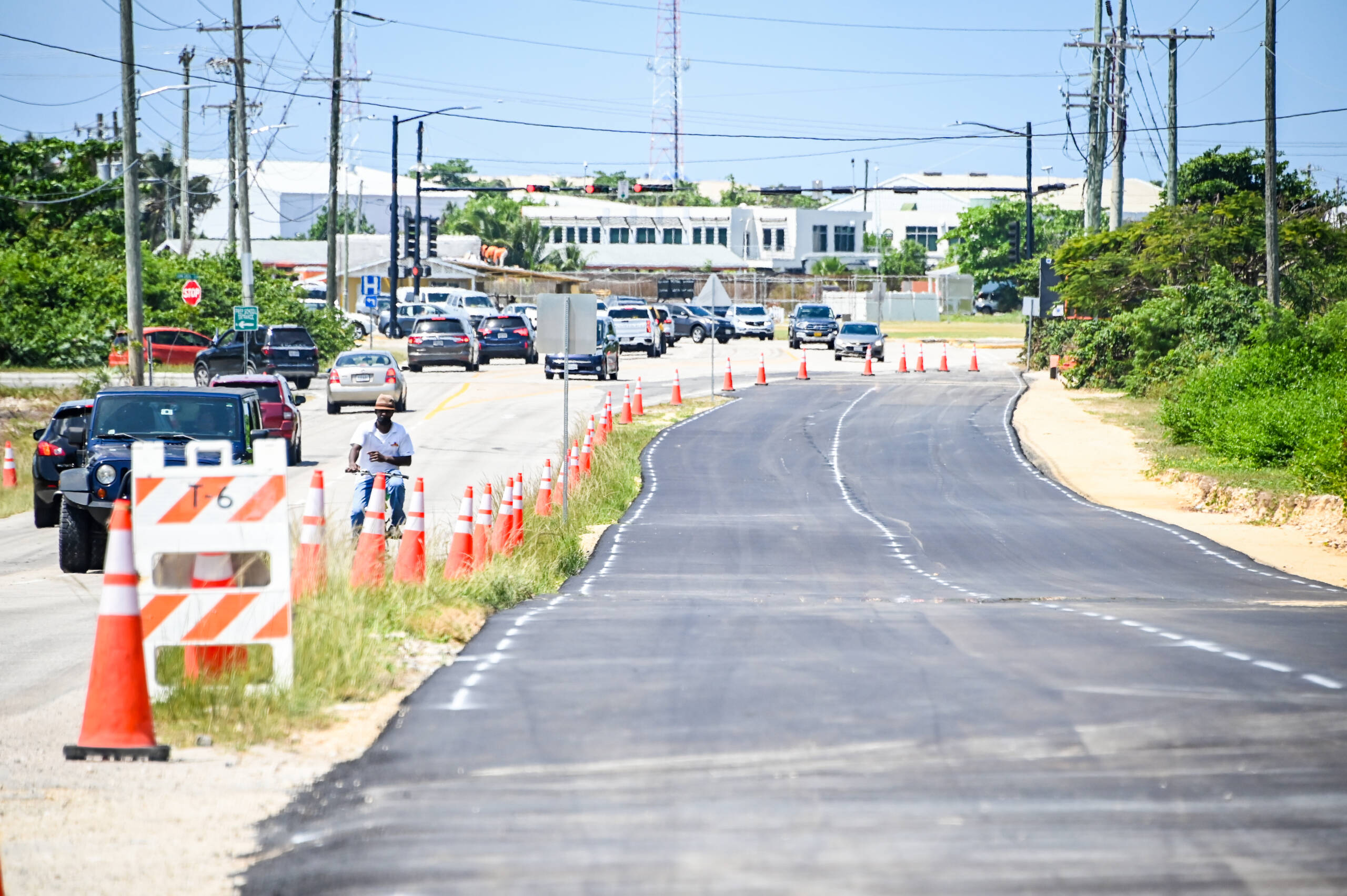
Government has voted $5 million in new funding to pay outstanding compensation claims on land taken for road development and committed to reform legislation to ensure a fairer deal for property owners in future.
Currently Cayman Islands landowners who have homes or property taken for new roads face being shortchanged because of the islands’ outdated laws on involuntary land acquisitions.
MPs acknowledged that payouts often take years to process and are frequently based on outdated valuations that don’t reflect the correct market value.
The revelations came across two separate debates in Parliament over the past week.
Speaking during a Finance Committee session on 30 June, Lands Minister Jay Ebanks said government needed additional funds to clear up outstanding compensation claims. He said government is in the midst of a “clean up” exercise to get everybody “paid up to date”.
“I can’t say this takes care of every single claim, but it does take care of a lot of them going back at least a decade,” he added.
Government has also committed to reforming involuntary land acquisitions legislation to ensure people are paid on time and at market value in future.
Parliament supported a motion to review the Roads Law and the Land Acquisition Act.
Sometimes years to settle
Under current law landowners are only required to be compensated based on a property valuation from the time a road was gazetted – the formal announcement that triggers compensation claims.
But it can take several years for work to actually begin and the payments to be processed.
In many cases the value of the property has increased substantially in the interim. And by the time the landowner is actually paid it can be decades later and well below the market value.
Opposition Leader Joey Hew bought a private members motion to Parliament last week calling for the law to be updated.
Hew acknowledged this was a longstanding issue that spanned multiple government administrations.
‘Fair payment in a reasonable time’
Hew said government does need the right to take land for public purpose, particularly for roads. But when it does so, he said Cayman’s people are entitled under the constitution to a fair payment within a reasonable time.
“When government exercises one of the most significant powers available to it, we must ensure that it does so in a manner that is fair, transparent and respectful to the constitutional rights of our people.
“It is not fair compensation eventually or fair compensation when government gets around to it. It has to be fair compensation within a reasonable time frame.”
He said there were often significant time periods between the valuation of the property and the payment of the claim.
“The market does not stand still,” he said.
Sometimes dispute over the fair value of land can drag the process out even longer. In some cases landowners are left waiting decades for a payment.
In one such case, previously reported by the Compass, the landowner died before the claim was settled as the dispute dragged through the courts for more than a decade.
Hew cited a more recent instance involving an elderly couple from the Rock Hole of Grand Cayman who having their land, home and rental properties taken for a road development.
Government valued the property in 2008 and is only now moving to acquire it. Hew acknowledged government was ‘working to find a solution’ but said that under the letter of the law they are not required to do so.
The case is an extreme example of a phenomenon that routinely impacts landowners tied up in government compensation claims.
Deputy opposition leader and George Town Central MP Kenneth Bryan cited two similar cases in his constituency. In one case he said, a retired civil servant had her property taken and is awaiting a fair payout more than four years later.
He said the land had a rental property on it but she has received no compensation for the loss of the building or the lost rental income.
He said the property was described by valuation surveyors as a “wooden shack’. He accepted that it was not something that could be built under current planning laws, but said it was adequate enough to provide her with $1,300 a month.
“Now she has to put her pride aside and ask family members to help her put food in the fridge.”
In such circumstances, he said landowners may feel economic pressure to accept whatever deal government offers, regardless of fairness.
He urged government to make reform of the law a priority and to provide adequate funding for compensation claims.
Minister: ‘We have to pay a fair price’
Minister for Planning and Infrastructure Jay Ebanks acknowledged this was a longstanding problem. With multiple road projects in motion, including a major highway extension through the eastern districts, many more compensation claims are likely in the coming years. He said it was important that the issue was resolved.
“We need to pay people at the current market value once we take the land for the road.”
He noted that landowners also lose the ability to develop or capitalise on their property once it is gazetted for road development.
And he accepted that it was government’s responsibility to be fair when it claimed people’s land.
Ebanks said government was already negotiating in good faith even in cases where the law does not require it to do so. But he acknowledged the legislation should be updated to ensure a fair deal across the board.
The motion passed without opposition.
Ebanks said, “We will work as hard as we can to get this sorted out.”
Related Videos