
Markets have always been in the business of pricing the future. Stock prices reflect expectations for earnings. Bond yields reflect expectations for interest rates and inflation. Oil prices reflect expectations for supply, demand and geopolitical risk. Insurance premiums reflect expectations for loss.
Prediction markets make that process more literal. Instead of buying a stock because someone believes a company will grow, participants can buy contracts tied to specific events. Will inflation fall below a certain level? Will the Fed cut rates by year-end? Will oil prices rise above a certain threshold? Will a storm make landfall in a particular region? Will Messi and Ronaldo shake hands during the World Cup?
These markets turn future outcomes into tradable prices. That makes them interesting, but also risky if investors forget what a price represents.
How prediction markets work
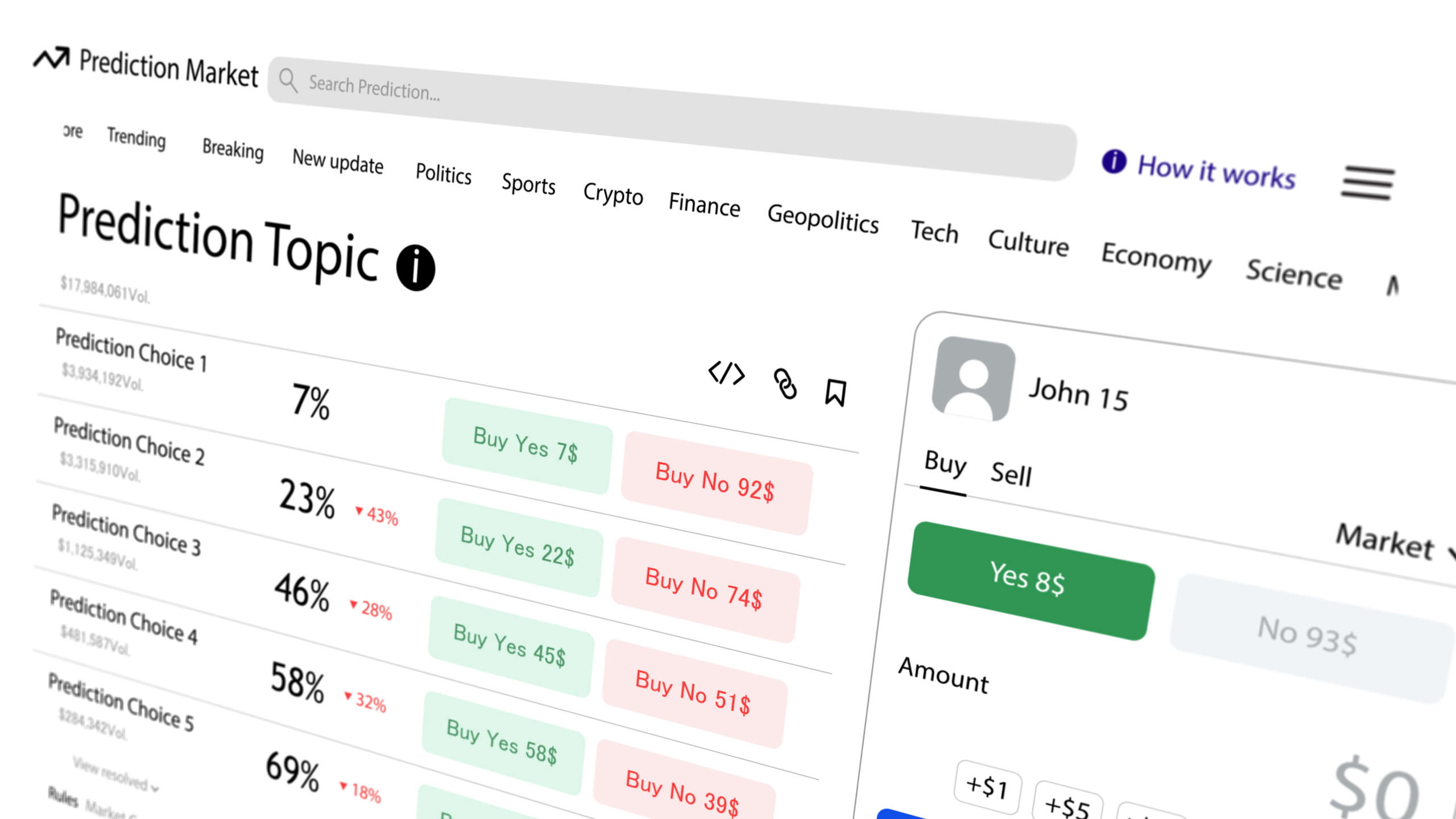
A prediction market allows people to trade contracts linked to a defined event. Many are structured as yes-or-no outcomes. If the event happens, the contract pays out. If it doesn’t, the contract expires worthless.
If a contract is trading at 70 cents, the market may be implying roughly a 70% probability of that outcome, ignoring fees, liquidity and other frictions. That doesn’t mean the event will happen. It means traders are currently willing to price it that way.
For local readers, the relevance isn’t necessarily whether prediction markets should become part of a personal investment strategy. For most people, they shouldn’t. The more useful question is what their popularity tells us about how markets price uncertainty, and how easily confidence can be confused with certainty.
Where global prices meet local costs
Cayman understands pricing risk better than most places, even if we don’t always think about it that way. We import much of what we consume, from groceries and vehicles to construction materials, equipment and fuel. Those prices are shaped by commodity costs, shipping rates, insurance costs, currency effects, duties and local business expenses.
When global prices move, Cayman often feels it with a lag, but we feel it. Higher oil prices can flow through to airfare, shipping, utilities and business costs. Shifts in rate expectations can affect mortgage rates, deposit rates, bond yields and income from cash and fixed income.
Insurance is another familiar example. Changes in global reinsurance pricing can affect what homeowners and businesses pay to protect property in a hurricane-exposed market like Cayman. Even those who never look at a trading screen are affected by markets pricing energy risk, financing costs and catastrophe exposure.
That’s why prediction markets are worth understanding. They’re part of a broader trend toward turning uncertainty into a visible price. People in Cayman may not trade these contracts, but household budgets, business costs and investment portfolios are shaped by similar forces.
The investor psychology trap
Prediction markets can be useful because they provide a real-time snapshot of what financially motivated participants believe about an event. Unlike a poll or pundit’s forecast, the participants have money at stake. That can make the signal more responsive when new information arrives.
If inflation data surprises, prices can move. If a central banker changes tone, prices can move. If a storm track shifts, prices can move. These markets update quickly because they are designed to turn information into a number.
That number can be helpful when investors are trying to understand where expectations are moving. Prediction markets may become another signal to watch alongside bond yields, commodity prices, inflation data, earnings forecasts and economic indicators.
But a number is not the same as knowledge. Human beings like clean probabilities. A 75% chance sounds precise. A market price feels objective. A chart moving in real time gives the impression that uncertainty is being converted into something manageable.
Sometimes it is. Often, it is just being repackaged. A 75% probability still leaves a 25% chance of an opposite outcome. That “unlikely” result isn’t a rounding error. It happens one out of four times, if the probability is accurate.
Investors routinely underestimate how often the less likely outcome becomes reality. Anyone who has invested through the past few years should understand this. Inflation was supposed to be transitory, until it wasn’t. Recession was considered almost inevitable, until it kept getting delayed. Rate cuts were repeatedly priced in, then pushed out.
Markets can be efficient at processing information, but they aren’t immune to overconfidence. Prediction markets face the same challenge. Their prices can be distorted by low liquidity, limited participation, speculation, fees, platform rules or herd behaviour.
There is also a local compliance point. People in Cayman should not assume that a platform is legally available simply because it can be accessed online. Many prediction market contracts sit close to the line between financial speculation and gambling, and Cayman’s gambling rules remain restrictive. Some may try to access offshore platforms through VPNs or other workarounds, but that doesn’t make the activity compliant or remove the risks involved.
Then there are broader regulatory and ethical questions. Some event contracts look like financial tools. Others look much closer to gambling. Regulators are already paying attention to fraud, misuse of non-public information and whether certain contracts belong in regulated financial markets at all.
That doesn’t mean prediction markets are useless. Rather investors should treat them like any other market signal: potentially informative, but incomplete.
Planning still matters
For households and businesses, the practical takeaway is straightforward. Prediction markets may become one more data point to watch, especially around inflation, interest rates, energy prices and weather-related risks.
But they shouldn’t replace planning. A household doesn’t need a perfect forecast for interest rates to decide whether its mortgage is affordable. A business doesn’t need to know exactly where fuel prices will be next quarter to build sensible margins.
An investor doesn’t need certainty about inflation to maintain a diversified portfolio, appropriate liquidity and a time horizon that matches their goals. The danger isn’t that people will look at prediction markets. The real risk is mistaking a market price for certainty.
Markets are very good at producing prices. They are less good at producing peace of mind. That still comes from preparation, diversification and the humility to accept that the future rarely moves in a straight line.
Prediction markets may be new, flashy and increasingly visible. But the lesson they offer is old: prices can tell us what people believe today. They can’t promise what tomorrow will bring. The future may now be tradable in cents on the dollar, but good investing still depends on preparing for more than one version of it.
Jessica Jablonowski, CFA, is the managing director and investment advisor at Radix Financial Cayman, LLC.
Disclaimer: The views and opinions expressed in this article are my own and do not necessarily reflect those of Radix Financial Cayman, LLC.
This article is for informational purposes only and should not be taken as financial advice. Radix Financial Cayman, LLC accepts no liability for any actions taken based on the information presented here.
Related Videos