

Topic: george will
Will: Clawing back trade power from the president
Although today’s swollen presidency will not soon be a museum piece, it is encouraging that a few legislators want to claw back some of their branch’s powers, thereby reducing the executive to a dimension more compatible with our constitutional architecture.
Will: How to heal our epidemic of loneliness?
If Sen. Ben Sasse is right – he has not recently been wrong about anything important – the nation’s most-discussed political problem is entangled with the least-understood public health problem. The political problem is furious partisanship.
Will: America should do away with the death penalty
Without being aware of it, Vernon Madison might become a footnote in constitutional law because he is barely aware of anything.
Will: Markets know what society needs
Governments, seemingly eager to supply their critics with ammunition, constantly validate historian Robert Conquest:
Will: Trump’s trade wars would avenge mythical casualties
Treasury Secretary Steven Mnuchin says the Trump administration is “putting the trade war on hold.” The one with China, that is. Others can continue.
Will: When is making a cake protected speech?
The conversation about a cake lasted less than a minute but will long reverberate in constitutional law.
Will: The fatal conceit of planning for the future
Kevin Hassett evidently has not received the memo that economics is “the dismal science.” The ebullient chairman of the US president’s Council of Economic Advisers is relishing the intellectual feast of applying to policymaking the predictive tools of a science that was blindsided by the Great Recession.
Will: The auto industry’s glamorous past and opaque future
Bending metal, slapping on chrome and marketing an empowering product and status marker that mesmerized 20th-century America, the automobile industry typified the Old Economy, of which General Motors was emblematic. As was its bankruptcy.
Will: The steep cost of ‘cheap speech’
At this shank end of a summer that a calmer America someday will remember with embarrassment, you must remember this: In the population of 325 million, a small sliver crouches on the wilder shores of politics, another sliver lives in the dark forest of mental disorder, and there is a substantial overlap between these slivers.
Will: The slovenly institution that is the US Congress
In January 1988, in Ronald Reagan’s final State of the Union address, he noisily dropped on a table next to the podium in the House chamber three recent continuing resolutions, each more than a thousand pages long. Each was evidence of Congress’ disregard of the 1974 Budget Act. Reagan fumed:
Let us plunge toward our fast-unfolding future
In 1859, when Manhattan still had many farms, near the Battery on the island’s southern tip The Great American Tea Company was launched.
Get the shovels in the ground
Sensing that his Scottish enemies had blundered at the Battle of Dunbar in 1650, Oliver Cromwell said, "The Lord hath delivered them into our hands." Philip K. Howard, were he the exulting type, could rejoice that some of his adversaries have taken a stand on indefensible terrain.
Engineering without a license
Beginning this week, Washington hopes that infrastructure, which is a product of civil engineering, will be much discussed.
Public broadcasting: superfluous yet seemingly immortal
As changing technologies and preferences make government-funded broadcasting increasingly preposterous, such broadcasting actually becomes useful by illustrating two dismal facts.
Who wants to be a billionaire (in 1916)?
Having bestowed the presidency on a candidate who described their country as a “hellhole” besieged by multitudes trying to get into it, Americans need an antidote for social hypochondria.
Will France elect a Gallic Barack Obama?
The French are too intellectually vain to borrow others’ political ideas, but too interested in style not to appreciate and appropriate that of others. So, on May 7 they might confer their presidency on a Gallic Barack Obama.
Experience America at the time of the Great War
One hundred years ago, two events three days apart set the 20th century’s trajectory. On April 9, 1917, in Zurich, Vladimir Lenin boarded a train.
An oasis of liberty in the Arizona sun
The current president has pointedly said, “This is called the Republican Party. It’s not called the Conservative Party.” Actually, it became a conservative party partly because of what an Arizonan did many decades ago. It may become such a party again, with another Arizonan’s help.

A modest proposal to solve inequality
Tight labor markets shrink income inequality by causing employers to bid up the price of scarce labor, so policymakers fretting about income inequality could give an epidemic disease a try. This might be a bit extreme but if increased equality is the goal, Stanford’s Walter Scheidel should be heard.

Starbucks and our pursuit of snobbery
Indiana’s Thomas R. Marshall, who was America’s vice president 100 years ago, voiced – he plucked it from a Hoosier humorist – one of the few long-remembered utterances to issue from that office: “What this country needs is a good 5-cent cigar,” which would be $1.11 in today’s currency. A century later, what the country needs is a $12 twelve-ounce cup of coffee.
Will: The sensitivity police strike again
The word “inappropriate” is increasingly used inappropriately. It is useful to describe departures from good manners or other social norms, such as wearing white after Labor Day or using the salad fork with the entree.
Will: Britain’s political silliness
Misery loves company, so refugees from America’s Republican Party should understand that theirs is not the only party that has chosen a leader who confirms caricatures of it while repudiating its purposes.
Will: The United Kingdom at the crossroads
Sixty-five years ago, what has become the European Union was an embryo conceived in fear. It has been stealthily advanced from an economic to a political project, and it remains enveloped in a watery utopianism even as it becomes more dystopian.

Will: Amtrak helps government ride off the rails
In 1906, Leonor Loree, an accomplished railroad executive, examined the dilapidated Kansas City Southern Railroad that he had been hired to rehabilitate.
Will: The future will disappoint
Presidential campaigns incite both hypochondria and euphoria, portraying the present as grimmer than it is and the future as grander than it can be.
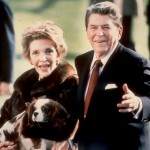
Will: Then along came Nancy
If she had not come along, Ronald Reagan would not have come to the place he now occupies in history and in the hearts of his countrymen.






