Two years after being elected Prime Minister on a mandate of social change, Michael Manley made his most ambitious move to ensure equal opportunities for Jamaicans by announcing in November 1974 that democratic socialism would be the country’s new political philosophy.
At a People’s National Party rally in Trench Town, Kingston, Manley said: “The capitalist system is the system that brought slavery to Jamaica. Under capitalism we supported 300 years of colonialism and no way shall capitalism continue in Jamaica. Socialism is running Jamaica now!”
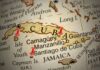
It was a major step by Manley, whose government embarked on a series of grass roots programmes during the next three years, aimed at making Jamaicans self-reliant. The masses reportedly warmed to it but not middle-class Jamaica nor the administration of United States President Gerald Ford who believed the Jamaican PM was cozying up to its neighbour, communist Cuba, according to the Jamaica Gleaner.
Within three years after democratic socialism was launched in Jamaica, the economy was in tatters. There were food shortages (staged, some believe, to sabotage the Government) and bloody battles throughout Kingston between supporters of Manley’s PNP and the Jamaica Labour Party.
Although the PNP easily won re-election in 1976, by 1980 Jamaicans had grown weary of the Government’s socialist policies. The PNP lost power to the JLP in national elections that year.
Arnold Bertram was a Government senator when Manley declared the advent of democratic socialism. He says it appealed to young persons like himself who were weaned on the Black Power euphoria of the 1960s. They believed, he said, that democratic socialism was a significant step for blacks in this country to develop a sense of independence.
“There was a tremendous response from the generation to which I belong … We were excited about democratic socialism because it drew us into volunteerism,” said Bertram.
Professor Rupert Lewis, a lecturer in the Department of Government at the University of the West Indies, Mona, said democratic socialism represented a new political awareness for the Government in Jamaica.
“It was the first time in modern Jamaica that there was a path defined by Jamaica, not Britain or the U.S.,” Professor Lewis pointed out.
At the time, Manley’s decision to embrace the socialist ideology was fodder for the JLP which had, over the years, accused the PNP of flirting with communism. According to Bertram, they were not far off track.
“The PNP was into socialism from as early as 1940 but it had its ebb and flow since the expulsion of the Four Hs (Frank and Ken Hill, Arthur Henry and Richard Hart) in the 1950s,” he explained. “It resurfaced again in 1963 when the executive suspended Hugh Small and Dennis Daley of the Young Socialist League.”
The most significant aspect of socialism’s re-emergence in 1974 was that the PNP was in power for the first time since Jamaica were granted independence by Britain in 1962.
“It was the first time that it was being articulated by the PNP in power. It was something new and something powerful,” said Bertram.
It was not only persons in the JLP who were shocked by Manley’s decision to go socialist. Some of his middle-class supporters were just as stupefied.
“I thought it was intellectual laziness. You didn’t need socialism to make people independent,” said Perry Henzell, the filmmaker who was part of the team that helped get Manley elected in 1972.
While Manley ignored the middle class’ fear of him leading the country into communism, Bertram said there was concern in Washington, D.C. over his relationship with Castro.
“They never liked the Cuba-Jamaica bond; things are completely different now but back then it was the Cold War and it was bipolar,” he explained.
Professor Lewis agrees. He reasoned that the American Secretary of State, Henry Kissinger, was not pleased with Castro’s support of the Movement for Popular Liberation of Angola, Soviet-backed troops in the southern African country of Angola, which was then ruled by the American-backed UNITA regime.
Manley, who had risen up the ranks of the Non-Aligned Movement, also supported rebel troops in Angola. According to Professor Lewis, “The screws came on Jamaica after that.”
Democratic socialism may not have been popular with the middle class, but average Jamaicans benefited from several of its progressive programmes. These included the National Housing Trust which built low-income homes; the establishment of the Jamaica Movement for Adult Literacy agency, which provided education for those who had limited literacy capabilities and compulsory recognition of trade unions in the workplace.
Other initiatives, like the street-cleaners crash programme, were not as popular. It was seen by Government opponents as free work for persons affiliated to the PNP.
In the end, Cold War paranoia and the failure of the programmes to sustain themselves proved to be the downfall of democratic socialism.
“Democratic socialism definitely opened opportunities for many Jamaicans. It answered a deep yearning for the majority of Jamaicans who wanted to be given a chance in the land of their birth,” he said. “In the end it was unable to unite the country and expand the economy to sustain a quality of life.”
1974 Trivia
President Julius Nyerere of Tanzania visited Jamaica in November 1974.
The Suppression of Crime Act and the Gun Court Act were passed by the Government in March 1974, both aimed at curbing criminal activity.
Michael and Beverley Manley celebrated the birth of their first child, Natasha, in 1974.
Edward Seaga was elected Jamaica Labour Party leader, replacing former Prime Minister Hugh Shearer.
Related Videos