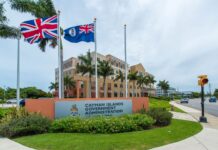
The Foreign and Commonwealth Office confirmed last week the UK has not changed its position with regard to not wanting to impose a constitution on the Cayman Islands.
In her visit to the Cayman Islands last December, Parliamentary Undersecretary of State Meg Munn was asked if the UK would impose a constitution on the Cayman Islands if one could not be agreed on.
‘I don’t think there is much point in seeking to impose a constitution on the people of Cayman,’ Mrs. Munn said at the time. ‘That’s not the kind of relationship we want for the Overseas Territories.’
However, during the constitution modernisation process, the government has inferred several times that unless Cayman puts forward a draft constitution with bill or rights soon, the UK might impose one.
Paul Sykes, of the FCO Press Office responded to a question sent to Mrs. Munn by the Caymanian Compass asking if the UK’s position on imposing a constitution had changed.
‘The answer is… no – the UK’s position has not changed since Meg Munn’s visit in December.’
While the Opposition has steadily said the constitutional modernisation process is being rushed, Cabinet Minister Alden McLaughlin has steadily maintained a sense of urgency in getting the new constitution in place.
At the Cabinet press briefing last week, Mr. McLaughlin said the fact the UK recently implemented changes to the British Nationality Regulations highlighted the importance of constitutional change in the Cayman Islands.
The recently gazetted amended regulations contain language referring to civil unions, which could be formed between two people of the same sex.
‘When we talk about the need to get the United Kingdom to agree to restrict its ability to legislate for the Cayman Islands, to extend legislation to the Cayman Islands… this is a perfect example of what can happen if we do not achieve that objective.’
Mr. McLaughlin has also steadily stressed the need for a ‘Caymanised’ bill of rights to be a part of the Constitution.
The Opposition has conversely called for the bill or rights to be enshrined in legislation, where it could be more easily changed.
However, in responding to a query from Leader of Government Business Kurt Tibbetts last month, Mrs. Munn said ‘the British Government would not agree to a new Cayman Islands Constitution that did not include an up-to-date human right chapter.
‘This chapter would need to reflect the fundamental rights set out in international human rights treaties that have been extended to the Cayman Islands for many years.’
The Caymanian Compass had also asked a similar question of Mrs. Munn last month. Mr. Sykes referred to the letter sent by Mrs. Munn to Mr. Tibbetts.
‘This letter, I think, answers your first question.’
Although the United Kingdom has never specified a time limit in getting a new constitution in place, Mrs. Munn did say during her visit she would ‘be very unhappy for the constitutional issue continuing to drift.’
Related Videos