The people of Burma have voted in the country’s first
national elections for 20 years.
Ruling generals say the polls mark a transition to
democratic civilian rule but critics say they are a sham.
The National League for Democracy, the main opposition
party led by Nobel laureate Aung San Suu Kyi, boycotted the vote.
Observers say voting proceeded calmly while opposition
parties say it was manipulated.
“The authorities of various levels forced the people
to cast advance votes,” said Sai Ai Pa O – president of Shan National
Democratic Party, which is fielding the fourth largest number of candidates.
“We are not allowed to send representatives to the
polling stations at the time of advance voting,” he said. “If the
election was free and fair, I am sure we would win at least 80% of seats.”
One soldier based near Rangoon told the BBC that
rank-and-file troops from 10 army regiments had refused orders to vote. His
testimony could not be verified.
Reports from Burma’s largest city, Rangoon, suggest
turnout was light at many polling stations.
Foreign journalists and monitors have not been allowed
into the country for the election.
EU ambassador David Lipman said that people voted in a
calm atmosphere with no visible presence either of the army or police.
Cho Cho Kyaw Nyein, of the Democratic Party, said she was
“quite surprised to see a lot of people come to vote. ‘No Vote’ campaigns
have appeared to be ineffective”.
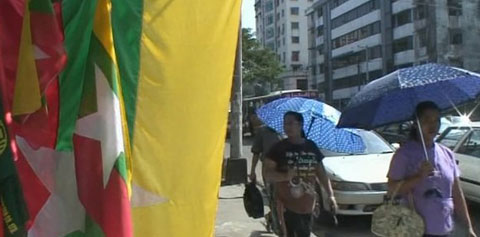
The atmosphere is very subdued here – although the
country hasn’t held an election for 20 years, there is not so much excitement
as a sense of nervousness in the city.
There certainly weren’t large crowds outside polling
stations, although that may be people responding to the NLD’s call to boycott
the polls.
Officials have said voters will be allowed to watch the
count at polling stations.
Many here are sceptical that the election will count for
very much, but have cast their votes in hope rather than expectation.
Critics say the poll is a sham, while optimists say it is
flawed but as the only game in town, it could herald the beginning of a process
of a slow process of democratisation.
Burma is a very large country with polling stations in
remote areas While results are expected from Rangoon within a couple of days,
it will take longer to collate results from elsewhere in the country.
US President Barack Obama, on a visit to India, said
Burma’s elections would be anything but free and fair.
“One of the starkest flaws of this exercise was the
regime’s continued detention of more than 2,100 political prisoners, including
Aung San Suu Kyi, thereby denying them any opportunity to participate in the
process,” he said in a statement.
British ambassador to Burma Andrew Heyn told the BBC’s
World Today programme that the military government had missed a chance.
“These elections really represent a very badly
missed opportunity,” he said.
“There was a real chance here to put Burma on to a
different track, both in terms of a path to democracy and to national reconciliation.
And that part, that opportunity, has been badly missed. The result has been a
process which is in no way free, fair nor inclusive.”
Candidates supporting the military are expected to win
the most seats.
“Every citizen who values democracy and wants
democratic rule must cast their votes without fail,” said a recent
editorial in the state-run New Light of Myanmar newspaper.
“However, some people are inciting the people to
refrain from voting in the elections. They are attempting to mislead the people
who are walking along the road to multi-party democracy,” it said.
Opposition party officials said the pro-junta party had
told voters they could lose their jobs if they failed to vote for
military-backed candidates.
The two junta-linked parties are fielding by far the
largest number of candidates.
The National League for Democracy – which won the last
polls in 1990 but was never allowed to take power – has been forced to disband
after it said it was not participating because of laws which banned Ms Suu Kyi
from taking part.
Other parties that are contesting the polls have
struggled to fund campaigns and have complained of harassment.
Burma has been hit in recent days by major internet
disruption, which some believe is an attempt by the junta to restrict
communications over the poll period.
Related Videos