

The Cayman Islands government received nearly US$12 million from dormant bank accounts during its first collection of such funds earlier this year, the Caymanian Compass has learned.
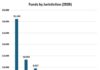
According to records provided through a Freedom of Information request, US$11,788,154.95 was taken in by the government from just more than two dozen locally operating banks between 31 March and 30 June of this year.
The number and value of dormant accounts held at each bank varied widely, from 2,511 accounts worth US$4.8 million at FirstCaribbean International to just one account at Wing Wang Bank [Cayman] Ltd. holding US$128.32.
Amounts held in the accounts collected by government also varied in average value. For instance, the large number of dormant accounts at FirstCaribbean only averaged out to US$1,912.28 held per each individual account. An entity called Delta Bank had just three dormant accounts with a total value of about $939,000 – averaging out to roughly $313,000 held in each account.
Butterfield Bank handed over 400 accounts with a value of more than US$2.8 million during the period; Cayman National Bank turned in 531 accounts holding just more than $1 million. Royal Bank of Canada turned in 71 accounts worth $558,774.94, while Fidelity Bank handed in nearly $200,000 from 181 accounts.
The four banks in the previous paragraph, along with FirstCaribbean, the Bank of Bermuda [Cayman] Ltd., and State Street Bank and Trust held the majority of accounts identified as dormant. Those seven banks also held about 83 per cent of the value of dormant accounts collected by government.
The vast majority of the funds held in dormant accounts was in US dollars – about $9.8 million. The rest of the funds, worth about US$2 million at current conversion rates, was held in either Canadian dollars, British pounds, Cayman Islands dollars and Euro.
According to the Dormant Accounts Law approved by Cayman Islands lawmakers last year, a bank account is considered “dormant” if it has been open for at least seven years with no financial activity occurring during that period.
If a bank account becomes dormant under the law, account providers – banks or other financial institutions – must take certain steps to contact holders of those accounts by 31 July of the year that account has reached the seven-year dormancy threshold.
If no account activity is noted, or if no attempt is made by the account-holder to contact the account provider is made by 31 December of the same year, the funds can be transferred to government by 31 March of the following year. The law absolves the account provider of any liability for the funds once they are transferred to government. However, there is a process whereby account holders can get their money back from government.
Locally operating banks must publish their own lists of dormant accounts each year and most did so this year, however most did not identify the account holders or the amount held in each account. Some dormant accounts published as part of the bank lists earlier this year dated back as far as the 1970s – meaning they hadn’t been used for 35 years or more in some cases.
It is expected that government collections from dormant accounts in subsequent years will be much less than what government has received this year, since the sheer number of dormant accounts held will be drastically reduced.
Premier McKeeva Bush said during debate on the first Dormant Acccounts Bill last year that he hoped passage of the measure would give clear direction to local financial institutions, which have long been said to hold multiple millions of dollars in accounts that are no longer in use and whose ownership is unknown.
“No longer will financial institutions be uncertain about what to do in cases where they have been out of contact with asset-holders for a certain period of time,” Mr. Bush told members of the Legislative Assembly.
The initially approved Dormant Accounts Law was changed shortly after passage when local financial institutions disputed several provisions in the law.
The new Dormant Accounts Law, 2010, extends the dormancy period created by the original law from six years to seven years.
The changes also eliminate all references from the previous law to financial institutions and instead refer to the entities that hold dormant accounts as ‘account providers’. Under the amendment, account providers include: class A insurers, banks, some licensed trust companies, credit unions, building societies, or any other type of financial institution that Cayman Islands Cabinet members determine to be an account provider.
Cabinet members can make that designation in any case where it is deemed to be in the national interest to do so.
Related Videos











So let us say, I deposited a thousand dollars in a bank account, and have decided not to touch the funds for at least ten years; and most naturally, my address and contact details have changed over the years… it is hard to believe that these 7 banks, are morally justified in giving over these funds to government. Sounds a bit like theft to me.
It’s amazing how the opposition is so critical i this hour when the premier is singing us happy we can’t see the UDP tiptoeing into our bank accounts. Is anyone going to say something. It is not lawful for someone or a government under investigation to have free access to the people
s bank accounts unclaimed funds or not. There also should be notification given to people who’s bank accounts have been touched and the amount taken.
Otherwise that’s theft. Oh I forgot this govt. has no morals so what the heck, Is this money going to pay for Dart’s road?
Money is owed by the government out of its reserved intended for economic development and sustainability. Whoever has the money has to use it, though with the bank money is considered in circulation though restricted, but still it does not serve its main purpose. 12 million restricted bank accounts is tantamount to economic sabotage. If it is a law it is now lawful. I must say good job to the leaders!
Money is owed by the government out of its reserved intended for economic development and sustainability. Though with the bank money is considered in circulation but still it does not serve its main purpose. 12 million dormant bank accounts are tantamount to economic sabotage. If it is a law it is not unlawful.