A new billing and insurance verification system introduced at the Cayman Islands Hospital could save the Health Services Authority between $30 million and $40 million during the next 10 years, according to health officials.
Chairman of the Health Services Authority Canover Watson, speaking at a media briefing to announce the launch of the Real Time Adjudication card-swipe system, said the system would be instrumental in helping to rid the Health Services Authority of bad debts that had plagued it due to non-payment of bills.
Mr. Watson described the new billing system as a “revolutionary step for the HSA as approximately 25 per cent of the overhead costs in health care are associated with the inefficiencies of the billing system. On average, it takes over 60 days for the HSA to receive payment for services they render, making cash flow a major challenge to manage.
“In addition, physicians and patients are frequently confused and burdened by the process. The CarePay system will now streamline the process for CINICO and the HSA resulting in significant cost savings.”
This phase of implementing the system cost US$1.3 million, divided between the Cayman Islands Insurance Company and the Health Services Authority. The government plans to put another US$2 million into the system to develop it throughout the Cayman Islands for use by insurers and medical practitioners in the private sector, Mr. Watson said.
“I am extremely pleased that we have reached this milestone of implementation of this system, and although we have started within the Health Services Authority and CINICO, the ultimate goal is to include all commercial health insurance companies, thereby reducing their administrative overheads, improving coordination of benefits between insurance companies and greatly increasing patient and physician billing convenience, while modernising the entire system for all residents of the Cayman Islands to benefit from,” said Minister of Health Mark Scotland.
Mr. Scotland said the government would help practitioners in the private sector defray costs of installing this new billing and verification system so that these costs would not be passed on to patients.
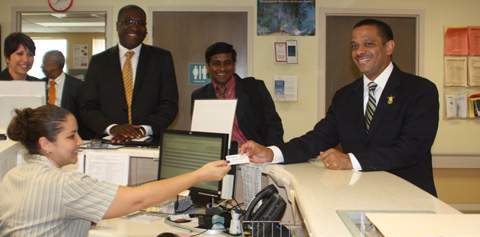
The system was launched at the hospital on 1 May, and more than a week after it was implemented, was still experiencing some teething problems, such as patients continuing to show up without their CarePay cards and some civil servants being erroneously charged for services for which they traditionally have not had to pay. Scott Cummings, chairman of the CINICO board, said the glitches in the system were expected and staff were working to overcome them. Once those issues are sorted out, he anticipates that many administrative staff in CINICO and at the HSA will be freed up from checking and verifying insurance coverage of patients because it will all be done automatically in the computer system.
The Real Time Adjudication system utilises a swipe-card process using CarePay cards issued to CINICO members to collect and collate immediate information about a patient’s eligibility and payment.
Each of CINICO’s more than 13,000 members has been issued cards, with the rollout beginning in October 2011. The card, along with a form of identification, must be presented to the hospital or any other Health Services Authority facility whenever a CINICO patient visits for medical treatment.
Similar systems are already in place in Jamaica and the Bahamas.
The health officials said the aim behind the new system is to take the guess work out of whether a person is eligible for treatment and will immediately outline how much of the cost of treatments the insurance company will cover.
“As an insurance provider, we are excited to be part of this initiative leading the way forward. Members will be able to understand and pay their health care bill at the time of care, just as with any normal billing process,” Mr. Cummings said. “Members’ bills will be adjudicated at the time of their care, not days or weeks afterward. They will leave the hospital or clinic with their billing process completely resolved and finished, which is clearly an added benefits to our members as well.”
For the financial year 2009/10, the HSA had bad debts of more than $12 million for that year alone, with a total of more than $40 million outstanding. The majority of that outstanding bad debt was due to uncollectable bills.
Both Mr. Cummings and the managing director of CINICO Lonny Tibbetts reminded CINICO members that this new system did not mean there had been any changes to members’ benefits.

Related Videos