

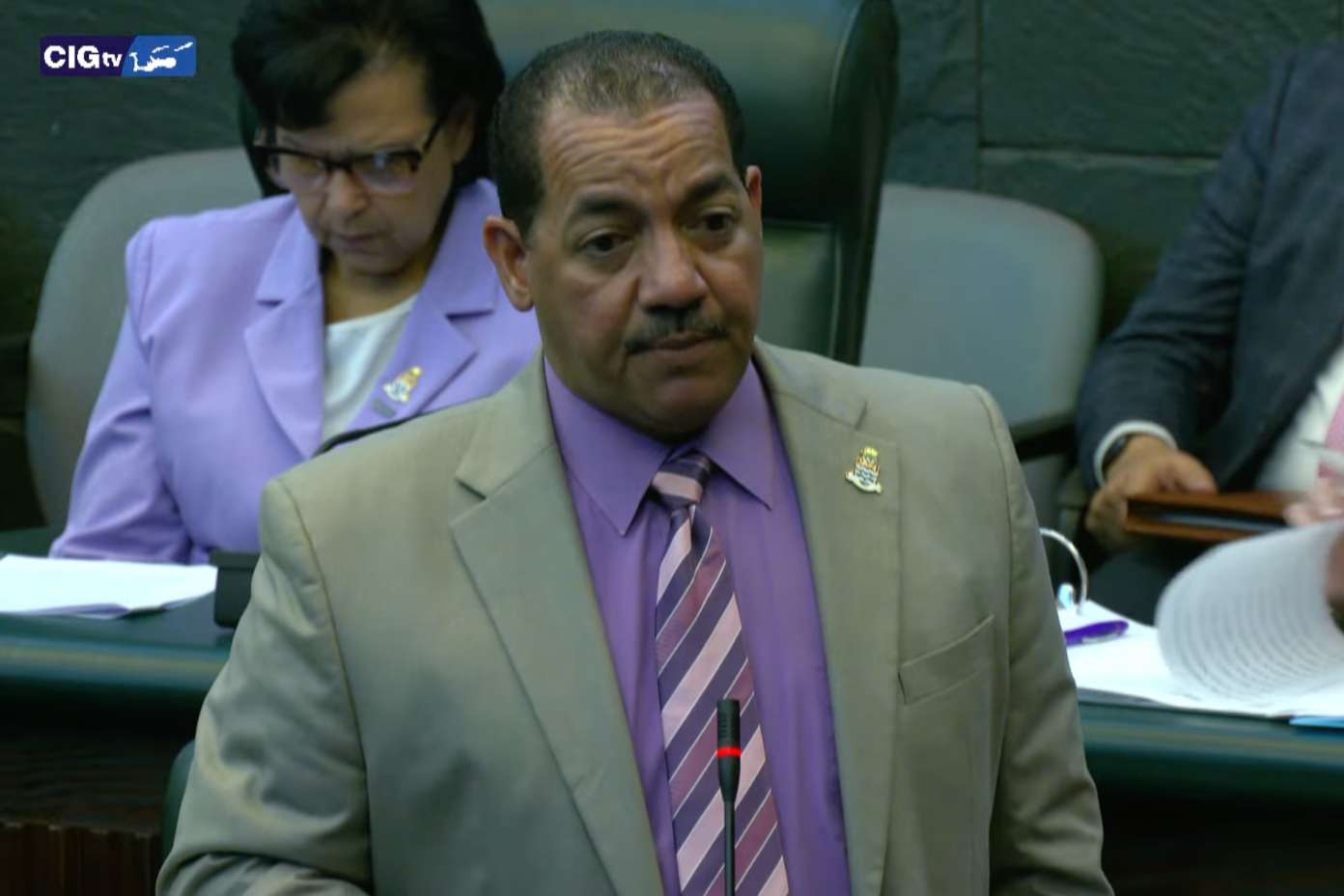
CINICO’s Home Health Care programme has grown into a “Pandora’s box that got opened”, Finance and Economic Development Minister Rolston Anglin told Parliament last week, warning that the rapidly expanding benefit is placing increasing pressure on public finances and may require major reforms.
The minister made the remarks while responding to questions from Red Bay MP Roy Tatum during the 6 March sitting of Parliament, about whether caregiver allowance rates under the programme had been adjusted following the recent increase in the statutory minimum wage.
He clarified that the allowance was never designed to track wage levels.
“It is clear that in drafting of the question that there is an assumption that the home health care allowances were initially established by reference to the statutory minimum wage,” he said. “That assumption is not valid and there is no linkage to the statutory minimum wage.”
Anglin explained that the home health care benefit is administered by the civil service health insurer CINICO and is provided as a government-set capped allowance within the insurer’s official benefits schedule.
Rapidly rising costs
Spending on the programme has been rising steadily. Anglin told Parliament that home health care expenditure reached approximately $11.4 million in 2025, up from $9.6 million the previous year.
CINICO has advised government that aligning the allowance with the current minimum wage could significantly increase the programme’s cost.
“CINICO has indicated, based on current projections, adjusting the home health care allowance rates to reflect the current minimum wage could increase costs by as much as $9 million per year depending on utilisation and claim trends,” Anglin said.
If the allowance were raised to match the minimum wage, the monthly cap could increase from around $1,200 to approximately $1,700.
That change could push the programme’s annual cost to roughly $20 million by the end of this year, rising to about $24 million by 2027 and reaching approximately $29 million by 2028.
“These numbers are real, and they’re staggering,” the minister said, warning that the programme could become a major financial burden if left unchanged.
An increase to the allowance “would require further assessment and costing to determine its affordability and it is likely that supplementary expenditure funding would be required,” the minister said, adding that a policy paper will be submitted to Cabinet this month seeking a decision on whether the allowance levels should be increased.
‘A Pandora‘s box that got opened’
Anglin warned that the programme has expanded far beyond its original purpose, describing it as “at a minimum, chaotic”.
“It’s a crisis. It’s an absolute crisis. This is a Pandora’s box that got opened,” he said. “There are no belts and braces around this programme. There’s no means testing.”
The minister explained that the programme was initially designed to support short-term home health care for patients recovering after surgery, in the absence of a rehabilitation facility in the Cayman Islands.
“We now have families who are applying for 24-hour care,” he continued. “This was initially started as home health care because we don’t have a rehab facility in Cayman. So you can’t have surgery, go like you normally would into a rehabilitation center for two months or whatever, then go home. And so, it was to be home health care. What this has turned into is assisted living. This is now assisted living for elderly.”
The shift has created challenges for CINICO, which administers the programme but must determine whether applications meet the intended health-related criteria.
“CINICO is put in this very awkward position where people get approved, but when CINICO looks at it, there’s no health element,” he said. “It’s not a home health care issue at that point. It’s assisted living.”
Anglin said government is now considering reforms and proposed creating a small bipartisan working group of up to four persons to review the programme and recommend changes.
He suggested the review could examine options such as introducing means testing to ensure the benefit is targeted to those who most need assistance.
“Are we going to have things like an income check so that we ensure that it’s going to those who absolutely need it and can’t afford it?” he asked.
The discussion in Parliament also highlighted broader structural issues in Cayman’s elder care system, including the lack of rehabilitation facilities and limited assisted living options for aging residents.
“This country desperately needs a proper rehab facility, and we need additional assisted living facilities,” Anglin said.
Related Videos












There is some irony here, Govt cannot afford to increase the Cinico home care allowances to match the increase in minimum wage, yet the Civil Service have always rec’d an annual wage increase (COLA) to match the increase in cost of living. As well I also believe they receive a Christmas bonus. How long is it since the minimum wage was increased. Perhaps the Minister can advise the cost of these payouts to rhe Civil Service for year ended 2025.