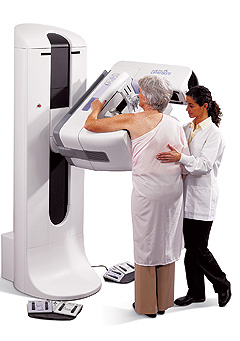
Chrissie Tomlinson Memorial Hospital has a new three-dimensional mammogram machine that offers “pain-free” breast examinations.
The state-of-the-art Hologic Selenia digital mammography equipment, which the hospital acquired last month, uses technology that enables radiologists to identify and characterise lumps or lesions without the confusion of overlapping breast tissue.
“The pressure used in the mammogram is just enough to hold the tissue in place so there is no movement while the procedure takes place, so there is none of the squeezing that has been experienced in the past,” said Dr. Yaron Rado, chief radiologist at Chrissie Tomlinson and Cayman Islands Imaging.
The tomosynthesis system offers 3D scanning of the breast instead of traditional 2D scanning.
“It’s very exciting to see this new technology being implemented at the hospital. The introduction of technological advancements of this kind, which are not currently available anywhere else in the region, is important to the strategic plans that we have as a hospital and the future that CTMH sees for strengthening their motto of exceptional health care,” Dr. Rado said.
The hospital hopes that with this new technology in place, more women and men will come forward for regular screenings.
The fees for the mammogram service are not being increased.
Hologic’s systems took the top three places for digital mammography in the 2012 Best in KLAS Awards.
Traditional mammograms present certain challenges in image reading and interpretation. When a 3D object, like the breast, is displayed as a 2D X-ray, the breast must be forcibly “squeezed”, so it can be as flat as possible between the plates, leading to a loss of image-depth information. Due to this image flatness, lesions may be masked by the tissue above or underneath, or normal structures may mimic a lesion.
The compression and squeezing of the breast in traditional mammogram examinations can be extremely painful for some women and can even deter them from getting the test. Early detection of breast cancer is vital to saving lives of patients.
Breast tomosynthesis, the new technology being used, helps reduce these challenges.
The tomosynthesis mammogram produces a three-dimensional image of the breast by using several low-dose X-rays obtained at different angles. The breast is positioned in the same way as for a mammogram, but the X-ray tube moves in a circular arc around the breast.
With the old system, mammograms take only one picture, across the entire breast, in two directions: top to bottom and side to side. Studies show that tomosynthesis outperforms traditional mammography and that for both masses and microcalcification, the recall rates for patients who are asked back for a mammogram do-over showed a reduction of about 40 per cent.
Preparing for a mammogram
Preparing for a 3D mammogram is the same as for 2D mammograms:
Wear two-piece clothing (top and pants/skirt) to simplify undressing for exam.
Do not apply talc, deodorant, oils or creams on your upper body the day of the exam.
If you experience breast tenderness with your menstrual cycle, try to schedule your exam one to two weeks after your period when breasts tend to be less tender.
In some women, caffeine-containing products, like cola, coffee or chocolate, could make breasts more tender. Women who are sensitive should limit caffeine intake for two weeks prior to exam.
If you have had prior mammograms performed at other imaging facilities, notify your doctor so that the previous study may be requested for comparison.
Tell the technologist if you have breast implants.
Women should inform their doctor if they are or may be pregnant or nursing prior to any radiological imaging. Your doctor may recommend another type of test to reduce the possible risk of exposing your baby to radiation.

Related Videos