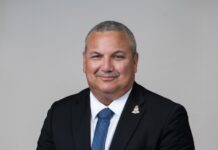
Former Cayman Islands Premier McKeeva Bush managed to stun the world in July 2012 when he announced his government’s intentions to implement what amounted to a payroll tax for non-Caymanian workers earning more than $20,000 per year.
The plan was later changed to non-Caymanians earning more than $36,000 per year.
The Caymanian Compass’ main webpage – www.cayCompass.com – exploded with more reader comments than it had ever received before on a single story.
“The downward spiral has just accelerated exponentially,” one reader opined. “The implosion of this islands economy is imminent. What part of spending equals revenue equation escapes you? A fool and his money are soon parted.”
Another reader stated: “I understand this will be a tax on private sector employees only. Expats who work for the CI government will be exempt. So those employees whose salaries are already paid by the working public will have a free ride. Well, at least we won’t see government employees leaving!”
The proposal led to what, in the Cayman Islands, might be considered a major public uprising led on social media. A Facebook page called ‘Caymanians and Expats United Against Taxation’ was started and included more than 10,000 members by the end of the controversy.
The issue even brought Cayman’s typically stoic local business community out of the woodwork with a statement being released from Woody Foster, Brigitte Kirkconnell-Shaughness, Roy McTaggart, Dan Scott, A.L. Thompson, Gene Thompson and Wilbur Thompson about two weeks after the idea was first introduced.
“Clearly the proposed Community Enhancement Fee has created polarity and division within our community, and this has caused us great concern,” the statement read. “We are a welcoming diverse society that recognises the contributions of Caymanians and expatriates alike, and we are confident that the new revenue measures will provide a way to share equitably the responsibility of providing revenue to the government.”
The Cayman Islands Real Estate Brokers Association called the proposed tax “fiscal suicide” and noted the international news coverage of even the proposal of such a tax noted that Cayman’s financial future looked bleak.
“From a marketing perspective we are giving up the single-most important value proposition that the Cayman Islands has to offer our investors – no direct taxation in a world where taxation is on the increase everywhere else,” the CIREBA statement said. “In doing so, we will have lost the primary advantage that distinguishes Cayman from the rest of the world and fallen directly into the hands of our competition.”
In the face of overwhelming opposition, Premier Bush’s government eventually withdrew the plan.
However, it’s worth noting that at its essence the Expat Tax – or the Community Enhancement Fee as it was called by government – was essentially a payroll tax.
Ten per cent
Mr. Bush said at the time that he did not want to impose the tax, but he had no choice because the United Kingdom was demanding a sustainable Cayman Islands budget.
“The [Foreign and Commonwealth Office] insisted that the government strengthen its fiscal position by implementing a greater level of expenditure reductions than had hitherto been made by honourable ministers and senior civil servants. The concern is to make expenditures more sustainable going forward into future fiscal years,” he said in a statement. “The FCO is also of the firm view that the strengthening and improving of fiscal results for the Government must not occur solely as a result of reductions to expenditure, but revenues of the government need serious enhancement and expansion.”
With regard to expenditure reduction, Mr. Bush said the government had already made “extremely deep cuts” to the budget at that point.
“This still did not produce enough savings to satisfy the FCO,” he said. “There have been calls to have significant layoffs – in the range of 500-700 – in the civil service from the private sector. Neither the governor nor the deputy governor has come with any such plan and government could not have accepted it anyway.”
Mr. Bush said the government had a choice of revenue measures to choose from.
“We could have introduced income tax, property tax, Value Added Tax or something softer such as the Community Enhancement Fee,” he said. “Government has opted to introduce a Community Enhancement Fee that is linked to the remuneration level received by work-permit holders in the Cayman Islands.”
Opposition Leader Alden McLaughlin opined that a proposed Cayman Islands payroll tax slated to affect only work permit holders within the Islands may not stay limited in that way for long.
“For those who think that somehow they’re insulated from this… once government implements this system, it just takes a stroke of a pen to include Caymanians or to raise the rate from 10 per cent to 15 or 20 per cent,” Mr. McLaughlin said. “It is one thing to say the country is moving from a system of indirect taxation to direct taxation, it is quite another to say it is moving from no income tax to having an income tax.”
As a balancing measure, Mr. Bush said he would remove legal requirements that companies and employees pay a combined 10 per cent into a work permit holder’s retirement savings accounts. Currently, 5 per cent of a worker’s salary and a matching 5 per cent contribution from their employers must be paid into a Cayman Islands pension account.
The premier said government would not accept proposals to lay off 500 to 700 government workers and decided instead to charge the payroll tax to work permit holders that earn more than $20,000 per year.
Opposition Leader Mr. McLaughlin said the “income tax”, as he referred to the payroll tax, was the worst possible option for Cayman and that he understood the United Kingdom had made no such requirement during Cayman’s budgeting process.
“There are other direct taxation methods to consider: property tax, sales and excise tax, a value-added tax,” Mr. McLaughlin said. “This income tax is going to be hugely damaging to the country. It’s going to completely alter the view, from a perception standpoint, of investors.”
Tax dead, damage done
Although the 10 per cent tax proposal died a swift death a few weeks after it was proposed, some argued the damage from it even being put out in the public domain had already been done.
One company, Davenport Construction, which assists several charities in the Cayman Islands was hit hard and company officials stated it may be difficult to recover.
“We have lost three sales, which we had deposits for since the announcement of a payroll tax on expats last week. The combined amount for those sales was $1.3 million. One was a home worth $345,000 and two others worth $485,000,” said Davenport Construction owner Paul Pearson at the time.
He said the potential home buyers backed out because of the proposed tax.
“One man is losing his deposit, as he made changes to the home he was going to buy. A deposit is nonrefundable if changes are made. However, this individual did not mind,” explained Mr. Pearson.
He said the customer told him, “Unfortunately, whether a fee or a tax is imposed or not, the haste with which decisions are made and the impact this can have on the economy means that we would not consider buying, as it is all too uncertain.”
Davenport Construction spent $120,000 in the community last year, according to Mr. Pearson. This year, the company had a target of more than $200,000 for community projects, which included assistance to the Humane Society, Red Cross, Meals on Wheels, the Cayman Islands Youth Development C
ommittee and the Positive Intervention Now programme, which is an after school-intervention programme for adolescents in central George Town. A centre for performing arts at the George Town Primary, which was on Davenport’s agenda for this year, has now been suspended until further notice. The project was worth about $300,000.
A statement from the George Town Parent and Teacher’s Association regarding this development read, “We are saddened that the Centre for Performing Arts project has been put on hold but we understand the gravity of the situation. We hope that the circumstances surrounding the postponement can be rectified in order to bring this amazing project to fruition. The PTA will continue to raise funds for the music and performing arts programmes, which are a very important part of the development of our children.”
For more on the upcoming election, please click here.
Related Videos