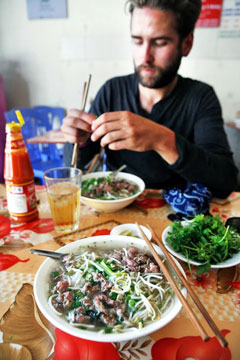
Mizu Asian Bistro & Bar’s executive chef Dylan Benoit spent the summer in Asia with his brother Lucas, exploring the region’s cuisines, techniques and ingredients, with the aim of enhancing and further perfecting the menu at Mizu. In the first of a five-part series, he shares his culinary adventures. First stop on the gourmet extravaganza – Vietnam.
Vietnam has a rich culinary history with many ties to Chinese, Cambodian and French cuisine. Due to influences from the French colonization in the late 19th century, there are many foods in Vietnam that are uncommon in neighboring Asian countries, making it a truly unique feast for the senses.
One of the most notable is the abundance and availability of amazing Vietnamese-style coffee. “Ca phe sua da,” which means “coffee milk ice,” is a common drink any time of the day in Vietnam.
Strong in aroma and intense in flavor, it is made from dark roasted, coarse ground coffee, sometimes infused with chickory, that slowly drips from a small aluminum single portion pot into a small glass and is then mixed with sweetened condensed milk. Once the coffee is finished brewing, the consumer stirs the coffee and condensed milk to form a tan color, velvety textured beverage that is then poured over a tall glass of ice and consumed in one gulp. At least that’s how we did it; this stuff is too delicious to sip.
Pork pâté served with fresh, rustic baguette, akin to the kind you would find in the French country side, are prevalent all over Vietnam. Called “Bahn Mi,” this French-inspired dish offers a quick and easy meal any time of the day, but is perhaps most delicious when consumed late night after several Tiger beers.
The most common ingredients are pork pâté, fresh cucumber, shredded carrot lightly pickled in rice wine vinegar, fresh cilantro sprigs, sliced green onion and the option of a fried egg. All stuffed in a fresh baguette and wrapped up in newspaper.
But Vietnam is most well known for Pho, (pronounced w“fa”), a noodle soup made with piping hot broth, noodles, thinly shaved beef and an assortment of vegetable and herb garnishes. Beef Pho – “Pho Bo” – is most common but chicken – “Pho Ga” – is also often available. Most restaurants will only serve either beef or chicken pho. This is especially true in rural regions. The idea of doing one thing very well, instead of lots of things half-way, is something that is placed in high regard across Vietnam.
Seafood a must
With more than 3,000 kilometers of coastline, Vietnam is one of the largest seafood producers and exporters in the world, along with Thailand and Indonesia. As with most cuisine in Vietnam, seafood is regional, and the best dishes are found in the towns and villages that pepper the coastline.
In Ha Long Bay, a UNESCO World Heritage Site in northeastern Vietnam, my brother and I passed restaurant after restaurant illuminated with neon lights boasting fish tanks stacked to the ceiling. Each restaurant offered a vast array of seafood dishes. Even after a decade cooking in professional kitchens, there were numerous fish, crustaceans, mollusks, bivalves and cephalopods I had never seen or heard of.
We decided to check out one of the smaller, less unassuming restaurants, which was filled with buckets teeming with the catch of the day. With no menu, we simply picked our seafood of choice from one of the buckets. It was then weighed on a scale before being sent to the cook to be prepared on a single wok in the middle of the restaurant.
After selecting some small shrimp and a couple of blue swimmer crabs, we found a spare, almost child-size plastic table and chair, which we wedged ourselves into to enjoy our seafood feast.
A steady stream of accompaniments and sauces begin to arrive at the table. Plates piled high with fresh basil, cilantro, and mint, small dishes of chili sauce and containers of fish sauce. Small side plates arrived as well, including a salt and pepper mixture accompanied by miniature limes and diced chilies, meant to be mixed with the salt and pepper to create a dipping paste for seafood.
By the time this procession of accouterments had been delivered and arranged our first plate of food had arrived – the shrimp. Grilled to perfection, they were served plain with little to no seasoning or frills. They were small, sweet and delicious. We ordered another round right away.
Meanwhile, the cook was about to prepare the blue swimmer crabs, so I headed over with my camera to get a couple of shots and get the recipe. He fired up the burner, the flames rocketing up the sides of the iron wok. A few tablespoons of oil heat up in a matter of seconds, and he tossed in the crabs to “toast” them, the sweet aroma of roasted crustacean shells filling the air immediately.
Next, he strained them out, draining the shells on paper towel. Then he added lemongrass, fresh chili peppers, chopped garlic, diced shallots and a slab of tamarind paste, before finally adding some water to create a sauce. After tasting his creation, the chef added some sugar, chili paste, fish sauce and salt, allowing it to simmer a minute before tasting again. Once satisfied with the flavor, he added the toasted crab back in and tossed until well coated, scooping it out onto a plate to serve.
The flavor at first was sweet and tangy, typical of tamarind but with a deeper sweetness than usual from the caramelization of the natural sugars in the wok. The salinity of the crab meat almost creating the perfect balance, it was delicious, but something was missing. About three or four bites in, we started to feel the heat, creeping on in a subtle way to balance out the sweetness and acidity and round out the four pillars of Asian cuisine – hot, sour, salty and sweet – the base of almost every dish in Asia. This time the sourness commonly created by citrus, like lime or orange, was replaced by the tart bite of tamarind, a truly unique and instantly recognizable flavor.
A delicious meal, it solidified our dining rule for the rest of the trip – only eat at the most unassuming restaurant, with very small plastic table and chairs.
Inspired by the delicious dish of blue swimmer crabs in Ha Long Bay, the use of tamarind paste, sugar and chili paste creates a beautiful balance of spice, sour, salt and sweet.
This recipe substitutes soft shelled crab instead of the traditional hard shell crab, simply because it is easier to eat and absorbs the flavors of the sauce that much more.
- 4 soft shelled crab, cut in half
- ¼ cup corn starch
- 1 teaspoon salt
- 3 tablespoon vegetable oil
- ¼ stalk lemongrass, sliced very thin
- 2 red bird chili peppers, cut into rounds
- 3 cloves garlic, smashed
- 1 shallot, chopped
- For the tamarind paste
- 1/2 cup water
- 1 tablespoon chili sauce
- 3 tablespoon sugar
- 1 tablespoon fish sauce
- 2 tablespoons salt
- Small handful of mint, Thai basil, and cilantro for garnish
- 2 bowls steamed rice
Mix 1 teaspoon salt with cornstarch in a mixing bowl, and toss crabs until well coated. Deep fry until golden brown and crispy. Once cooked, remove from oil, season lightly with salt and drain excess oil on paper towel.
While the crabs are frying, heat the oil in a wok until shimmering, add lemongrass, chilies, garlic and shallot, stir fry for 30 seconds.
Add the tamarind paste and mix, then add water and incorporate well to create the sauce. Season with sugar, fish sauce and salt and simmer for a minute to reduce.
Taste for seasoning and adjust so it’s a balance of spicy (chilies) sour (tamarind) salty (fish sauce) and sweet (sugar), using sweet to balance heat, and sour to balance salt and vice versa. When the sauce is ready, toss crabs in the sauce to coat.
Place crabs on a plate, pour excess sauce over top, r
oughly tear herbs and sprinkle overtop of the crabs. Serve with 2 small bowls of steamed rice and Tiger beer.


Related Videos