


The Turks and Caicos Islands is enjoying record tourism numbers even amid the pandemic. Has the success of a fellow British Overseas Territory come at Cayman’s expense or has it ‘cracked the code’ that our leaders can follow to revive a crumbling pillar of the economy?
The TCI effect
When Barry Thomas was unable to book a trip for his family to the Cayman Islands in June, he opted for Turks and Caicos instead.
“We liked it so much we visited again in August,” he said.
Regular visitors to Cayman, the Thomas family from North Carolina, had been looking at property in Cayman Kai.
But the extended border closure changed their perspective and put other destinations on their radar.
While other islands have been closed to visitors or suffering through uncontrolled COVID outbreaks, Turks and Caicos is one of a handful of destinations that has seized the moment to emerge as a tourism leader.
The island chain saw a slow and steady recovery snowball into record arrival figures through the summer.
Luxury travel, including private jets and high-end real estate, is a growth area fuelled by celebrity endorsements.
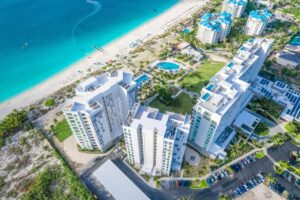
A new Ritz-Carlton hotel opened in June on Providenciales’ Grace Bay. John Hazard, then manager of the Marriott Beach Resort in Grand Cayman, was recruited to lead the new venue.
Early next year, cruise visitors are expected to return to Grand Turk for the first time since March 2020.
Premier C. Washington Misick attributed the success to a high vaccination rate and a tight partnership between the private and public sector.
“Through the end of August, we recorded our best 90 days for tourism performance. The best in our history, even pre-Covid,” he told Travel Weekly in an article that declared Turks and Caicos had ‘cracked the code’ of post-COVID travel.
As the Cayman Islands looks to reopen its borders, the fellow British Overseas Territory offers both a template of a successful destination and a potential rival for tourism and real estate investment.
Thriving through COVID
Simple but strict entry requirements combined with well-drilled on-island safety measures and a focus on luxury have enabled Turks to rebuild tourism without sacrificing safety, says Stacy Cox, CEO of the Turks and Caicos Hotel and Tourism Association.
The island never sought to achieve a ‘zero COVID’ scenario, reopening its borders in July of last year, even as a 6pm curfew remained in place.
“We realised that elimination is not an option, COVID is here and it is here for a while,” said Cox.
“The health department has been mindful and vigilant – balancing restrictions with living life.”

The decisions have not been without consequences.
The island has suffered 23 deaths since the pandemic began, and now, with around 70% of the 40,000 population vaccinated, averages around 40 active cases a day.
But Cox believes visitors are having very little impact on the state of the virus within the islands.
“We have conducted 18,000 tests with tourists and seen 670 positive cases since reopening in July last year – 98% of our cases are not imported,” she said.
Spas transformed to testing centres
Turks and Caicos requires visitors to provide proof of a negative COVID test to enter the country.
All travellers over the age of 16 are also required to be vaccinated, plus they must have medical insurance that covers COVID and they are required to fill out their information through a travel portal.
Cox said the island chain’s heavy reliance on tourism had compelled government and the private sector to work together to provide easy and convenient means of facilitating tourism.
There are 21 testing centres around the islands, with 16 of them based at hotels.
“Spa techs have been trained to use lateral flow tests and many properties use their spas as in-house testing centers. Guests don’t have to leave the property to get their re-entry test for the US.”
Hotels have also kept room stock available for guests that may need to quarantine.
Pent-up demand
Cherylann Jones, permanent secretary in the Ministry of Tourism of Turks and Caicos, said the industry was essential to the territory’s economy and a swift return of visitors was crucial to maintain jobs.
She said government and the private sector had worked hard on establishing, drilling and training a clear set of protocols. All service providers had to apply for a ‘TCI Assured’ stamp of approval to demonstrate compliance.
“Tourism is our major, major revenue, revenue generator and so it was critical from very early to start thinking about reopening about the safety issues about reducing the risk of COVID 19,” she said.
Being quick off the mark helped the destination benefit from massive pent-up demand in the core US market, where large swathes of the population had been unable to travel for more than a year.
Jones said government had invested heavily in marketing the fact that TCI was one of the few destinations openly welcoming visitors.
“We promoted not only lovely beaches, but of course, the protocols that we had put in place,” she said.
The effort seems to have paid off.
More than 50,000 visitors touched down in Turks and Caicos in June of this year – a near 20% increase on 2019, which was itself a boom year across the Caribbean.
“We felt these numbers were extraordinary given the current pandemic throughout the world,” said Jones.
Aside from marketing and logistics, the islands have some natural advantages that have made tourism easier in the COVID era.
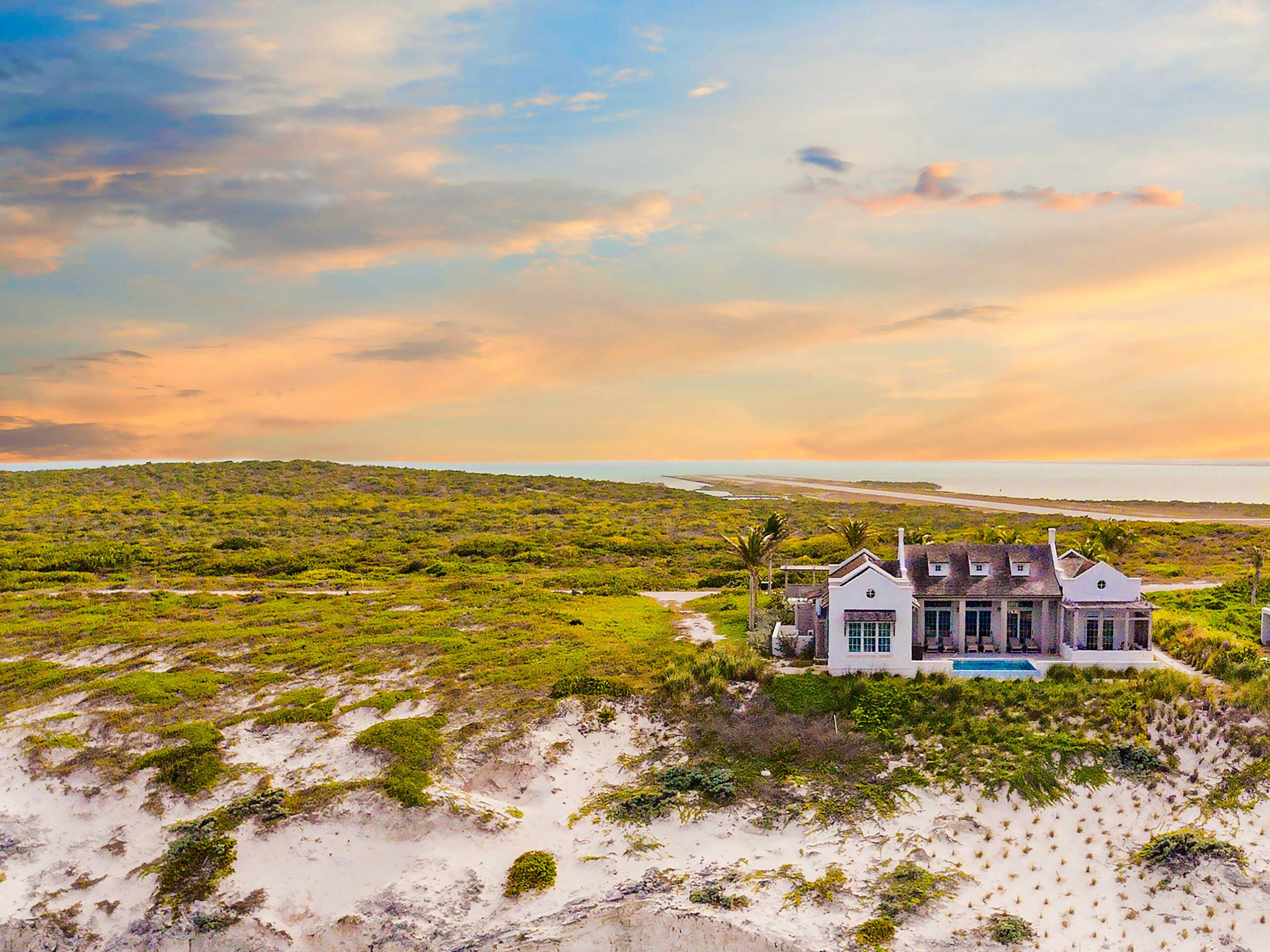
Most resorts, says Cox, are low density and many restaurants have extensive outdoor-dining facilities.
“Even with full occupancy it feels spacious,” she said.
Luxury travel
The islands have tapped into a niche of high-net-worth travellers looking for an escape from the stress of the pandemic.
While hotel occupancy has rebounded to pre-COVID levels, it is high-spending luxury travellers that are underpinning the destination’s biggest gains.
Private jet arrivals are up 25% and high-end villas are enjoying record occupancy with bookings stretching through next summer.
That extends to the real estate market, says Ian Hurdle of The Agency – one of Turks and Caicos’ premier agents.
The industry has seen $500 million in sales in the first six months of 2021 – eclipsing the total for 2019.
Hurdle, a former resident of Cayman, said many visitors had discovered Turks and Caicos over the past 18 months. He believes the closure of other destinations – especially Cayman – coupled with the remote working phenomenon and the trend of wealthy individuals seeking luxury boltholes amid the chaos of the pandemic, has seen a surge in demand.

“It has been an incredible year and we are not seeing any sign of slowdown,” he said, highlighting high demand for multi-million-dollar beachfront property.
Hurdle acknowledged Cayman’s diverse economy has enabled the islands to take a more cautious approach to COVID-19. But he believes Turks and Caicos has gained business as a result.
“We were already moving as a burgeoning destination but that has really escalated over the past few years,” he said.
Real concerns
The trend has been noticed in Cayman.
James Bovell, of real estate broker RE/MAX Cayman Islands, believes the islands have lost significant business in both real estate and tourism to destinations that opened sooner.
He compared the phenomenon to Hurricanes Irma and Marie that struck the British Virgin Islands and other Caribbean islands in 2017, leading to a surge in visitation to Cayman.
“That gave us many new visitors who, once having experienced Cayman, wanted to return and in many cases, invest,” he said.
Bovell believes Cayman may have permanently lost some previously loyal visitors. But he said a solid and consistent reopening plan would put the island back on track.
Kim Lund, also of RE/MAX, agrees, highlighting Turks and Caicos as Cayman’s biggest competitor for upscale real estate.
He said the islands were investing in infrastructure and gaining traction as the luxury destination of choice for higher spending travellers and celebrity visitors.
“They have already caught up to us in quality and are surpassing us with substantially more five-star properties,” he said.
“They are getting more and more of the affluent tourist and visitor market, slowly eating away at Cayman’s market.”
Lund said TCI had emerged from almost nowhere over the past 15 years to be serious competition for Cayman.
“We cannot take our success for granted and need to keep working hard to attract the type of tourism and investment that will make a positive impact to Cayman and all the residents here.”
Cayman connections
One Cayman businessman who is familiar with Turks and Caicos’ reopening plan is Michael Tibbetts, the owner of Clearly Cayman dive resorts, which has properties on all three Cayman Islands.
Amid frustration over the border closure, he branched out and invested in a new resort in South Caicos. Visitors that had been forced to cancel at the Cayman resorts were booked instead at the new location.
Tibbetts believes Cayman will eventually build back its business, though he highlights airlift and staffing as two major challenges ahead of the 20 Nov. reopening.
“I have no doubt that many of our guests will eventually return to Cayman but it will be a slow process to rebuild,” he said.
“We are planning to open our Cayman resorts as airlift becomes available and demand increases.”
Tibbetts who is also vice president of Cayman Islands Tourism Association, said he was encouraged by the recent spirit of collaboration between the public and private sector over the reopening plan.
While he views Turks and Caicos as competition, in some respects, he said the islands also provided a blueprint that Cayman could learn from.
“I believe TCI has navigated through the pandemic very well by balancing COVID risk reduction with protecting the livelihoods of islanders and the continuity of businesses,” he said.
Tibbetts believes it is important that Cayman gives up on the ‘COVID-zero goal’ and instead focusses on keeping hospital cases as low as possible. He said the virus was already in the community and visitors were unlikely to influence the picture too much.
“With a high rate of vaccination combined with ongoing risk-reduction measures, such as mask wearing and late night curfews, TCI has managed to avoid a significant spike from the Delta variant,” he noted.
Growing pains
Back in Turks and Caicos, Cox says they are beginning to encounter a different set of problems – issues that will be familiar to Caymanians from long before the pandemic.
Slot management for arriving aircraft has been a huge concern, with multiple planes arriving at once and crowds of visitors at times required to wait on the tarmac.
“For the festive season we are looking for ways to improve the experience at the airport,” she said.
“That has been a challenge and a new airport is the long-term solution.”
Those are the kinds of problems she is happy to have. Turks and Caicos does not have a significant financial services industry or a multi-faceted economy to rely on.
Attracting tourists and keeping them is the bread and butter for the islands’ economy.
Does that growth put them in direct competition with Cayman? She is not sure.
“Only time will tell,” she says, “but hopefully there is enough business to go round.”
Turks and Caicos – entry requirements
Vaccinations: All adult passengers must be vaccinated but the requirement is not in place for children under 16. Unvaccinated travellers must quarantine for 14 days.
COVID testing: A test from an accredited lab is required 72 hours prior to travel. Lateral flow testing is available at hotels for those that require tests to return to their home country.
Insurance: Insurance, which covers COVID-19 medical costs and full hospitalisation, doctors’ visits, prescriptions and air ambulance, is required.
Paying for isolation: Visitors are fully responsible for the cost of quarantine in the event they test positive during their stay. Some insurance policies cover this.
Other requirements: Visitors must fill out a health-screening questionnaire and upload their details to a travel portal before they fly.
Related Videos











This is not so much an extraordinary accomplishment by TCI as it is a damning indictment of Caymans overbearing approach to Covid-19.
TCI makes it easy to visit and they don’t punish families with unvaccinated young children with punitive quarantine.
Wake up Cayman and learn from this example of forward thinking leadership and in particular pragmatic policy as it pertains to visiting children!
We’re on our way to St Marten this Sunday. Our plans were to be in Cayman. We had plans for last March, then August, then November. Finally gave up. We have plans for next March again. Four of our travelers are under three so unless rules change we won’t be going then. It’s so sad how horribly wrong Cayman has been at handling this. Maybe some will read this article and realize it.
This explainer making the rounds puts a fine point on our place in the World.
https://www.youtube.com/watch?v=0cAtvkjWRQU
So what will the Cayman Islands do for vaccinated returning families and guests over the Christmas season that have children and babies who are unable to be vaccinated?
This is exactly what many people said would happen if Cayman Islands remained closed for 2 years. People find other destinations that are doing it well. TCI has always been a sort of Cayman Lite and this confirms it is a natural alternative. Learn how well TCI has handled this record surge in tourism without a corresponding surge in Covid and replicate it.
Planning is the key. Will CIG take note and learn anything? That is the question.
Our family of 10 spent a week on Grand Turk in July as we couldn’t go to our condo on SevenMile Beach. We loved it and the Grand Turks people made us feel very welcome. Kind of like Cayman used to be years ago. Diving was excellent. Our mode of transport was golf carts. Will definitely go back.
The problem is twofold- firstly, a change in political leadership may have created a discontinuity unmanageable by the civil service entrusted with implementation as the less experienced ministers and an opportunistic ‘caucus’ struggled to get a grip on a clear-eyed route to managed entry controls; secondly, the abandonment of rigorous controls over the implementation of PCR or vaccination checks on returning residents, first-time work permit applicants and irregular chancers seeking to duck the system linked to a leaky and lightly policed quarantine system lost the essential pre-opening controls that would have kept community infection spread within manageable bounds.
Putting it another way, did PACT government lose the plot, while the play was lost to unscrupulous or even corrupt actors serving their narrow interests?
TCIs are appealing to people for multiple reasons, not just because they are allowing visitors during Covid.
What Cayman should take away from this info is that the TCIs currently are what Grand Cayman used to be – charming, quaint, NOT overbuilt & provide visitors with the feeling of a true island experience!!!
I have been to TCI’s several time and can confirm all the above positive comments are true… Their beaches , the gin clear water, sunshine and palms are the ingredients the money spending tourist is looking for… the only difference right now is they have the tourists ….and we don’t. I never thought I’d see the day- G Nowak
Turks and Caicos changed their policy in August to take effect in September. I had to change my vacation plans because of their overbearing Covid policies. I will NEVER visit Turks and Caicos as long as they continue these draconian policies and just because they had a good summer doesn’t mean they will have a good winter. Either the vaccines work, or you need a test. NOT BOTH.
Turks and Caicos has taken a lot of our island businesses as well a our tourist. Amazing how they did not lock down as Cayman did yet they have the same amount of deaths which is extremely low at 26-27. I think we have seen with other islands that we need to fully open up for ALL tourist and if you are not vaccinated then be sure had have a test to come on to island and then maybe one 3 days later but having to quarentine for 7 days is ridiculous. Even in the US I was able to go to work just 5 days after testing positive and with no symptoms. We need to treat this as an epidemic and not a pandemic.