

The proposed return of stayover tourism has cracked open the door to recovery for the troubled industry. But multiple businesses and jobs still depend on the higher volume of passengers provided by cruise ships. As Cayman’s leaders seek to negotiate the complex logistics of cruising in the era of COVID-19, questions linger about the value of the sector to Cayman and whether a rethink of the relationship with the mega corporations that dominate the industry is possible.
On Standby
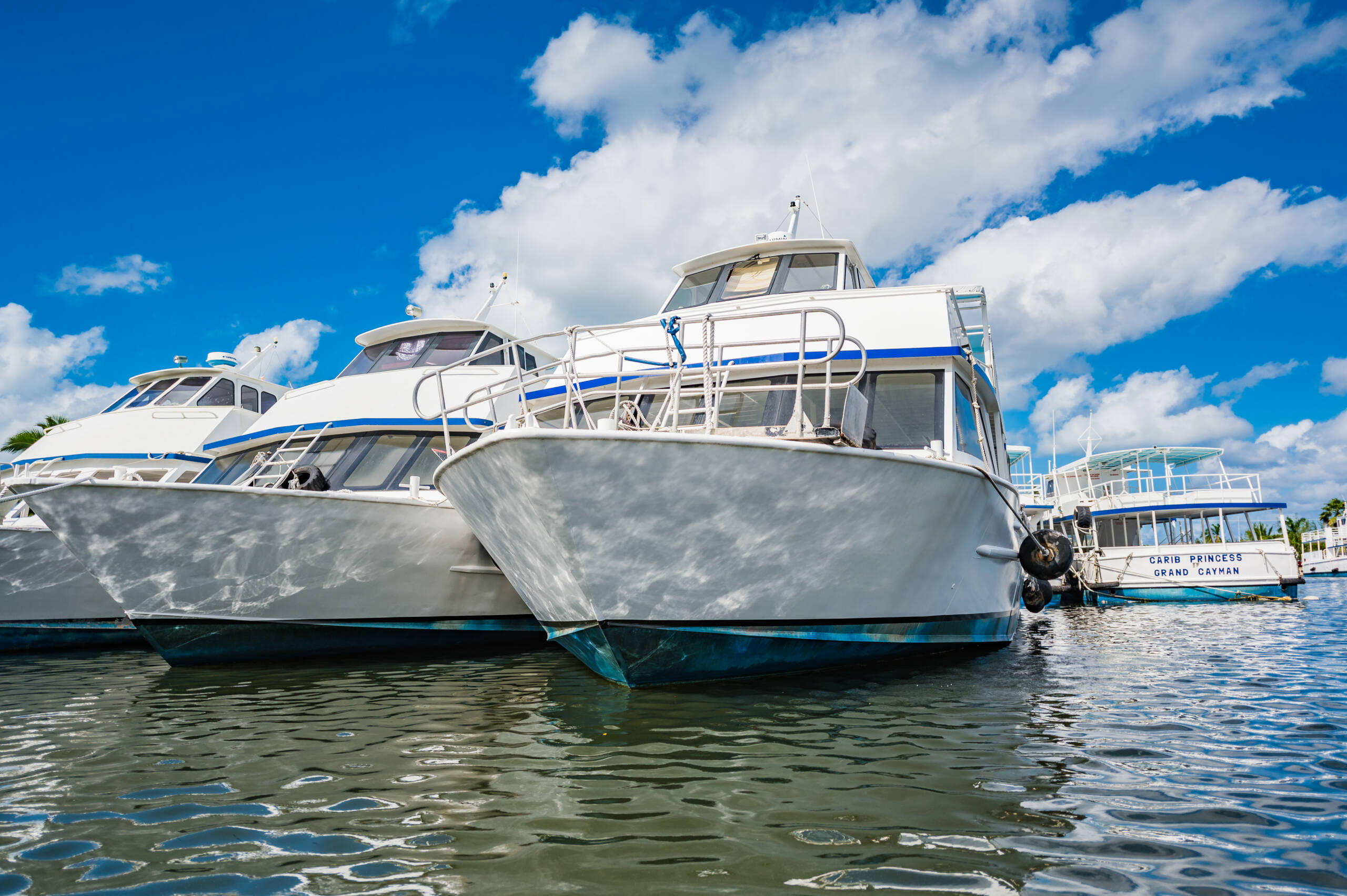
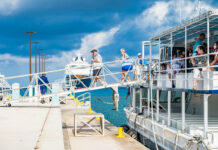
The fleet of tender boats looks out of place in the quiet residential canal-side community.
Built to ferry thousands of cruise tourists from ship to shore, the sturdy boats have been moored in their ‘hurricane hole’ for so long they have started showing up on the Google Earth satellite map.
Two years ago, Caribbean Marine Services was facing the threat of extinction, as Cayman’s leaders pushed a proposal for cruise piers that might have brought 2.5 million passengers each year to Cayman.
Ironically, the COVID lockdown, was the final nail in the coffin of project that was already facing major public opposition and a referendum on its future.
The pandemic might have saved the tender operation in the long term.
But, for now, it is in mothballs. A staff of 55 has been trimmed to a skeleton crew of nine.
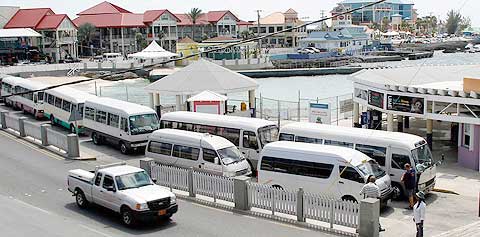
For many businesses – the shuttered shops on the waterfront, the taxis parked in driveways around the island, the North Sound tour boats straining against their moorings – the 20 Nov. reopening date is not a significant watershed.
Until the cruise lines come back, there will be no reopening.
Adrien Briggs, owner of Caribbean Marine Services, believes the island still needs cruise tourism. The port debate was about scale, he said, not the question of whether Cayman wanted to stay in the cruise business.
“I think for a large sector of the economy there still needs to be a balance between stayover and cruise,” he said.
“I don’t think 2.4 million passengers was realistic or necessary but there are a lot of businesses and jobs [in the sector].”
New relationship
The legacy of the fractious port debate has left an antipathy towards the cruise business that still lingers.
For Troy Leacock, owner of Crazy Crab watersports and a representative of the North Sound boat operators, there are long-term questions that need to be considered about Cayman’s relationship with the big corporations that shuttle millions of tourists through the Caribbean each year.
But he is in no doubt, that the cruise business has a role to play in Cayman’s tourism future. He believes the island needs to be more selective about which ships come to Cayman and smarter about the deals it negotiates.
“Cruise and the way we catered to cruise on an activity level was not sustainable pre-COVID,” he said, “Let’s not go back to the same paradigm.”
As Cayman’s leaders thrash out the parameters of the return of cruise ships to the Cayman Islands, he believes there is a chance to reset the relationship.
“This is a once in a lifetime opportunity to set the terms by which the cruise ships market, sell and operate activities in the Cayman Islands.”
Tourism Minister Kenneth Bryan is thinking along the same lines.
Bryan is hopeful an agreement can be struck that will see ships in port by the first quarter of next year.
He said rethinking the relationship between Cayman’s tour operators and the major cruise lines would be a longer conversation. But it is one, he insists must happen, as part of a strategy that emphasises “quality over quantity”.
He said government intended to help the land and sea tour operators work collectively to bargain for a better deal rather than competing against each other and driving down the cost of tours and attractions.

He also raised the possibility of minimum pricing for the stingray sandbar to help control numbers and ensure a reasonable margin for operators at the attraction.
“We want to assist those in hospitality to get more money with less people,” he said.
Challenging logistics
The logistics of bringing large numbers of cruise passengers back to Cayman in the era of COVID remains a challenge.
But there is a blueprint to follow.
Michele Paige, president of the Florida Caribbean Cruise Association, said Cayman was one of only 6 out of 37 destinations in the Caribbean and Latin America that remained closed to the industry.
She said Cayman remained an “alluring destination” for many operators and the delay in reopening the port wouldn’t change that.
“Cruise lines are understanding and respectful of destinations’ decisions to do whatever is best for their people and risk tolerance during this world-changing event,” she said. “However, itineraries are planned in advance and cruise lines market the destinations they call in two or more years out.”
Paige, whose organisation represents 22 cruise lines, added that Cayman would simply need to enact protocols in line with the policies of the cruise lines and the current US Centers for Disease Control conditional sail order for guests to come back.
“Cruise lines are ready, willing and able to return to Cayman,” she added.
She said social distancing and capacity restrictions would likely add to the challenges of tendering form the perspective of the cruise industry, which favors destinations with ports. But she said tendering has happened in other ports post-COVID and could likely be managed in Cayman.
David Carmichael, manager of CMS, said the business would work with whatever protocols were put in place.
The biggest challenge, he said, would be building back the staff, a process which won’t begin until it is clear the cruise lines are coming back.
“We are just in a holding pattern to see what is going to happen,” he added.
Soft opening
While he expects to see ships back in George Town by March next year, he believes it will be two or three years before the industry settles into a new normal.
Briggs, who also has stakes in a number of stayover businesses, including Sunset House, Red Sail Watersports and Rum Point Club, agrees. He said tourism as a whole would take a long time to recover.
“I don’t see the island going from zero to 100, it is going to be a soft opening and a slow progression.”
As visitors begin to return, he acknowledges, the pre-COVID anxiety over issues like over-tourism and the stresses and strains that too many people could put on Cayman’s environment and infrastructure would likely resurface.
“Government still has to look at the carrying capacity of this country,” he said.
“Perhaps we can stay at 1.5 to 1.7 million (cruise tourists per year) and that is a happy medium where the businesses can operate and the beaches aren’t overwhelmed.”
Carmichael acknowledges that many people who voted against the pier project, oppose the cruise industry in general. But he believes it is an important part of the economy.
“I don’t think any government is going to say we can go without cruise. We have been lucky with the financial services success, there has been a construction and real estate boom as well, but is that going to cover for cruise in the long term? I don’t think so.
“Look at the bars and shops that have shut, there are a lot more people hurting than you think. If you pulled the stipend out of the game then you would really see it.”
Ghost Town
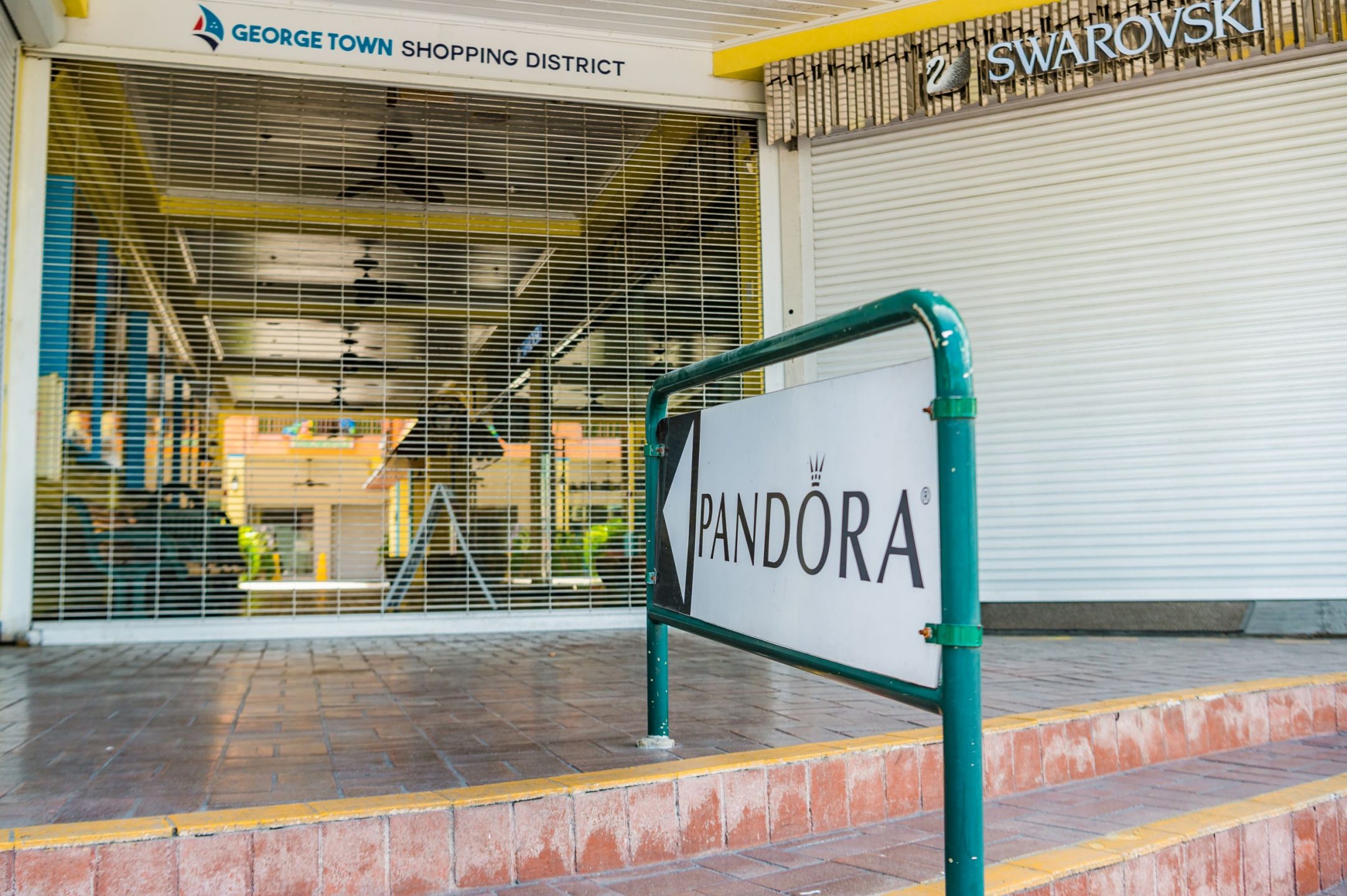
The phenomenon is most evident in George Town were shutters still cover the windows of a majority of store fronts and restaurants.
Matthew Bishop, CEO of Island Companies which closed six outlets in the capital as the impact of COVID became clear, said they would not reopen until cruise passengers were back. Inevitably, he says, the loss of the sector has hurt the retailers and restaurateurs closest to the waterfront the most.
“There are some that are holding up all right but the jewellery businesses and the food outlets that really depend on the cruise industry are down. The better part of 2 million tourists is going to have an effect.”
Despite the impact on the company’s portfolio of shops, which include the Pandora boutique and De Sunglass Man outlets, Bishop is open to a national debate about the future direction of cruise in Cayman.
“There perhaps needs to be a discussion about what Cayman wants from tourism,” he said, “The better majority don’t want Cayman to be a Cancun.”
The desire for better quality ships with higher spending passengers as opposed to simply more cruise passengers is a common refrain from those that depend on the industry.
Carrying capacity
Watersports operator Leacock sees the cruise debate as part of a wider conversation about mass tourism and the direction Cayman wants for the country.
“I think our industry had several major issues pre-pandemic and we will have all those issues again post pandemic if we don’t try to do something different to address them,” he said.
“The question of what is our carrying capacity is not one which has been addressed in any way shape or form. For two years we have had no tourists and there is not going to be a rapid return. We still have time to have a conversation and try to address these things.”
As a North Sound boat operator, Leacock, said he would be happy with ‘more sustainable’ cruise visitor numbers. But he believes a rebalancing of the relationship between international cruise lines and local businesses should be an urgent priority.
“We have to forcefully and assertively renegotiate the terms for cruise to come back to Cayman,” he said.
“What we have to offer is in high demand. We should not be getting people on the sandbar and the operator is only getting $10.”

He believes putting a moratorium on Wildlife Interaction Zone licenses at Stingray City and sandbar and restricting numbers allowed at the attraction would be best for business and best for the environment.
“Stingray City was one of the areas that was being most impacted by mass tourism. We can’t go back to the way it was,” he said.
“We have been complaining for 20 years that we don’t make enough money from these tours. If you look at TCI, look at Bahamas some of the prices they are charging are more than double for similar trips. If the operators can take 50 people and get the same money they were getting for 100 , everyone benefits,” he said.
Related Videos








The cruise lines have billions invested in ships and need places to take them. They need Cayman and other islands far more than we need them. I don’t know why we don’t negotiate from this position of power. Here is our opening offer: YOU pay for the port 100%. We own it, not you. AND, pay us 50 million a year for infrastructure and other necessary expenditures to support so many people arriving each year. And no, we’re not paying you any of our fees we collect. Don’t like it? Fine. It looks like you might have too many boats.
The demographic on the higher priced cruise lines, for example, Holland America, is a lot older — many of their passengers retired. Retirees do not spend money — they have everything they need. How many retirees go on the Stingray City tours? It’s the middle aged people and people with kids who are out there. Retirees may treat themselves to an ice cream cone, but you won’t find them in the jewellery shops, or even t-shirt shops. They cannot take an elitist approach, business-wise that is a huge mistake. I think the cruise ships are going to be selective when they do their itineraries, and having to deal with all the shuttle boats is a huge black mark against Cayman. Guests don’t want to take shuttles, to wait in a holding room for an hour or more for their turn to take the shuttle to Cayman — it’s all about convenience. So even though you may think you are being picky about which cruise lines you will allow to Cayman, don’t think they aren’t doing the same thing.
Stop the Carnival!.
It is a relief to read several people agreeing on what is best for Grand Cayman, it’s environment, and it’s locals’ businesses. The cruise industry may be necessary, but the Tourism Minister stated perfectly it should be all about “Quality, not quantity.” This is an enormous opportunity to find a healthy balance as stated by Troy Leacock. That seems to be all this world needs, yet humanity has a terrible and greedy habit of seeking profits above all else, which then harms healthy living environments.
Grand Cayman can easily be the island that achieves what a healthy balance looks like. I look forward to reading the updates, and I will continue to keep my faith that this IS possible, and that humanity will make the responsible decisions needed for a healthy and sustainable future for this idealic island of paradise.
The islands of the Caribbean have been getting the short end of the stick in the cruise business for decades. Over 50% of worldwide cruise business is in the Caribbean alone. The cruise companies make billions, while the islands only make millions. This inequality makes no sense. The cruise companies play one island off the other to get their way. And the islands allow this to happen. All the islands in the Caribbean that do cruise business need to join together to form an organization to dictate the terms of cruising amongst our islands to the cruise companies. With more strength comes more money, and this will relive the pressure to go for volume of passengers over quality of passengers. This strategy will get each government more money and the local tour operators as well.
While the above conversation is interesting and important, I would like to point out that despite the much-ballyhooed “Grand Re-opening” expected in the next few days, there are STILL no international airlines – except Cayman Air, British Air and (supposedly) Jet Blue who are ready to book flights to Grand Cayman.
I just went on the Travelocity website – one of the largest travel websites in operation – and tried to book a flight from Chicago to Grand Cayman looking for ANY airline that would accept me as a passenger. THERE ARE NO FLIGHTS AVAILABLE UNTIL FEBRUARY 20!!!!!
Maybe Tourism Minister Bryan should be spending his energies getting the airlines to resume flights NOW instead of worrying about the cruise lines 4 months from now. We have heard NO news from the government about negotiations with the airline industry since all the news about Phase 4 starting on November 20. Maybe Cayman Airlines has a death-grip monopoly on flights from the US, but if the government wants to get tourism going again, it can’t depend on Cayman Airlines and British Air to fill that demand.