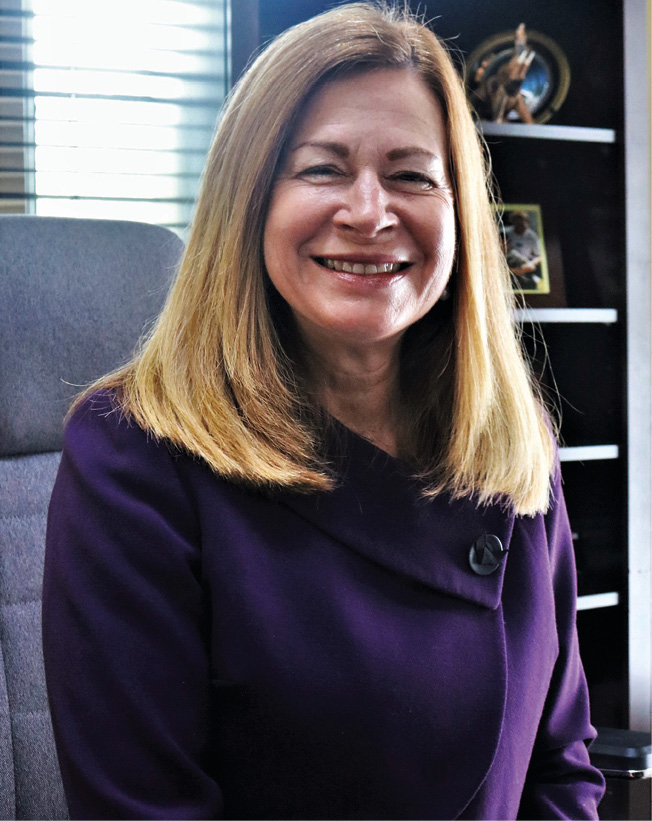
Stacy McAfee is president and CEO of the University College of the Cayman Islands, the first woman to head the campus.
A native of Illinois, McAfee is known for her hands-on academic leadership and passion for community service. She holds a doctorate in educational leadership and management, an MBA and a bachelor’s degree in business administration. She first taught, then moved into administrative roles, working at several colleges and universities in the United States, before signing on with UCCI in January of 2019.
Although women have made great strides in the world of academia, they still occupy a relatively small number of the coveted top rung of university positions. Can you talk about your journey in reaching your level of success, given the sector’s gender gap, especially among leadership?
According to the American Council on Education, “Only 30 percent of all college presidents are women, a figure that is bolstered by the portion who are at two-year institutions, where female leaders make up 36 percent.”
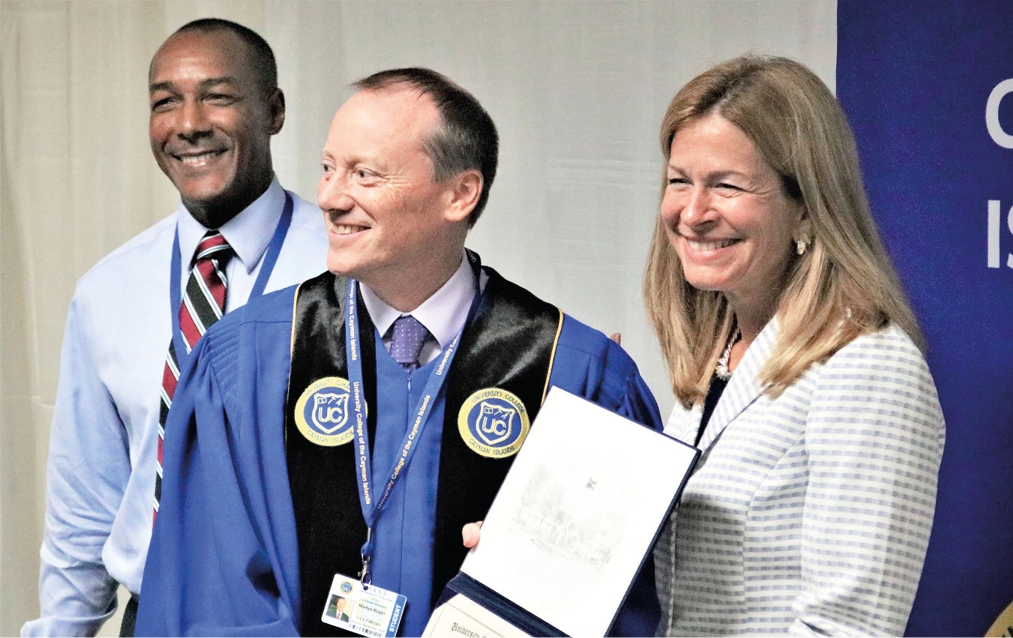
Anthony Ritch. The Governor received his ‘degree’ after being whisked though a series of crash courses in steel pan playing, chemistry, sushi making, media production and computer programming.
Research indicates that women are more likely than men to have altered or delayed their career progressions to care for others. That is true for me as I left full-time employment to care for my young sons. In my case, this career change led me to higher education, where I taught part-time while my children were young. I loved teaching and academia and when I was offered full-time administrative opportunities, I began serving in a series of leadership roles. Those roles included such positions as chief academic officer and campus vice president.
In the course of that progression, I realised I wanted to become a university president. I decided that the best way to achieve my goals was to learn directly from a female president. I hit the jackpot when Pamela A. Eibeck, president emeritus of the University of the Pacific, hired me and mentored me on my path to becoming a university president. She ensured that I had the professional development opportunities to broaden my experiences in philanthropy and other areas. She helped me to evaluate each presidential job opportunity so that I chose a presidency that aligned my calling with the institution’s mission. These decisions led me to UCCI.
At the end of the 2020-21 academic year, nearly 60% of all college students were women, according to data from the National Student Clearinghouse. Women have outpaced men in college and university enrollment for several decades, but last year’s female-male gender gap represents the largest in the history of higher education. What are your thoughts on this growing trend, and its implications?
Since the 1990s, females have outnumbered males in higher education. For the most recent academic year, UCCI’s student population was 61% female and 39% male. The implications are profound for learning economies, and for societal and cultural outcomes.
Learning increases when diversity of gender, beliefs and backgrounds exists within the student, faculty and staff of a university. Dr W. Edwards Deming said, “Every system is perfectly designed to get the results it gets,” which implies that some fundamental changes will be required unless we want the gender gap trend to continue.
As educators, we should consider fundamental shifts in how we teach, assess learning outcomes and prepare students for college. What would happen if universities were expected to be student-ready, versus expecting students to be college-ready? How would that change our curriculum, instruction, support services and view of higher learning?

Throughout the education continuum, we should expect to engage students in interactive, experiential and project-based learning opportunities, instead of just using traditional methods, because they yield better outcomes for both genders.
Because of the dominance of women in higher learning, their representation in the workforce has grown and the pay gap should narrow over time. Girls and boys will see their moms earning while learning and women will become the consumers driving the product and service mix. In the end, we must consider how education could be viewed as an enabler of human potential and realise that gender disparity will have long-term implications not only for effective, functioning families, but also for society.
How is UCCI reaching out in the community to help women pursue their professional and personal goals, especially in the realm of business?
In 2021, UCCI awarded over $100,000 in student scholarships and financial aid. This fall, 53% of those scholarships went to women. Additionally, since 2019, 68% of UCCI graduates were women.
We are also working closely with organisations committed to supporting the progression of women, including 100 Women in Finance and Cisco Systems. Cisco has programming that targets the progression of women – who are often under-represented in technology and financial services – by providing education, mentorship and experiences that build confidence and purpose. We regularly showcase our alumni and celebrate their career accomplishments, while our faculty invites local women leaders into the classroom to speak and lecture.
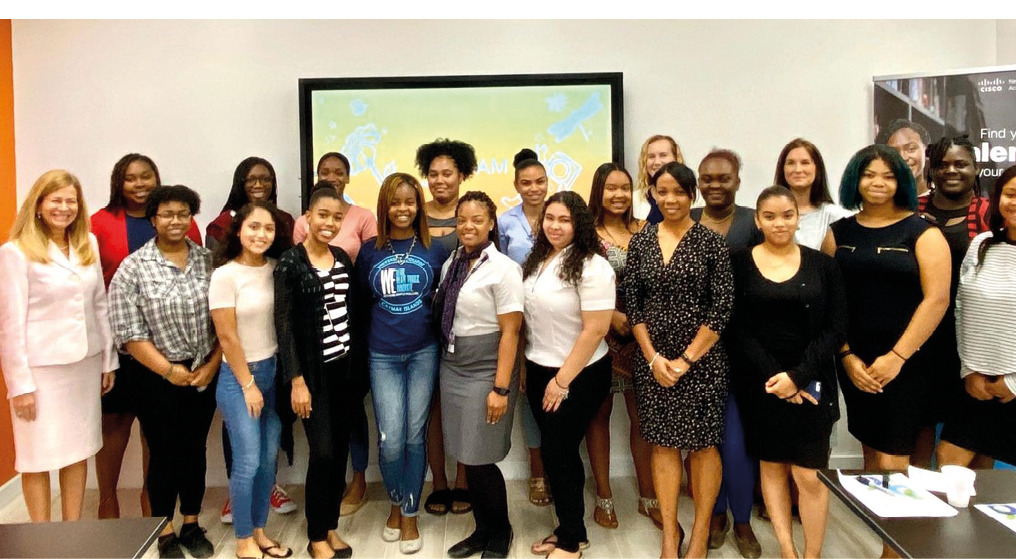
Finally, UCCI is leading by example in hiring and promoting women leaders and faculty. For example, our STEM faculty is predominantly female at UCCI, as is our executive leadership.
On a more personal note, can you talk about who inspired you professionally? What words of encouragement, or advice, would you give women today who may face gender-related barriers and challenges?
My mom was a role model for me and, in many ways, inspired me to serve within higher education, which I still believe is the greatest equaliser in any society.
She became a single mom when I was 15, following my father’s death. I saw her courage in pushing through the barriers she faced in the workplace, and I know that her lack of a college education made the challenges she faced more pronounced.
I dedicated my doctoral dissertation to her, as it focused on the plight of single women from low-income households trying to earn a degree, and the unique challenges they face.
At the same time, my father taught me that there were no limits to what I could accomplish in my life.
Women and girls must be surrounded by people who teach them this same principle. My husband is my biggest supporter and put his career on pause to allow me to lead UCCI.
Women are more than capable of ascending to every professional opportunity available. I encourage everyone to choose friends, spouses, colleagues and mentors that build them up and provide the networks needed to ensure that they succeed.
Finally, I would say that I am so proud to see the progress that women have made in my lifetime. I would encourage others not to become discouraged when faced with a variety of barriers and challenges, because if you persist in achieving your dreams, your success will have a multiplier effect on others, just like the ripple effect of a single pebble dropped in a quiet pond.
In your lifetime, you may not feel that transformative change is possible, but the impact you have by being brave, bold and brilliant will influence others to be more and to achieve more.
Related Videos