During the almost four months of lockdown in the Cayman Islands, while the local waters were devoid not just of cruise ships, but also of jetskis, fishing vessels and dive boats, the much-quieter environment led to a significant increase in fish populations, according to an ongoing Central Caribbean Marine Institute study.
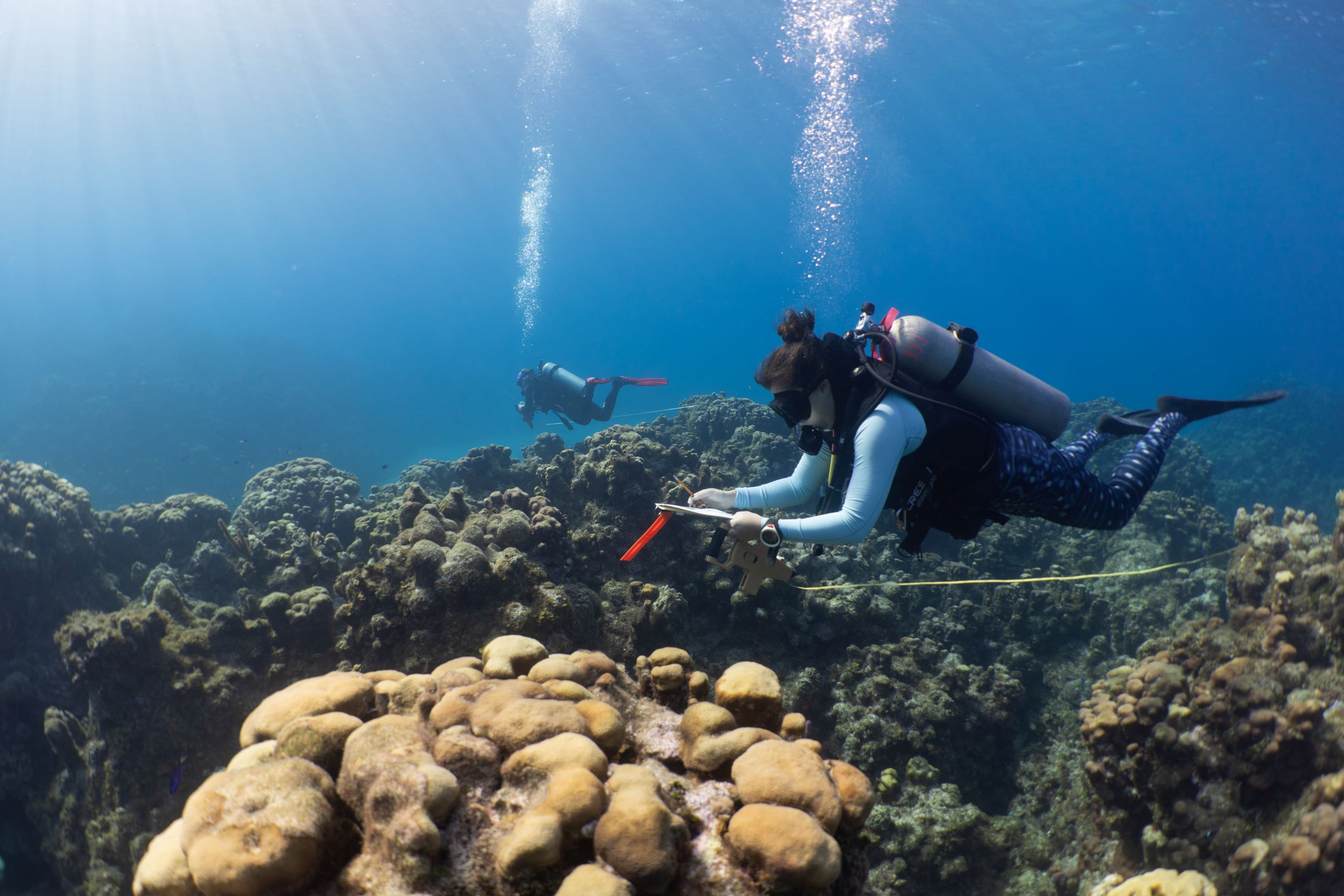
Over the past year-and-a-half, CCMI researchers have been conducting underwater site surveys at four locations in and around George Town Harbour in Grand Cayman, which in normal times is filled with cruise ships. The surveys have been carried out every two months since 1 July 2020, with an initial baseline survey done in July 2018.
CCMI director of research Gretchen Goodbody-Gringley presented the findings of the survey in an online seminar to the Food and Agriculture Organization of the United Nations on Wednesday, 8 Dec.
Tourism decisions

She said she hoped the findings could be used to help inform government decisions relating to the future of tourism in Cayman.
No cruise ships have been allowed to stop in Cayman since March 2020. However, Tourism Minister Kenneth Bryan announced last month that permission had been granted for Holland America Line’s Nieuw Statendam to become the first cruise ship to come here since lockdown.
“We’re at a place right now where we have the potential to really rethink our tourism product, our on-water activities, and how we structure our use of the marine environment,”
Goodbody-Gringley said. “As countries begin to open back up, and people start travelling again, how will we balance our activity and conservation of the marine environment? So, by giving these data to the Department of Tourism and the Department of Environment, they can then use that and integrate that into their tourism-reopening plan.”
The surveys
In her presentation, Goodbody-Gringley said the absence of boat traffic in the areas surveyed provided researchers with a unique opportunity to study how fish populations react when human activities are minimised and when the oceans are relatively “quiet”.
She explained that, in July 2020, after lockdown restrictions eased, CCMI began the series of fish population surveys, at a time when the waters had been untouched for an unprecedented period.

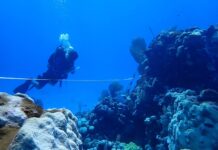
At each of the four sites – located between Don Foster’s and The Wharf – the CCMI divers swam from shore and set up transects measuring 30 metres by 1 metre (98.4 feet x 3.3 feet), within which they counted the number of fish and estimated the length of each one.
The bi-monthly surveys found that fish densities had increased significantly immediately after the lockdown period, compared to the July 2018 statistics, and continued to grow in the subsequent months. The latest survey was done in early December, but the data has yet to be analysed, she said.
As well as an increase in the number of fish being found in the survey sites – most likely due to the addition of juvenile fish into the population – the more recent surveys have also shown an increase in the sizes of fish, which may be accounted for by the growth of the newly introduced young fish.
“We haven’t reached a plateau yet in density (number of fish), which indicates that potentially there is still room for recovery of these populations,” she said.
Parrotfish and climate change
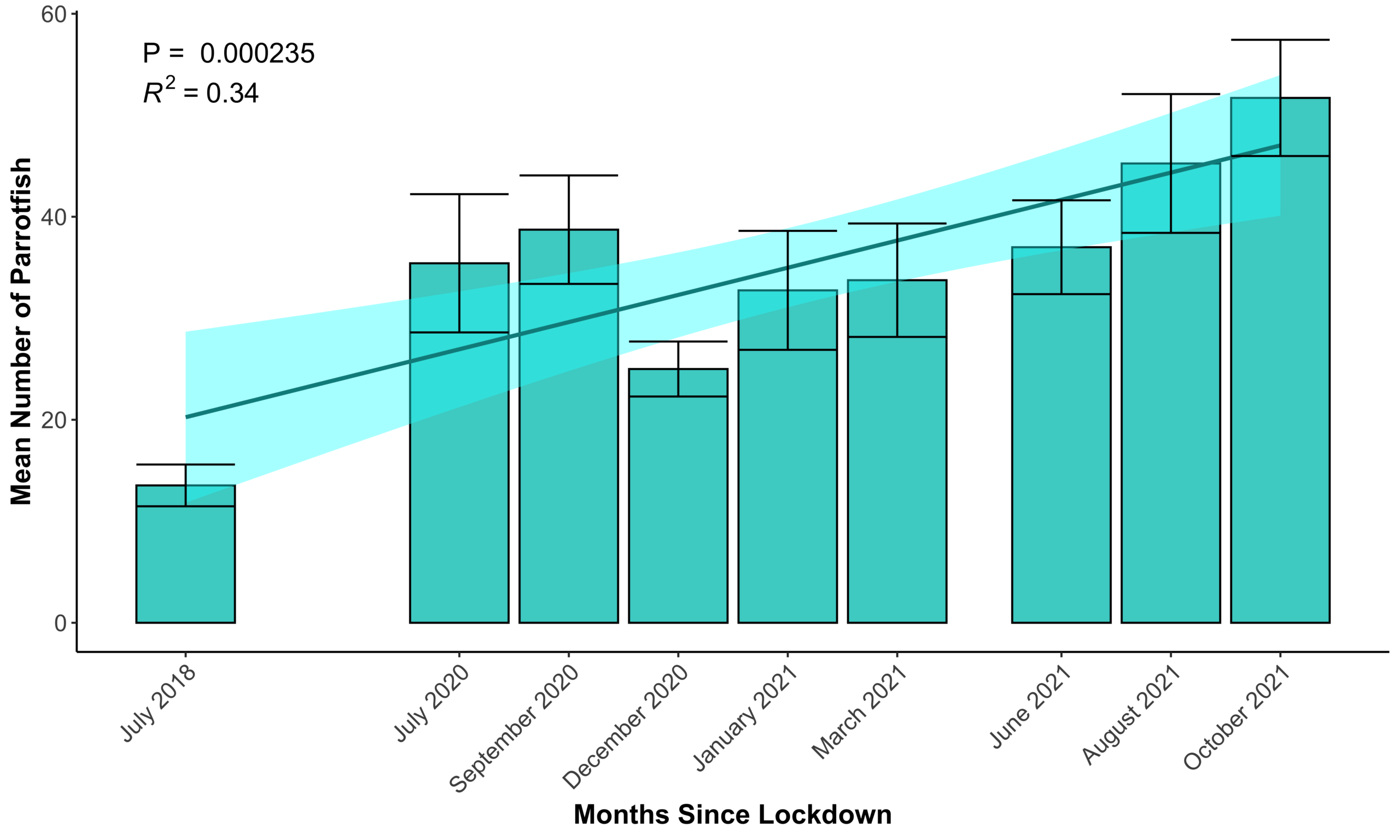
The researchers found that there had been an increase specifically in the number of herbivorous species – in particular, parrotfish and surgeonfish – in the surveyed areas. The presence of herbivorous fish is important as they help maintain the health of the reef by grazing down algae which competes with coral, which in turn enables the reef to deal with other challenges, such as those brought on by climate change.
“Parrotfish are probably the most important herbivorous species on coral reef communities, in particular in the Caribbean,” Goodbody-Gringley said, adding that studies have shown that reefs with high populations of parrotfish have correspondingly high coral cover, diversity of corals and recruitment of juvenile corals.
She said, “When we start to think about how our activities, and also activities that we can’t necessarily control on a local level, for example, climate change, are impacting the coral reef community as a whole, the more impact we can have on a small scale by increasing the resilience of that community just slightly by, for example, having an increase in herbivores, will overall help the ability of the reef to tolerate other stresses that it’s having to deal with.”
Goodbody-Gringley said the increased numbers of juvenile and initial stage parrotfishes found at the study sites indicated that the quieter seas were impacting reproduction, leading to a growing population, rather than meaning that the parrotfish had been hiding from noisy areas during the height of tourism and were now returning from neighbouring reefs.

“So what we’re seeing is the local population is, in fact, having more successful reproductive events, which is then contributing to future generations, so the population is… now just redistributing itself,” she said. Researchers also found jacks and porgies in the transects, which she said had been absent in the initial survey. These fish, she said, were important commercially as they are targeted by the fishing industry.
While the study appears to show that the reduced human activity associated with COVID-19 restrictions has had a positive impact on local fish populations, full recovery of the ecosystem may take several months to years as population density and biomass are continuing to increase, she said.
With the return of cruise ships to Cayman on the horizon, CCMI researchers plan to survey the sites after the Nieuw Statendam calls on Cayman, “so we’ll have very accurate pre- and post-data, that will be able to provide some context, so that we can actually think where do we go and what do we do with all this information,” Goodbody-Gringley said.
Related Videos