


Russia’s invasion of Ukraine has sparked a global economic war that drags offshore centres like Cayman, the British Virgin Islands and Bermuda into the heart of the conflict.
Related stories
While Russia’s armed forces continue to bombard cities in Ukraine, western leaders have responded with a battery of economic sanctions aimed at freezing Russian wealth and heaping pressure on President Vladimir Putin to change course.
One key strategy involves targeting oligarchs who have supported and benefited from Putin’s regime.
The measures have kickstarted a scramble to uncover the ownership of properties, jets, helicopters, yachts and funds, linked to a ‘red list’ of Russian billionaires.
In many cases, the trail leads back to the UK and its Overseas Territories.
Luxury ships, which are often more than 80 metres in length and worth hundreds of millions of dollars, have become the most visible symbol of oligarch wealth, together with historic mansions in the UK and vineyards and villas on the French Riviera or on the shores of Northern Italian lakes.
Eight luxury yachts detained
So far, European authorities have detained eight large luxury vessels. Four of them are registered in the Cayman Islands.
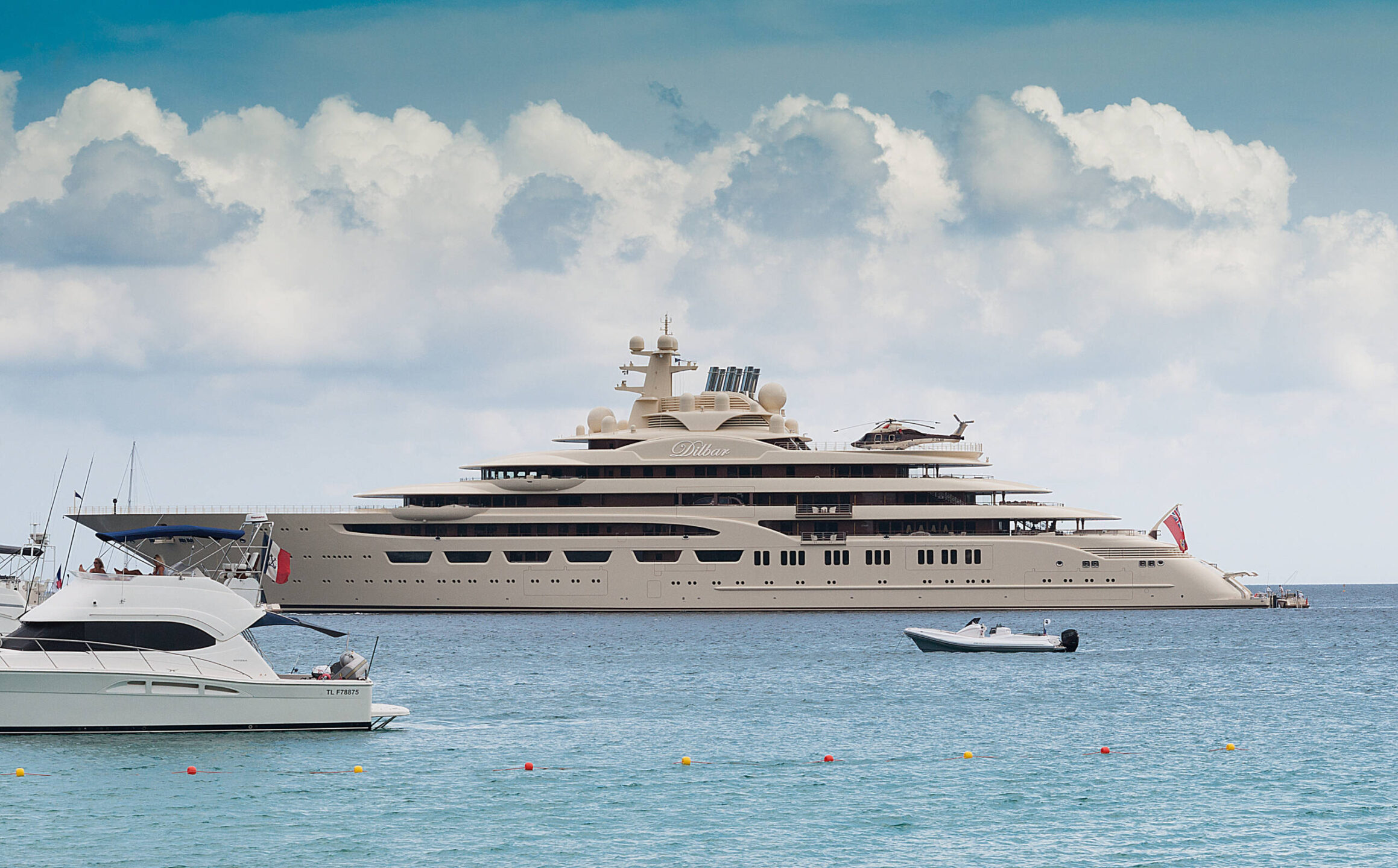
First German authorities stopped the Dilbar, Alisher Usmanov’s $800 million, 140-metre yacht, from leaving a shipyard in Hamburg, while French authorities impounded Igor Sechin’s 86-metre Amore Vero, valued at $120 million, in La Ciotat.
Italian authorities then arrested the Alexey Mordashov’s Lady M in the Northern Italian port of Imperia, before detaining Gennady Timchenko’s British Virgin Islands-registered Lena in San Remo.
This week, Italian’s financial police stopped Andrey Melnichenko’s $600 million, Isle of Man-registered Sailing Yacht A from leaving Trieste, where it was undergoing hurried repairs.
On Monday, Spanish police “temporarily immobilised” the 85-metre Valerie, a $153 million superyacht, registered in St. Vincent and the Grenadines.
According to Spain’s Prime Minister Pedro Sanchez the yacht is linked to Russian oligarch Sergei Chemezov, a former KGB spy and CEO of Russian state-owned defence conglomerate Rostec, who is said to be a close ally of President Vladimir Putin.
Lady Anastasia, owned by Alexander Mikheyev, the head of weapon exporting group Rosoboronexport, was seized at Port Adriano in Mallorca on Tuesday.
Complex ownership structures
Because few vessels are directly owned by an individual, yacht-management companies have claimed in some cases, like the Amore Vero, that a detained vessel is not owned by a person on the sanctions list but rather a complex network of companies.
The ownership structures of superyachts can at times resemble a Matryoshka doll, with layers of registrations, companies, leasing arrangements and management companies wrapped across various jurisdictions.
However, this has not deterred European authorities from stopping the yachts from leaving their ports and marinas.
Italy’s financial crimes police said Sailing Yacht A, registered in the Isle of Man, was indirectly attributable to Andrei Melnichenko through a Bermuda company.
The yacht Valerie, sailing under the flag of Saint Vincent and the Grenadines, was meanwhile registered to Chemezov’s stepdaughter, Anastasia Ignatova, through a BVI company, Spanish media reported.
The tales of Scheherazade
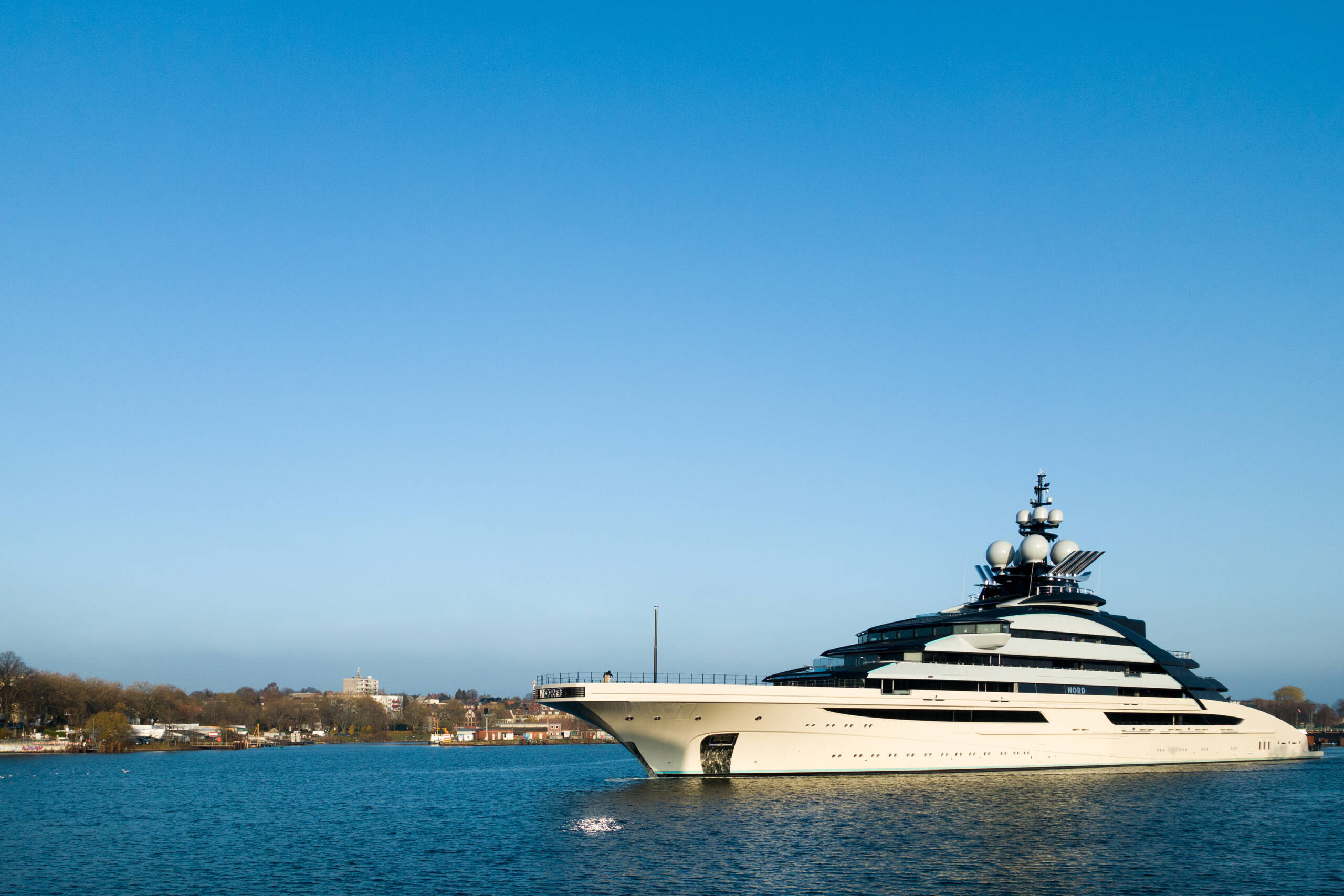
The lengths ship-management companies go to in order to keep ultimate beneficial owners of superyachts confidential can be seen in efforts by Italian law enforcement to determine the ownership of the Cayman Islands-registered Scheherazade.
Because no owner of the 140-metre ultra-large yacht has yet been identified, speculation has mushroomed that it could belong to a sanctioned Russian oligarch or even Putin himself.
Shipbuilder Luerssen does not even feature the yacht, one of the most expensive ever made, on its website, unlike all other yachts it has built.
The yacht has a metal plate designed to hide the ship’s name and it is rumoured, according a to former crew member, to have two alternating crews: a Russian and a European one.
The Italian Sea Group, the company in Carrara where Scheherazade is undergoing maintenance, said in a statement that based on the submitted documentation and checks carried out by the relevant authorities, the yacht is not attributable to the property of the Russian president.
Any assets belonging to Putin would of course not be held in his name but connected through a chain of companies to oligarchs close to him or members of his Kremlin entourage.
According to the International Maritime Organization, Scheherazade is legally owned by Bielor Asset Ltd, a company registered in the Marshall Islands.
The ship’s captain, Guy Bennett-Pearce, told the New York Times that he could not identify the owner because of a non-disclosure agreement he had signed, but that it was not Putin. However, he handed over documentation on the ownership of the yacht to Italian authorities.
These are presumably the same documents used to register the vessel in the Cayman Islands.
More than a week later, US intelligence officials still cannot rule out that the $700 million Scheherazade could be indirectly linked to Putin.
The Scheherazade’s sister ship, the Cayman-registered Crescent, has been detained by Spanish authorities in Tarragona on Wednesday. The 135-meter, $600 million yacht has equally unclear ownership but is said to be linked to Rosneft CEO and Putin ally Igor Sechin.
Flag states
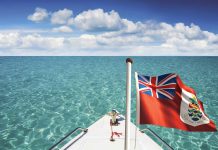
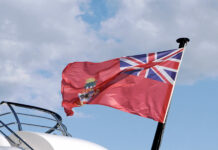
Cayman’s marine flag has rarely garnered as much attention as in the wake of international sanctions against Russia. Most of the largest superyachts fly the islands’ flag.
The Cayman Compass has drawn up a list of the 50 most prominent Russian-owned luxury vessels. More than 60%, 31 vessels, are listed by the Cayman Islands Shipping Registry.
A flag state is the nationality of a vessel. Based on the UN Convention on the Law of the Seas and other international conventions, flag states have oversight and control of the safety and seaworthiness of ships flying their flags.
They are responsible for ensuring the proper training and qualification of the crew and labour standards on the vessels. And they should adopt and enforce regulations that prevent and reduce marine pollution.
Flag states also provide registered ships with certificates that demonstrate that the vessel has been inspected and complied with international rules and standards.
The Compass has asked the Maritime Authority what it can do to enforce sanctions but had not received a response, which the authority said had to be approved by government, by press time.
Problems with sanctions enforcement by flag states
Neville Aquilina, a director general in Malta’s Ministry for Foreign and European Affairs, outlined in a March 2020 paper at an International Maritime Organization-hosted conference that there is inadequate sanctions enforcement by certain flag states.
Referring specifically to UN sanctions, Aquilina said, weak ship registries are frequently used for sanctions circumvention.
He noted that flag registration is not standardised and there are no audits that would ensure states are flagging problematic vessels or complying with other aspects of sanctions.
In addition, there is “a lack of requirements in current regulations about the identity of the ultimate beneficial owners of assets, including vessels”, he said.
The lack of proper vessel-tracking practices, which could fundamentally aid sanctions implementation, was another area that should be considered.
What can flag states do?
While there is no word on any action taken by the Cayman Islands, the Isle of Man has shown what offshore centres can do to enforce sanctions if they register aircraft and vessels.
The Isle of Man has so far delisted two superyachts, as well as one airliner, six business jets and seven helicopters from its aircraft register that contains about 320 aircraft. The delisted vessels included the now-detained Sailing Yacht A.
Deregistering a ship or plane effectively means that it cannot operate legally.
Enterprise Minister Alex Allinson said the island was “going further than UK sanctions” and will delist any vessel related to Russia as well as all aircraft subject to EU and G7 sanctions.
Allinson said widening the application of sanctions beyond those of the UK was part of a deliberate policy for the government-run registries to be “proactive” and to “make sure we know exactly who we are dealing with”, the BBC reported.
Russian yachts soon to be adrift
Several Russian owners of superyachts have quickly moved their vessels in anticipation of wider sanctions. The UK, EU and US sanctions typically prohibit service providers from servicing a vessel and there have been reports that some yachts, like Roman Abramovich’s Eclipse, have been unable to refuel. Helping repair a sanctioned vessel would be considered a violation.
Lloyd’s Register, which provides classification and compliance services for the marine industry, announced last week that it will no longer provide any services “to Russian owned, controlled or managed assets or companies”.
Classification societies like Lloyd’s often carry out statutory duties on behalf of the major flag states.
Surveys are done every five years to check the thickness of the hull, possible fractures and other potential damage, as well as the condition of electrical systems, machinery and equipment.
Although classification is not strictly mandatory, it is often essential to obtain insurance and for the re-sale of a vessel.
Russian companies in the aviation or space industry are already prevented from making use of UK-based insurance or reinsurance services, including those in Overseas Territories like Bermuda, under UK sanctions.
Without access to Western ports, service providers or insurance, many oligarch-owned superyachts are currently in the Pacific in search of a safe haven.
Yacht crew chat groups are speculating that many will head for the eastern Russian port of Vladivostok, home of the Russian navy’s Pacific fleet.
Cayman Compass journalist James Whittaker contributed to this article.
Related Videos







How is it that it’s so hard to open a company here or a bank account but seemingly easy to register a massive yacht without disclosure of the Ultimate Beneficial Owner.