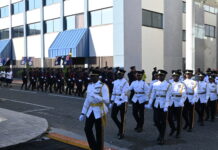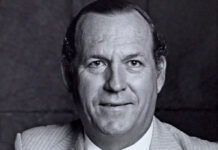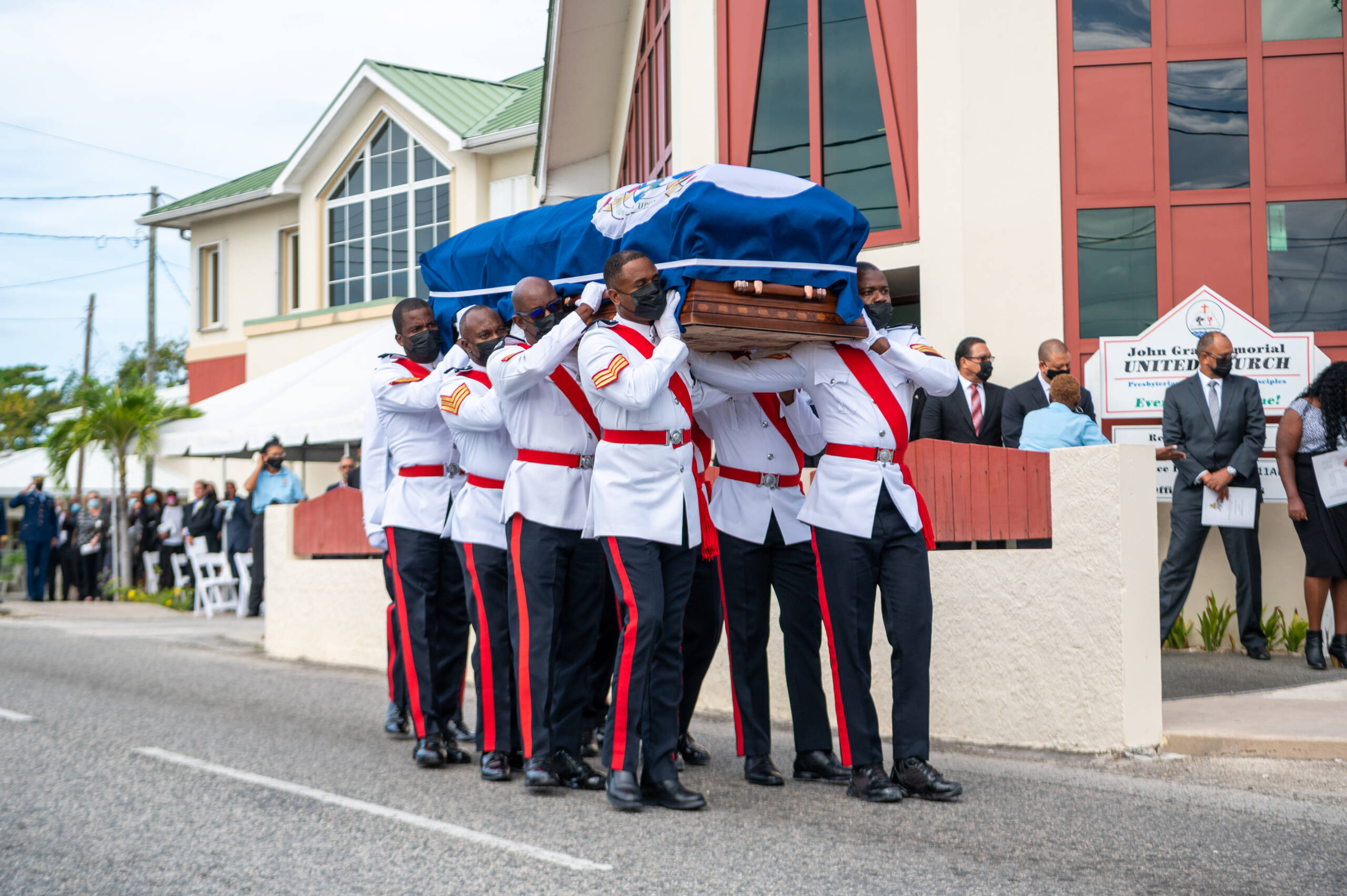
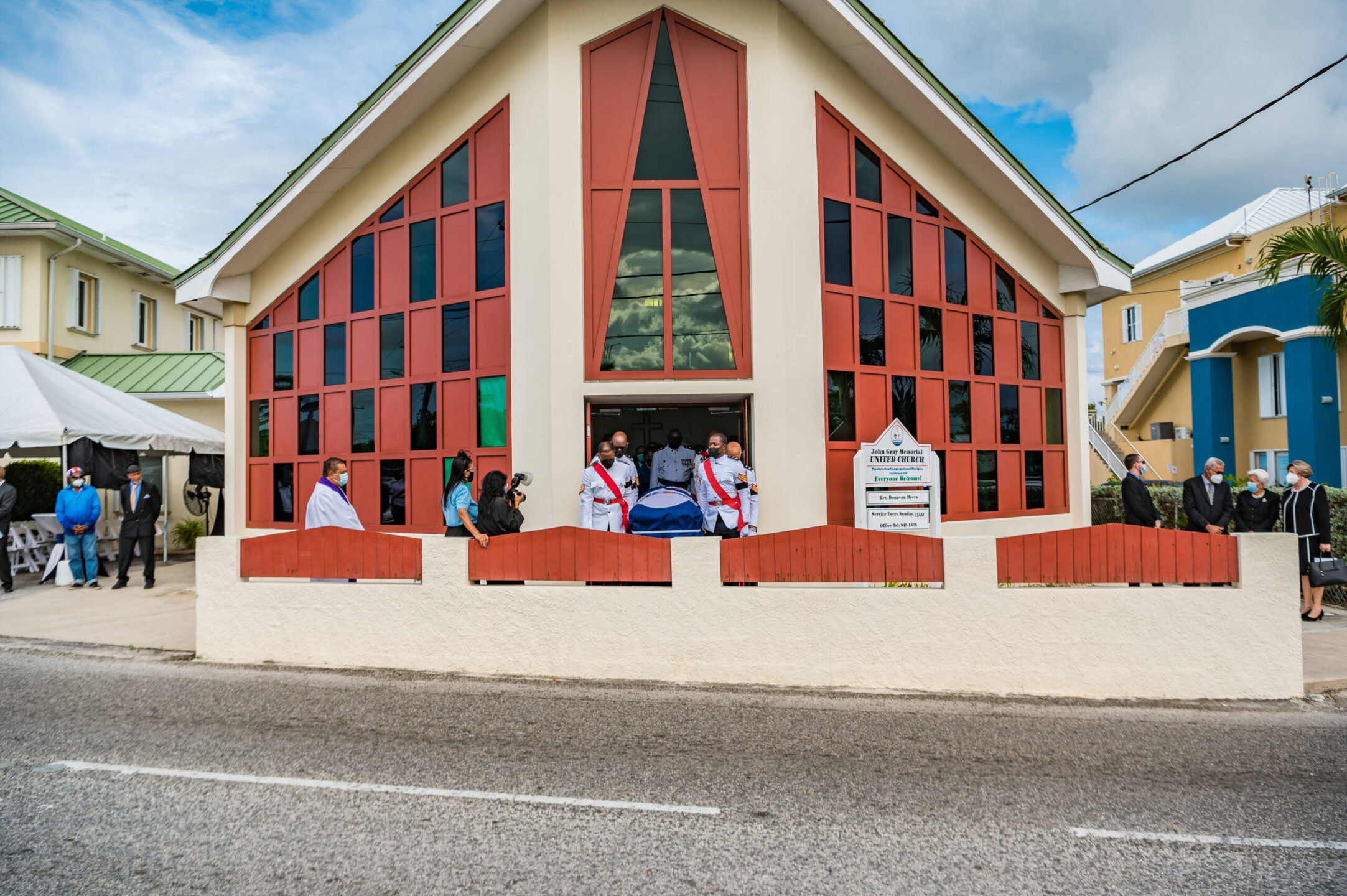
The late statesman Benson Obadiah Ebanks was laid to his final rest on Friday afternoon, following a funeral in his home district of West Bay attended by family, friends and supporters.
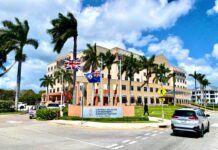
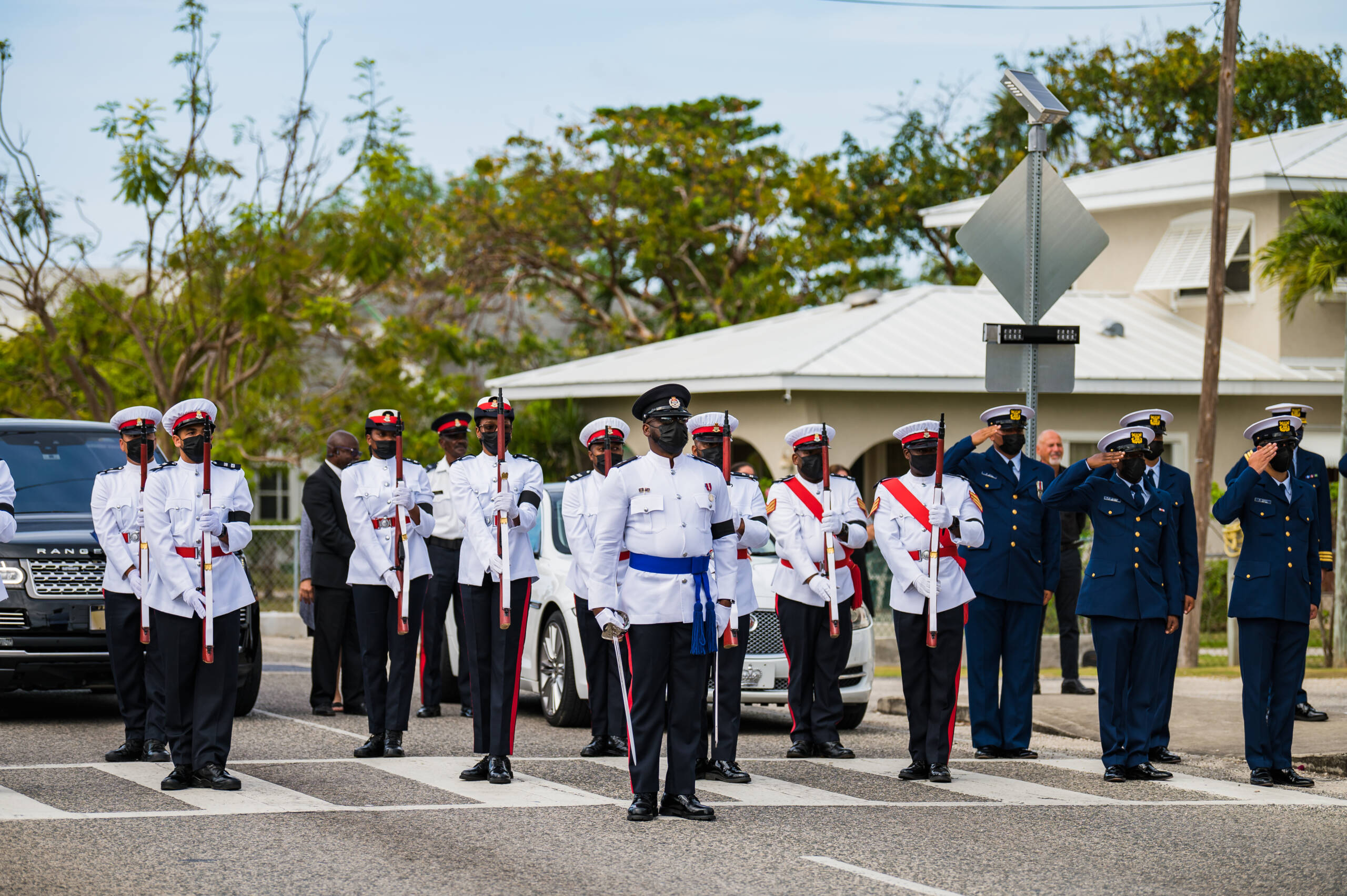
Following an official lying-in-state at the House of Parliament on Thursday, Ebanks’ funeral service was held at John Gray Memorial United Church in West Bay Friday, and he was buried at West Bay Cemetery.
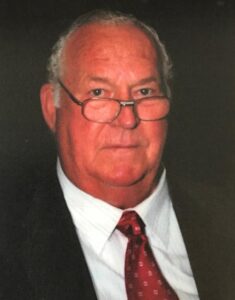
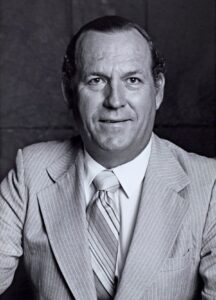
At his funeral service, Premier Wayne Panton paid tribute to Ebanks, who passed away on 29 March at the age of 87. The premier spoke of his almost 30 years in public office as an elected representative of West Bay, during which he led a number of government ministries, including education, health, social services and environment.
Ebanks served as a member of the Legislative Assembly from 1965 to 1976, and again from 1980 to 1992.
Panton related that some of Ebanks’ former colleagues in the House had described him as “thoughtful and logical”, “a gentle giant” and “a gracious and dignified man” – all of which were apt descriptions, he said.
He said Ebanks was a “steadfast champion of education” and his efforts and mentorship had led to the success of many young Caymanians over the years.
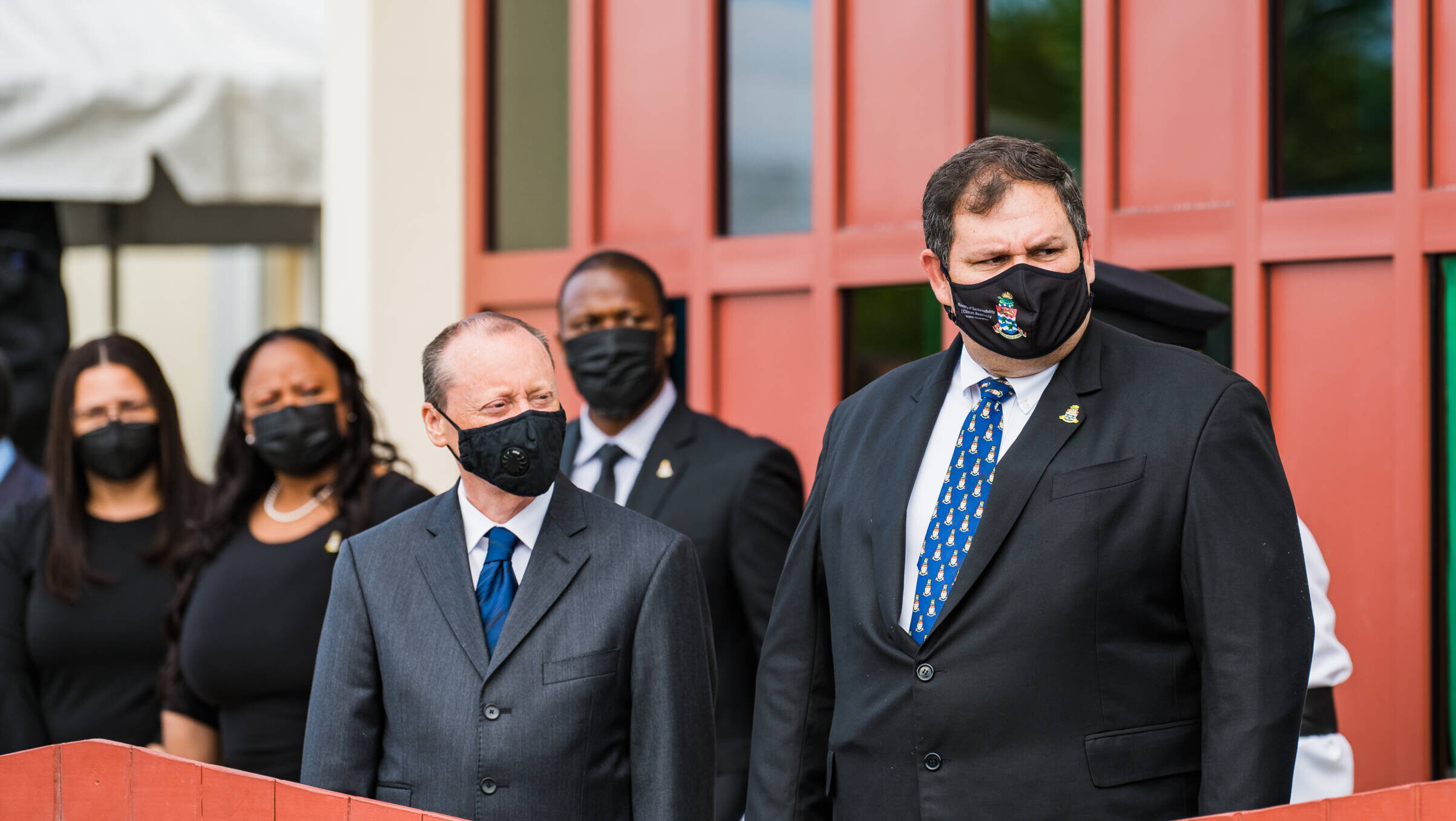
“He was a visionary nation builder and dedicated himself to our beloved Cayman Islands,” Panton said.
Speaking at the funeral service, Leonard Ebanks, who serves on the board of Cayman National Bank, of which Ebanks was chairman for 36 years, from its inception in 1974 until 2010, said the bank has renamed its internal scholarship in Benson Ebanks’ honour.
Lauding his many contributions to Cayman National, Leonard Ebanks said, “He will always be a part of our family,” adding that the local community had lost “one of its pillars and a true Caymanian statesman”.
Former Speaker of the House Mary Lawrence presented Ebanks’ life story to the congregation, outlining first his early days as a schoolboy and noting that he entered Cayman High School at 15, at a time when many boys were leaving school at 16 and going to sea. She said he was the first boy to take the senior Cambridge examination and received passes in seven subjects.
But instead of pursuing law in college as he had been considering, a friendship with a manager of a newly established Barclays Bank in Cayman sparked a new career interest, and he joined the bank in June 1953, at the age of 18.
“It was the beginning of a disciplined banking career that would last 12 years and take him to the top of the industry in Cayman at that time,” Lawrence said.
In 1958, he married his high-school sweetheart, Bessie – his wife of 53 years – and the couple had three daughters, Gina, Janet and Judith.
Encouraging his children to attend university and “to pursue lifelong learning opportunities”, Lawrence said, “he instilled in them the values of honesty, integrity and hard work, which were hallmarks of his own life.”
After a dozen years in the banking industry, in 1964, Ebanks found himself at a crossroads, Lawrence said. “He had a promise of a great career, a beautiful family and a respected position in the community. But he was also painfully aware of the growing pains his beloved country was experiencing. … In a move that surprised everyone, he decided to give up his career in banking and offer himself in service to his district and his country.”
The following year, 1965, he was elected as a representative for West Bay, becoming the youngest member of the Legislative Assembly at that time.
During his three decades in office, “his contribution was not just in the fields of education, health and social welfare, areas where he saw the greatest needs of the people,” Lawrence said. “He would lend his expertise to span every area of the country’s development, emerging as a recognised leader in the political arena.”
Among the laws that were passed under his guidance were the Caymanian Protection Law and the Local Companies (Control) Law – put in place to protect Caymanians at a time when economic progress in the islands was leading to an influx of much foreign labour and influence.
As education minister, he was instrumental in establishing the University College of the Cayman Islands and the Sunrise Adult Training Centre, and helped set up government scholarship schemes that would enable local students to attend schools and colleges overseas. His work in the social services ministry led to the eventual establishment of what is now the National Children’s Voluntary Organisations.
Ebanks was the first president of the newly formed Cayman Islands Chamber of Commerce, and served in that role from 1965 to 1967.
He was also a charter member of the Rotary Club of Grand Cayman. Its members, in a tribute to Ebanks, said he would be remembered by his fellow Rotarians “for his ability to leave his political differences aside when he entered a Club meeting and sit side-by-side with his opponents from the LA and get on with the business of Rotary for the greater good of the community.
“He is fondly remembered as being respectful to all, always recognising the abilities of others, being a dedicated Rotarian with perfect attendance, and being a ‘gentleman to the core’.”
Outlining some of the policies, legislation and decisions made in the ’60s and ’70s that led to the modernisation of the Cayman Islands, Lawrence said, “Mr. Benson’s fingerprint was on it all.”
She added, “Indeed, he and his fellow legislators stood shoulder to shoulder, presented a united front and drew on each other’s expertise to get the best for the country at all times. In an era when the young Caribbean nations were fighting for survival, the government of the Cayman Islands, led by nation builders, of which he was one, presented an aura of stability and good governance which earned the respect of the watching world.”
He lost his bid for election in 1976, but was re-elected, as a member of the opposition, in 1980, and again in 1984 when his Team Dignity party, in coalition with independents, formed a government, and he became chief minister – equivalent to the role of premier today.
In recognition of his contribution to the growth and development of the Cayman Islands, in 1987 he was awarded the Most Excellent Order of the British Empire by Queen Elizabeth II.
Both Lawrence and Premier Panton spoke of Ebanks’ commitment to the environment and his support of a development plan for Cayman.
“In addition to caring deeply about the Caymanian people, he also cared about the environment,” Panton said, noting that when developing the West Wind Building in George Town, Ebanks and his team strategically built it around a generations-old guinep tree.
He added, “He championed 50 years ago what we now refer to as sustainable development. He carefully managed the growth of our Cayman Islands – careful stewardship which balances the community with its needs and the environment while advancing our economy to create a better quality of life for the people of these islands. He was always ready to provide the right kind of leadership at the right moment when it was most needed.”
Lawrence pointed out that views expressed by Ebanks as far back as 1975 warned of excessive development in Cayman and its impact on the environment.
She quoted him as saying, “I am still in favour of controlled and planned development. I think it is the right policy and should be continued. … I don’t think we should develop faster than the community is capable of absorbing it.”
She added, “‘Hasten slowly’ was the watchword of the country’s development as it was presented to the people initially. Those were words which sparked much protest over the years, but which today have taken on new meaning in our islands, as young people recognise the fragility of what we have built. Mr. Benson would be proud.”
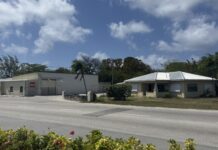
Following the 1992 election, Ebanks retired from politics and refocused on his family life, and spending more time at the family hardware store, which Lawrence said became “somewhat of a community club” where he provided advice, guidance and dispensed political opinions to all and sundry.
Following a fall in 2011, Ebanks’ mobility was significantly impacted, and the death of his beloved wife Bessie in May 2012 compounded his health issues, Lawrence said.
He passed away peacefully at his home in West Bay on Tuesday, 29 March.
Related Videos