

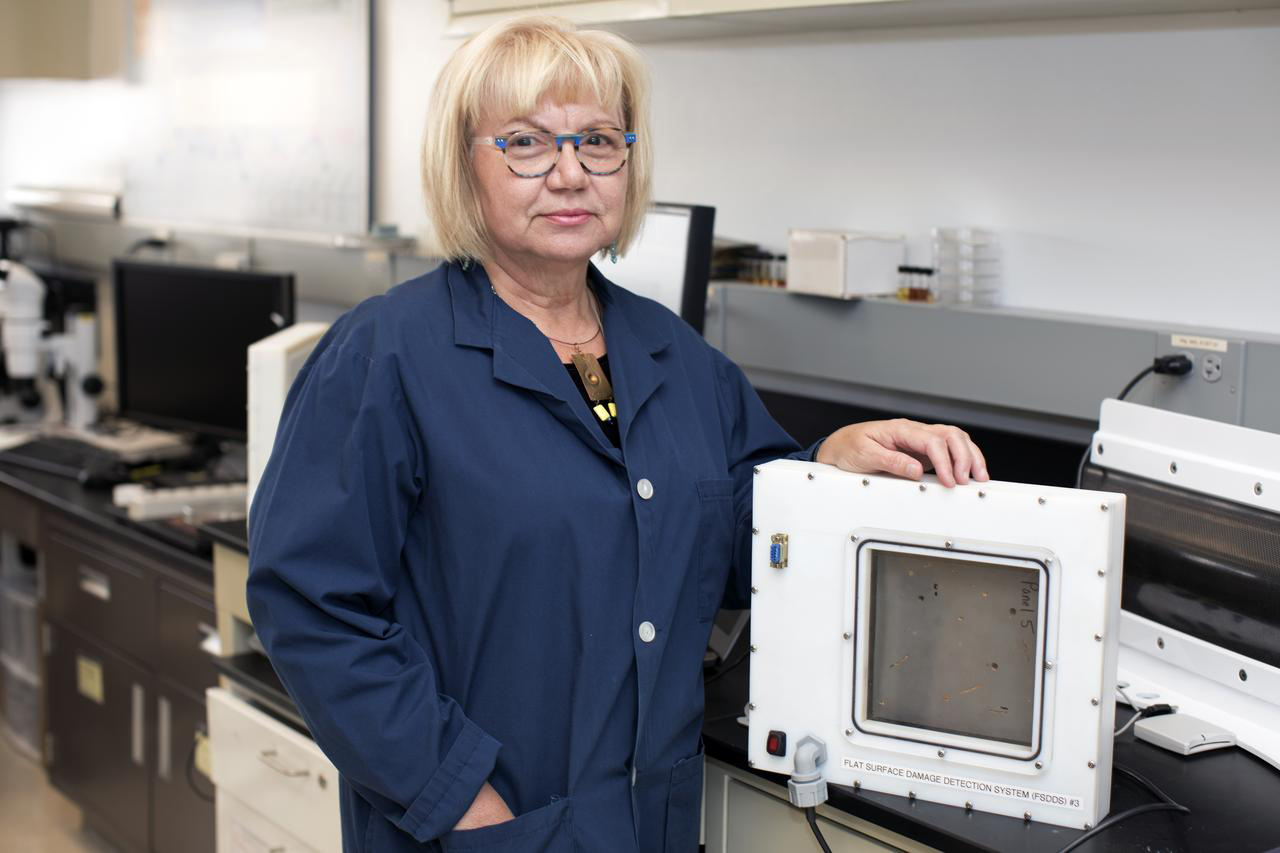
Caymanian scientist and inventor Martha Kay Williams has joined the ranks of the elite in her field after recently being inducted into the National Aeronautics and Space Administration (NASA) Inventors Hall Of Fame.
The proud Cayman Brac mother-of-two credits her humble upbringing, steely work ethic and her strong support network of family and friends for her successful, decades-long career.
“Growing up in Cayman Brac with my five other siblings, I was taught early the appreciation of hard work and the importance of education. My first introduction to ‘probably’ a type of inventing, being creative, was making our own play areas out of the limited resources, and making dolls out of painted rocks,” she told the Cayman Compass, adding, “For some growing up currently in the islands, that might seem farfetched now, but [it was] a great foundation for developing creative concepts and learning things that has served me well.”
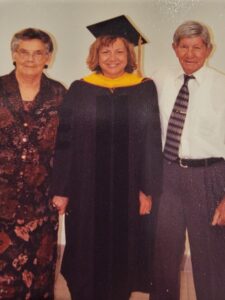
Reflecting on her journey, Williams, 64, recounted the influence of American missionary families on the Brac that became pivotal to her life and career path.
“There are a couple of descriptive scientific words that I use often in my career, game-changing and disruptive (significant positive change.) These are words that could also apply to what happened all those years ago in the Brac. American missionaries, the Kings and the Aldridges came to Cayman Brac because of their spiritual callings, but ended up also having a big impact on the education pursuits of many of the young people. I was one of those young people,” she shared.
It was through the Aldridges that she was able to go the US for the first time as a teenager, on a student visa, Williams said. There, she was introduced to the pastor’s sister and her husband, the Elliotts, who “loved me and supported me with great generosity as I learned to transition to a completely new life and the American high school culture. To this day, I am blessed with that extended family,” she said.
The Kings, she added, also encouraged and supported young people on the Brac in pursuing higher education.
A journey to NASA
Williams always loved science, but her early dream was to pursue medicine.
After graduating high school early at 16, with the Kings’ encouragement and support, she left for college with dreams of becoming a medical doctor, but that was not meant to be.
“My professors at college were an inspiration, probably one of the big reasons I am a scientist today, but upon graduating at the young age of 19, there were roadblocks to my dream – not a [US] citizen and lack of funds. I was not sure where to go from here, but believed in my scientific calling and with faith returned to graduate school in chemistry two years later,” she said.
Her career in forensics and pharmaceuticals followed.
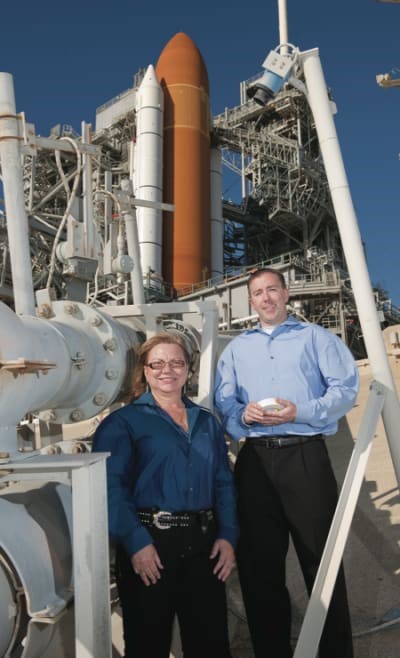
“Then my dream job with NASA Kennedy Space Center began two weeks after I became an American citizen,” she said.
Williams’s pursuit of education did not end after getting that job; in fact it pushed her to continue to excel.
“Being very transparent, during those doctoral study years sometimes it was really difficult as a mother of two, a wife, and having a demanding job… Sometimes, the most difficult things also become our biggest accomplishments,” she said.
Her Ph.D. in polymer chemistry, she said, allowed her to focus on research to help meet NASA space exploration needs.
“[It helped] hone in on my creative concepts, innovation, and invention skills in collaboration with my colleagues across multiple disciplines. The career journey has not been an easy one, but never boring, always challenging, having to push myself, learn new things every day, and get to do work that hopefully makes a difference,” Williams said.
Science and engineering are mostly a male-dominated fields, Williams acknowledged.
“Fortunately the percentages of women are probably a little higher at NASA than in other non-government organisations. For example, the NASA Inventor Hall of Fame, there [are] five women out of a total of 40 inductees,” she said.
Williams is one of the five.
Many things are possible even with challenges and loss, [such as] a young Caymanian girl who had a dream on a small 12-square-mile island with rocks and a Bluff and eventually ended up supporting the NASA space programme. Each of us have our talents, gifts and, as I share with my daughters, pursue excellence in whatever your vocation or calling,” Martha K. Williams, Caymanian scientist and inventor
After 10 years working in failure investigations work for the Space Shuttle programme, Williams was awarded a NASA doctoral fellowship programme, “one of the highlights of my career,” she said.
She said she spent the last 19 years of her career in full-time research leading multi-disciplinary teams, resulting in multiple inventions which led to the NASA Inventor Hall of Fame induction.
“I have a saying that the ‘journey is as valuable as the destination’. Supporting the NASA vision and destinations were important – what we learned in and through the journey was valuable, beneficial to me and the rest of the nation, the world and will continue to do so,” she said.
Encouraging female scientists
With 29 years as a NASA scientist under her belt, after having retired in 2018, Williams is still continuing to blaze a trail for women in her field through her work at US startup GenH2.
“GenH2 is focussed on the mass production of liquid hydrogen infrastructure solutions necessary for the transition to a clean energy economy. Cryogenics is also a male- dominated discipline and I hope to encourage more women to be involved using my specialty and interdisciplinary skills to support innovation and solutions for the hydrogen economy,” she said.
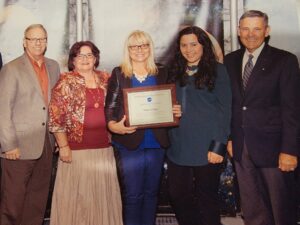
She said she hopes her journey can inspire a new generation of female scientists, not just in the Cayman Islands, but around the region and world.
“My advice to young Caymanian women or young women in general is do not let roadblocks define you. It is a hard and challenging career path, but provides much diversity in career options and can be very rewarding,” she said.
As a mentor, Williams said, she has encouraged women to pursue science and engineering, and also develop business and project- management skills.
However, “developing self-confidence, being able to articulate your input or opinions while still being a team player is also very important”, she added.
Her daughters, she said, did not follow her footsteps into science, but they are making their own marks. However, her Caymanian niece is pursuing a Ph.D in the sciences.
“I hope the evolution of advanced research in the Cayman Islands will be expanded in the coming future,” she said.
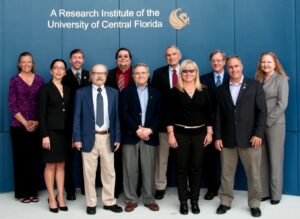
Williams said she hopes sharing her story inspires others “to take a journey of your own, even if different and challenging”.
“Many things are possible even with challenges and loss, [such as] a young Caymanian girl who had a dream on a small 12-square-mile island with rocks and a Bluff and eventually ended up supporting the NASA space programme. Each of us have our talents, gifts and, as I share with my daughters, pursue excellence in whatever your vocation or calling,” she said.
While recognition is great, Williams said it is also important to remember those along the way – to make them a part of the journey.
“To my teachers and mentors that invested in me (in Cayman and the US), the families (or parents of my friends) who shared their homes with me in my early education journey, I am eternally grateful. To my parents, siblings, husband (deceased), children and extended family members, friends, and great colleagues, thank you for the support and prayers on this God-given journey,” she said.
Related Videos








Exemplary determination, dedication and accomplishment. Very inspiring.