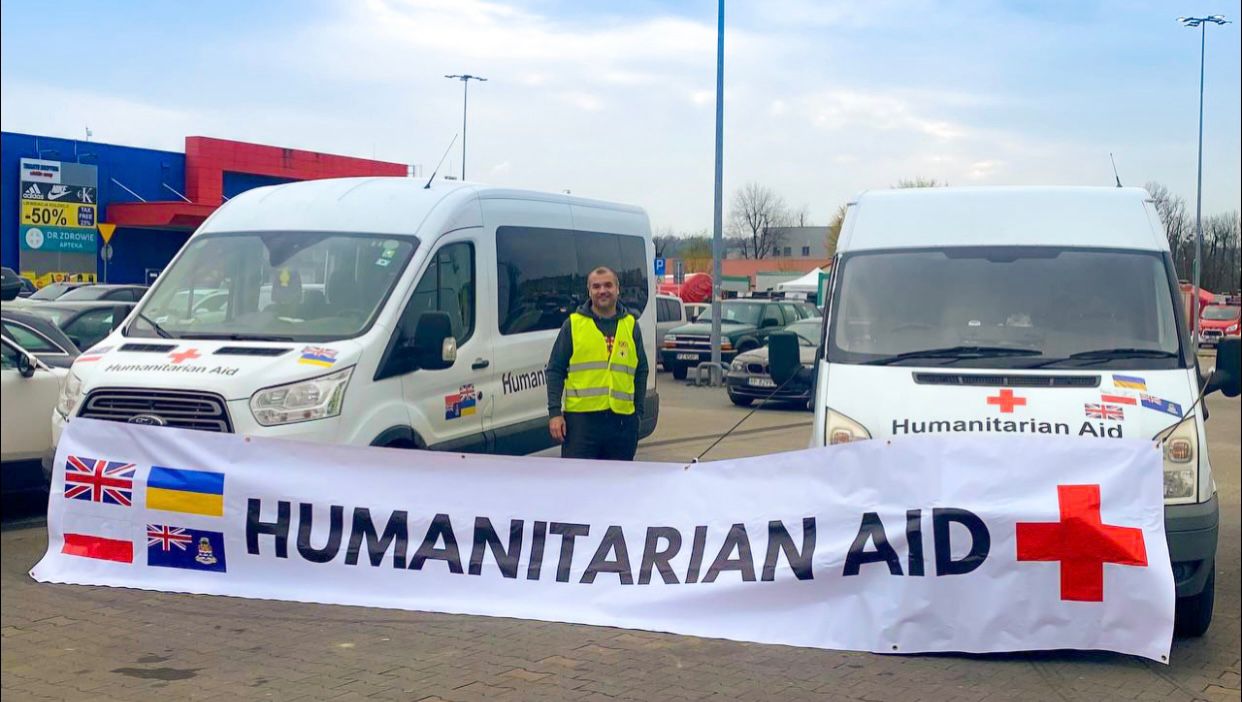
Paul Kenwright, who has spent 71 days ferrying refugees and animals from the Ukrainian border across Europe in his van, says he couldn’t have done it without the help and support he has received from the Cayman Islands.
Kenwright, 50, who runs a bed and breakfast in the UK, has visited Cayman five times and has made some fast friends here. They and others in Cayman, Australia and the UK who have been following Kenwright’s humanitarian efforts on his Facebook page, have helped pay for diesel for his van and for other supplies in the weeks he has spent helping Ukrainians.
“I went out to deliver some humanitarian aid for four days,” he told the Compass in a phone call from the UK on 18 May, a few days after he arrived back home. “I headed to the border to see if I could help out and … I just literally could not leave these people there. I carried on helping.”
He added, “I just put on my Facebook what I was doing and if anyone wanted to help pay towards my diesel. And I had a massive response from the Cayman Islands.”
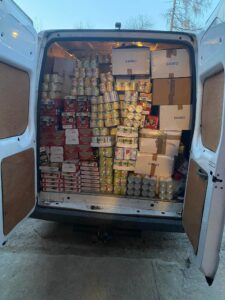
During his 71 days, as well as transporting refugees from the border to cities across Europe, he was also helping to get fuel and humanitarian aid vehicles into Ukraine, and bringing supplies to camps where the refugees have been staying.
“People from Cayman sent thousands and thousands of dollars,” he said. “They were amazing. That’s why I had the Cayman Islands flag on my vehicle. And not just on my vehicle, I put them on the fleet of vehicles that were going into Ukraine and to Germany, France, Belgium, Netherlands. People were asking what that flag was, if it was from a regiment, so I told them it was the Cayman Islands flag.”
Kenwright’s connection with the Cayman Islands comes through Travel Pros agent Fiona Brander, whom he met while travelling around Australia 25 years ago. “We stayed friends and when she emigrated to the Cayman Islands, I went to visit her there. I’ve been there five times and I’ve gotten to know a lot of people,” he said.
Brander, who, via her Facebook page, has been keeping the people of Cayman updated on international and local travel restrictions throughout COVID-19, has also been highlighting her friend’s efforts in Ukraine.
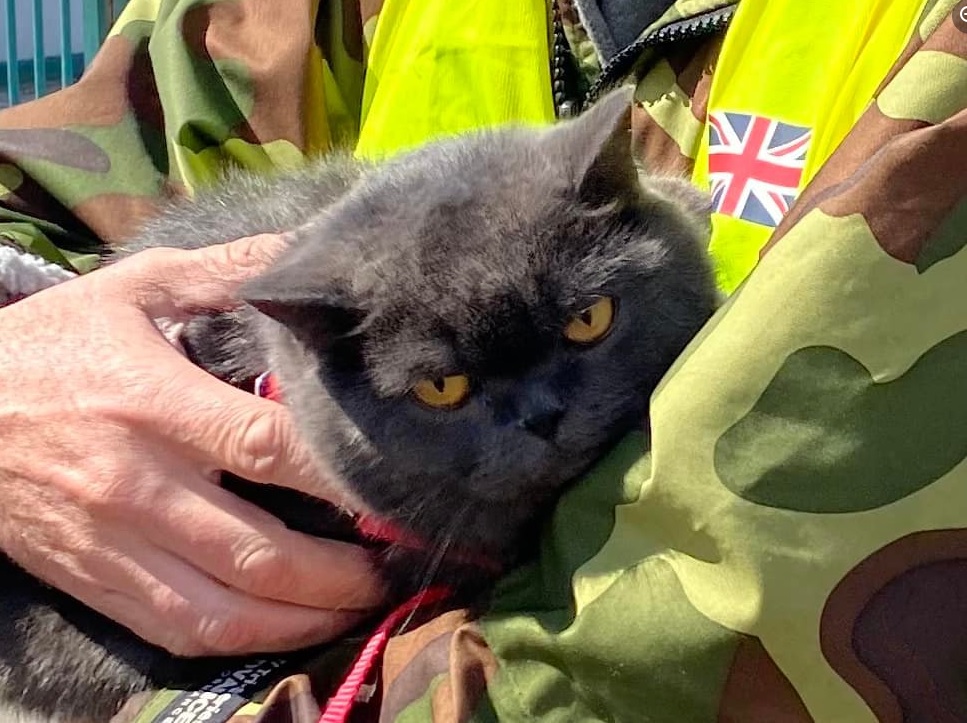
Kenwright said he specialised in rescuing “humans with animals”, and he has carried dozens of cats and dogs with their owners to safety in the more than two months he spent in and near Ukraine.
He spoke of some of the harrowing stories refugees, medical staff and other volunteers had shared with him in the weeks he spent there.
He related an account he heard from surgeons he transported from the Ukrainian town of Lviv, near the Polish border, to Krakow. “They told me a story of a lad and his mum, who were in a car, and came across Russians who told them they could drive down this road. But they’d placed bombs on the road and the car blew up. They just did it for their own entertainment. Two people in the back of the car were killed. The young lad, 14 years old, his legs were badly damaged – the surgeons operated on his legs. His mum was on fire, she died of her injuries.”
He told another story he’d heard from his interpreter, who said she had been trying to get her family out of Mariupol, which was besieged early in the conflict. The woman’s aunt did not want to leave. “Her aunt’s house was hit by a missile. The room the aunt was in was unscathed; in another room, where the aunt’s husband was, it was destroyed and he was killed. That was about three weeks ago. They never got his body out. It’s still there. And the aunt still won’t leave; she’s moved to a neighbour’s house.”
He said in Mariupol, there has been no running water, no electricity and no gas for more than two months. “They have to go down to a river to get water, and they boil the water outside, on the street. That’s where they cook. A guy I was taking to Germany told me they were just cooking on the street when a missile hit. The people in the house two doors down from them were blown to pieces – five or six members of the same family. All they were doing was just cooking up some food.”
Another family, with a 14-day-old baby girl, had left by train from their town, and once they got over the border, he took them to Germany. They told him that less than 24 hours after they’d been at the train station, it had been blown up, with passengers waiting for trains inside. “They’d been waiting there for ages, waiting for space to get on a train. If they’d had to wait another day, they’d have been dead. They were in my van when they got a call telling them about the train station being bombed,” he said.
Tales like these – of bombings, mustard gas attacks, killings, lost loved ones and near misses – are the stories that are told in his van as he drives fleeing refugees across Europe to safe havens.
“Stories like these, they’ve given me nightmares,” Kenwright said.
He described the conditions soon after the war broke out in late February, when refugees gathered at camps at the border with Poland, when temperatures were dropping to -10 degrees Celsius (14 degrees Fahrenheit).
“You have to queue up to get over the Ukraine border, and they enter a No Man’s Land, where no country has sovereignty. They queue there to get through the Polish border. When it was really cold, eight people died of hypothermia in this queue. There were thousands and thousands of people trying to get through,” he said.
Once they come across the Polish border , they wait in camps. “They are awful places,” Kenwright said. “Some people end up staying there two or three weeks, waiting to get to somewhere else.”
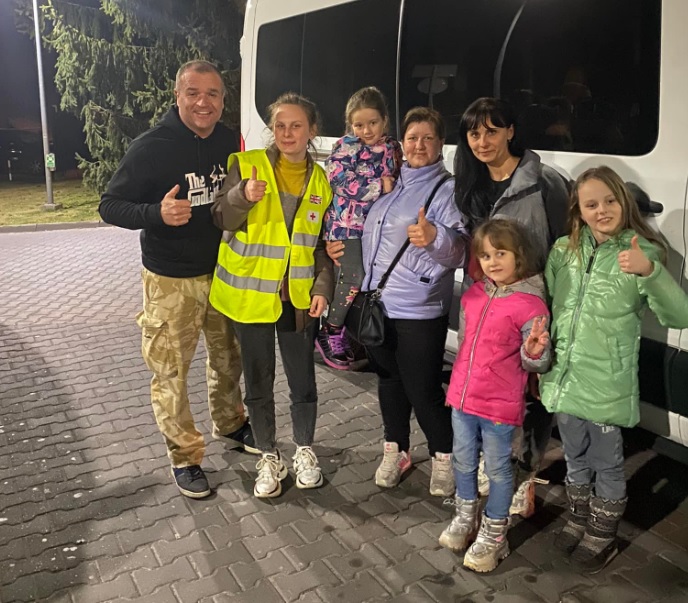
Sometimes, the camp’s registration desk would assign him passengers to ferry to whatever country in Europe they needed to go to in his eight-seater vehicle; other times he would hear from volunteers at the camp about urgent cases and would give them priority.
“I couldn’t have done this without other people’s help,” he said. “I’m just the front man. I have people funding me, people helping with the logistics of finding hotels and places to stay.”
And while he’s now back in the comfort of his home, he’s already making plans for his return to the Ukraine border.
“I’m definitely going back. I’m going to get more funds together for more diesel. … The Russians have been targeting ambulances in Ukraine, and lots of field hospitals. The Brits have sent some ambulances over there, and the next time they get ambulances, I’m going to drive one over. I want to get back over there,” he said.
Anyone who wants to support Kenwright on his continuing efforts to help the people of Ukraine can contact him through his Facebook page.
Related Videos