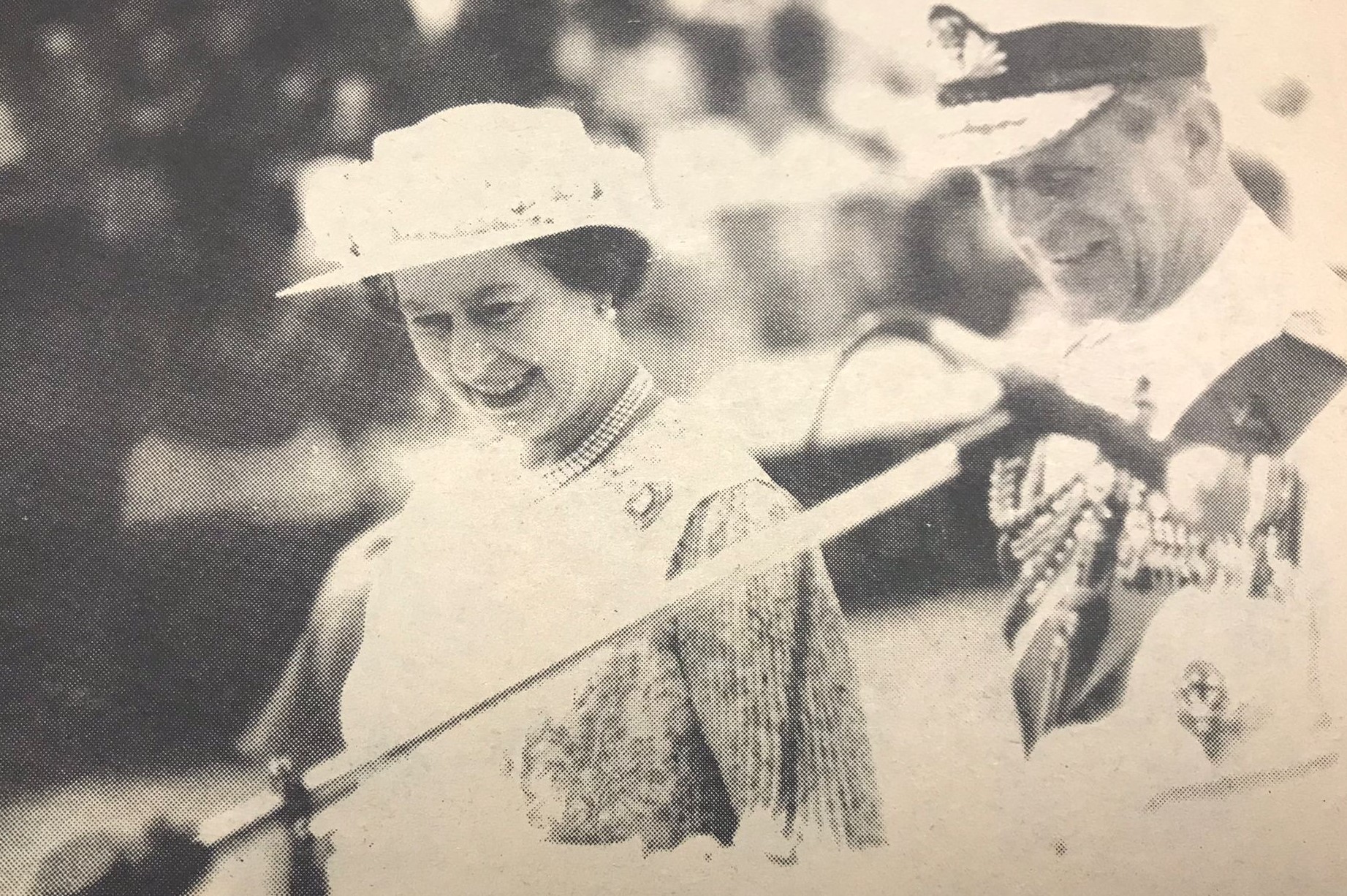
Queen Elizabeth II and Prince Philip, Duke of Edinburgh, outside Grand Cayman's Legislative Assembly on 16 Feb. 1983. - Photo: Cayman Compass archives
On 9 Sept. 2015, Queen Elizabeth II became the longest reigning monarch in British history, surpassing the reign of her great-great-grandmother Queen Victoria.
The queen was born at 2:40am on 21 April 1926 at 17 Bruton Street in Mayfair, London, and was the first child of the Duke and Duchess of York, who later became King George VI and Queen Elizabeth.
The queen’s real birthday is on April 21, but it is celebrated officially in June.
The queen is more widely travelled than any British monarch before her. She has visited more than 100 countries during her reign. Within the Commonwealth alone, she has made more than 150 trips.
The greatest number of destinations that the queen has visited in a single trip is 14, during her 1966 visit to the Caribbean.
The queen has carried out more than 21,000 engagements during her reign.
She has given Royal Assent to approximately 4,000 Acts of Parliament.
The queen has hosted 112 incoming state visits to the UK, including Emperor Haile Selassie of Ethiopia (1954), Emperor Hirohito of Japan (1971), President Lech Walęsa of Poland (1991) and President Barack Obama of the USA (2011).
She has sent more than 300,000 congratulatory cards to people celebrating their 100th birthdays, and more than 900,000 messages to couples marking their diamond (60th) wedding anniversaries.
At least 35 countries have coinage with the image of the queen.
The queen has sat for more than 200 official portraits; the first was in 1933 when she was 7 years old and was painted by Anglo-Hungarian artist Philip Alexius de Laszlo.
The Royal Collection is estimated to have more than a million individual pieces, including more than 8,000 paintings, 160,000 watercolours, prints and drawings, 200,000 photographs, 300,000 items of decorative art and 200,000 books and manuscripts.
There have been 14 presidents of the United States during the queen’s reign and, with the exception of President Lyndon Johnson (1963-69), she has met each one.
The queen has been served by 14 prime ministers of the United Kingdom during her reign – her first prime minister was Winston Churchill, who became a Member of Parliament during the reign of her great-great grandmother, Queen Victoria.
She has owned more than 30 corgis and dorgis, most of which have been descended from her first corgi, Susan, who was gifted to her on her 18th birthday in 1944.
She made her first radio broadcast in 1940 when, aged 14, she recorded a message of support for young people affected by the war in Europe, particularly those being evacuated from their homes, on the BBC’s Children’s Hour. “I can truthfully say to you all that we children at home are full of cheerfulness and courage,” she said. “We are trying to do all we can to help our gallant sailors, soldiers and airmen, and we are trying, too, to bear our own share of the danger and sadness of war.”
The queen joined the Auxiliary Territorial Service (the women’s branch of the British Army during the Second World War) in 1945, becoming the first female member of the Royal Family to join the Armed Services as a full-time, active member. As a subaltern, she learned to drive and maintain vehicles.
The queen and her husband Prince Philip, Duke of Edinburgh, celebrated their platinum wedding anniversary in 2017, the first time a reigning monarch has done so.
During her reign, the queen has received many gifts, including a variety of live animals. The more unusual animals were placed in the care of zoos, among them: jaguars and sloths from Brazil, an elephant from Cameroon, and two black beavers from Canada.
As British passports and driving licences are issued in the queen’s name, she is not required to have either – a privilege held by her alone.