Scientists who have studied efforts to combat the lionfish invasion in the Western Atlantic, including in Cayman, are sharing their findings with people batting an influx of the fish to the Mediterranean.
Lionfish, which are native to the Indian and Pacific Oceans, began invading the Atlantic in the early 2000s and are now found along the eastern coast of the United States, all the way south throughout the Caribbean, including on Cayman’s reefs.
“While the establishment of lionfish in the Western Atlantic is perhaps the most well-studied marine fish invasion to date, the rapidly expanding invasion in the Mediterranean is more recent and has received less attention,” according to authors of a report, compiled by 25 researchers from five continents, which was published earlier this year.
In the report, published in Frontiers in Marine Science website, they reviewed the successes and failures from two decades of lionfish management in the Western Atlantic to give policy recommendations for their management in the Mediterranean.
They noted that two common early approaches attempted multiple times in the Western Atlantic had failed – feeding lionfish to native fish to promote predation, and implementing bounty programmes to incentivise the killing of lionfish.
Instead, they recommend these three strategies:
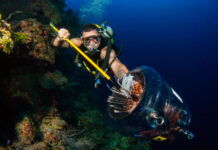
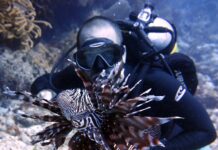
- Scuba divers conducting routine removals by spearfishing, which can effectively suppress local abundances of lionfish;
- Encouraging the development of recreational and commercial lionfish fisheries, which can promote long-term, sustainable lionfish population control; and
- Engaging local communities, for example, with lionfish culling tournaments “which can concurrently achieve multiple objectives of promoting lionfish removals, market-development, research, and public education”.

They noted that, in some jurisdictions, conservation policies had to be amended to enable lionfish removals in areas where spearfishing with scuba was otherwise prohibited.
“The risk of abusing these policies was mitigated through the use of gear restrictions, diver trainings, and through participatory approaches that integrated scuba divers and stakeholder organizations in lionfish research and management,” the scientists noted.
For example, here in Cayman, lionfish are the only species that scuba divers can legally remove from the local waters. Only approved three-pronged spears can be used and anyone using them must have a licence from the Department of Environment. In addition to Cayman, divers have been licensed to spear lionfish in Bermuda, Turks and Caicos Islands, Saba, St. Eustatius, St. Lucia, Aruba, Bonaire, Cyprus, Israel and the Egyptian Mediterranean.

The invasion in the Atlantic, which was first detected in 1985, is thought to have been introduced via aquarium releases in southeast Florida. The lionfish range expansion began in the early 2000s and populations are now established throughout the Gulf of Mexico, Caribbean Sea, and southeastern seaboard of the United States of America. The invasive fish were first spotted in Cayman in 2008.
The first recorded lionfish in the Eastern Mediterranean Sea was in 1991, but their initial establishment in the region in 2012 was in Lebanese waters, the researchers noted in their report. Their introduction into the Eastern Mediterranean was via the Suez Canal.
Over the last decade, the range of lionfish has expanded to the Central Mediterranean and is progressing towards the Western Mediterranean region.
Unsuccessful approaches
Thumbnail updated. May take a few minutes toSince the start of the invasion, several approaches have been taken to try to tackle the problem. Some have been more successful than others.
Teaching native fish to prey on lionfish: The researchers noted that, in the early phases of the lionfish invasion in the Atlantic, well-intentioned divers attempted to train other fish to prey on lionfish by feeding them speared fish. For example, they said, there are accounts of resident Nassau groupers that learned to lead divers to lionfish, stopping and turning when they reached one.
“Although there were instances of many native fish willingly ingesting speared lionfish, there is little evidence that native fish have become independent predators on lionfish as a result of this training,” the report noted.
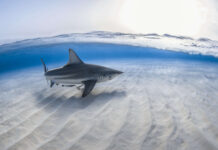
This feeding approach also led to dangerous interactions with marine predators, when Caribbean reef sharks, bull sharks and moray eels began associating divers with food.
“These predators will follow divers closely and even attempt to take them (lionfish) from containment devices,” the researchers stated.
They added, “The degree to which this problem occurs varies from place to place, but presenting lionfish to native fish in an attempt to promote predator control has made lionfish removal efforts more dangerous and difficult. We advise that all culled lionfish be contained and removed.”

Bounty programmes: The researchers also found that bounty programmes to incentivise lionfish removal by paying individuals for each lionfish collected did not work.
They cited the case of the government of Belize, which initially offered BZD $25 (CI$10) per lionfish. That programme exhausted its funds in less than six months. In Mississippi, a US$5 bounty was introduced early in the invasion of the northern Gulf of Mexico, but those funds were also quickly depleted.
While Cayman’s government did discuss the possibility of introducing a CI$5 bounty per lionfish back in 2012 as part of a debate into a private member’s motion, it was never implemented.
Successful strategies
The total eradication of lionfish on reefs where they do not naturally belong is not a possibility. Instead, the researchers noted that “functional eradication can mitigate their impacts on invaded fish communities and the fisheries they support”.
“Human removals are currently considered the most effective means of controlling densities and impacts,” they said. “These removals are accomplished primarily via spearfishing with short pole spears on scuba.”
They noted that, for example, in Honduras, Roatan Marine Park distributes pole spears and provides training specifically for removing lionfish. The dive sites where these removals took place resulted in lower lionfish densities compared to non-removal sites.
“Culling frequency is an important factor in minimizing negative ecological effects from the invasion,” they said. “Implementing control programs early in the invasion is also recommended.”
They noted that, in Bonaire, a spearfishing removal programme led by volunteers was immediately initiated after the first lionfish sighting in 2009, with a similar programme beginning on Curaçao two years later.
“More than a decade later, lionfish densities within recreational dive limits at marked dive sites in Bonaire have remained low relative to similar areas elsewhere,” they said.
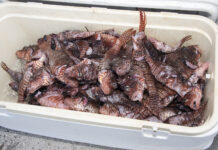
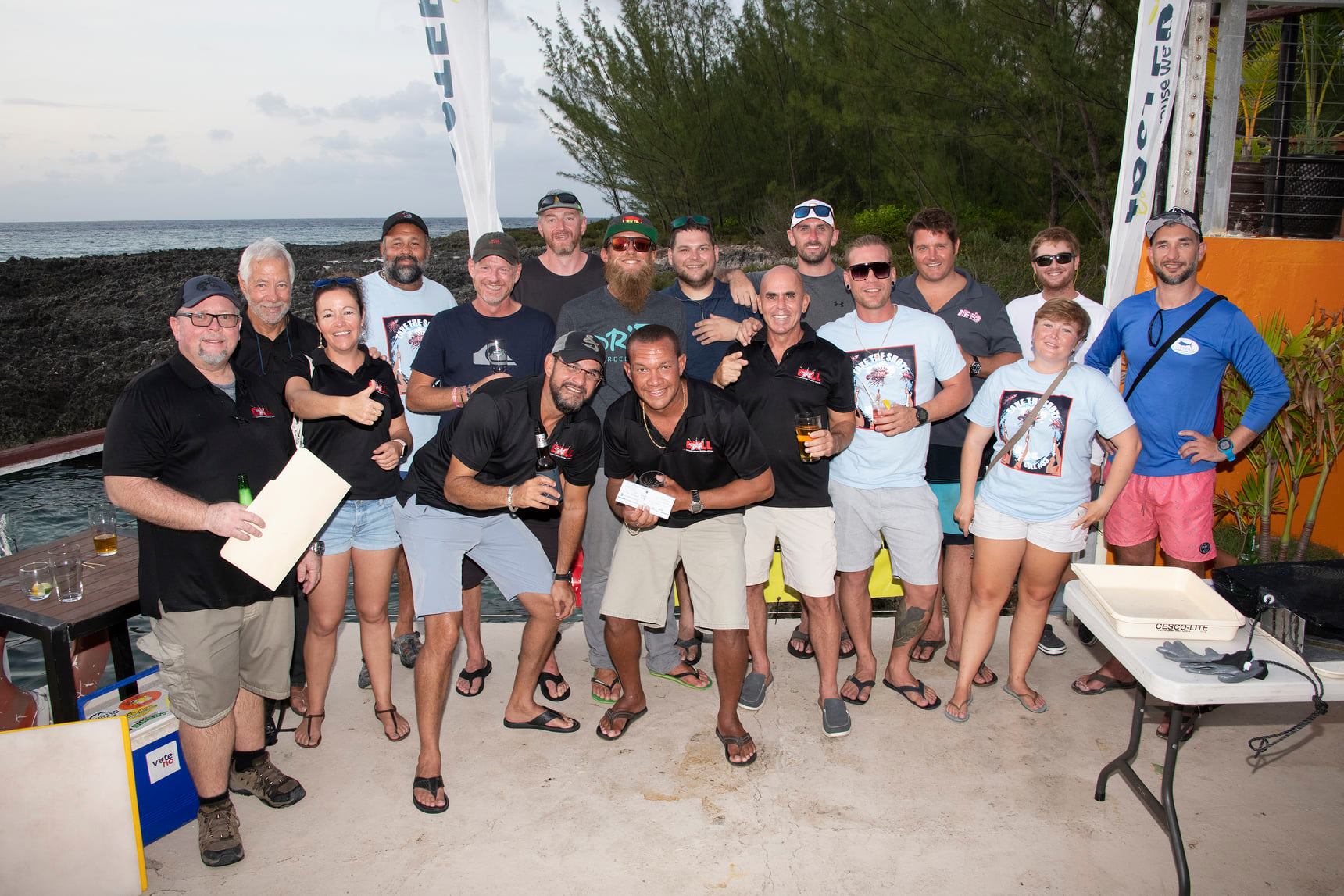
In lionfish tournaments, like those held regularly in Cayman by the Cayman United against Lionfish League (CULL), divers compete to remove lionfish within a set time period, and there are prizes for most removed, largest fish, smallest fish, etc.
The scientists said such tournaments, also known as derbies or rodeos, are held in at least 25 Western Caribbean jurisdictions.
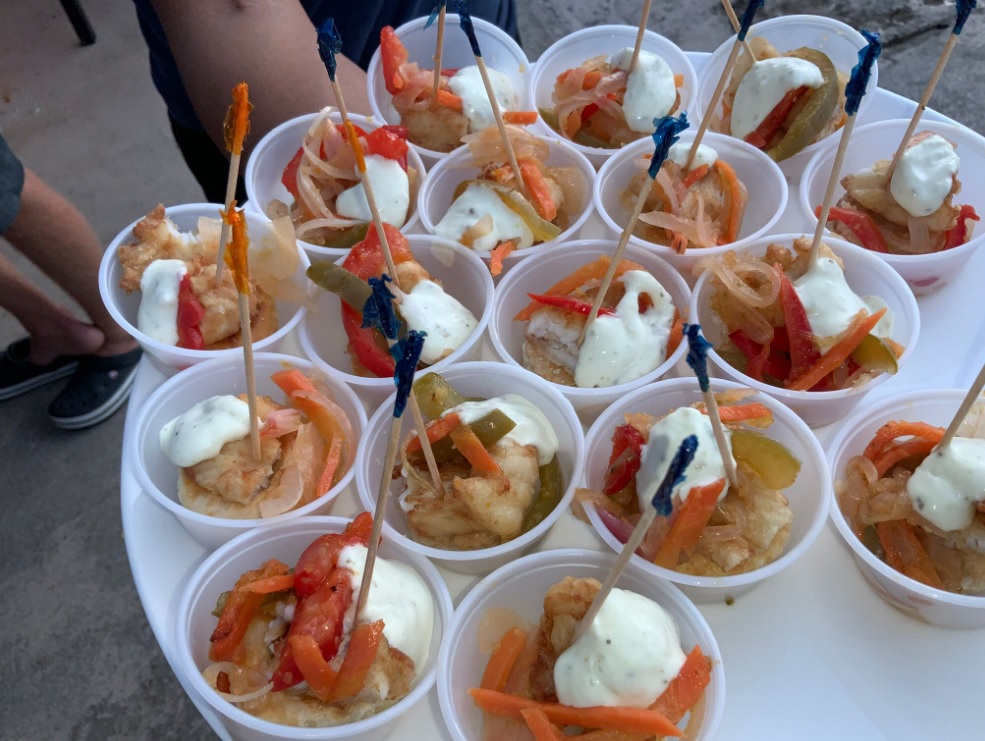
As well as removing the invasive species from local waters, such tournaments also raise awareness of the problem and help support research and education. At some, including here in Cayman, members of the public are invited to try out dishes made from lionfish, thereby introducing many to their first taste of the species.
But, the scientists acknowledged that sustaining organised lionfish removal events year after year can be challenging, and noted that, in some cases, high-profile annual events had been discontinued.
“This can be the result of lack of interest, dilution of participation due to excessive frequency (e.g., weekly), loss of financial support, and difficulties with planning around unpredictable weather,” they said.
Commercial opportunities

The report noted that catching lionfish can be commercially viable.
Lionfish meat is considered high-quality,” they said, “and annual commercial spearfishing landings of lionfish for food in the US northern Gulf of Mexico have been as high as 20,000 kg. Current ex-vessel prices of lionfish in the United States are approximately $10–$14 USD per kg, which compares to high-end reef fish prices.”
They added, “Prices in Belize and the Cayman Islands are also similar to high-end reef fish. In these areas, prices have increased over time, mostly due to public awareness campaigns, which communicated that lionfish are a safe-to-eat, tasty, and an environmentally-friendly seafood product.”
As well as being used for food, lionfish byproducts, such as leather from lionfish skin or jewellery from fins and spines, are also available.

Eastern Mediterranean lionfish management
The researchers noted that limited management measures to control lionfish have already been implemented in some areas of the Eastern Mediterranean, such as permission being granted in Turkey to allow single-day scuba removal events; a single diving centre in Israel being granted a permit to cull lionfish with scuba diving and pole spears; and 70 divers in the Egyptian Mediterranean, being issued with spearfishing permits.
However, the report stated, that overall targeted control efforts in the Mediterranean remain limited, as national and European laws prohibit spearfishing with scuba in much of the region.
“Although such regulations were developed for conservation purposes, they also inhibit removals of invasive species including lionfish. Lionfish removals by scuba divers are currently prohibited in Greece, Turkey, Lebanon, Tunisia, Algeria, and Israel,” the report noted.
The researchers said, “Broadly, our review suggests that invasive lionfish managers should support sustained lionfish removals with participatory approaches and cooperative management. Crucially, these strategies require strong communication between government managers, stakeholder organizations, and individuals.”
Related Videos