


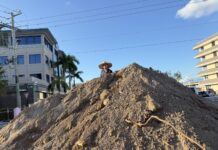
The recent demolition of part of a historic stone ‘slave’ wall has reignited calls for a legal framework to protect Cayman’s historic structures.
The destruction of the wall, which was originally built by slaves and located opposite Stone Wall Drive on the corner of Webster’s Estate, off Walkers Road, has triggered a community plea for legal protection for such culturally significant structures. It has also sparked a legal battle between neighbouring property owners who both claim they own the land where the wall was situated.
The Department of Planning, in an emailed response Tuesday to the Cayman Compass on the situation, said it has issued a stop notice for the clearing of the property and the demolition of the wall.
“The Department is dealing with the matter through the enforcement process,” it added.
David Dewson, who lives near the stone wall, had led the charge to stop its destruction last Wednesday and sought to have the contractors cease their work, without avail.
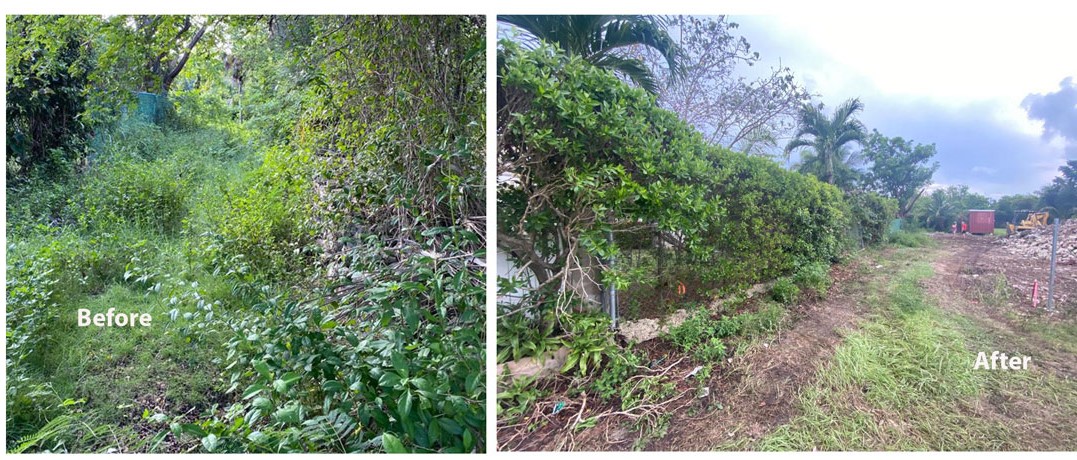
He said he was disturbed by the lack of attention being given to ensuring local heritage spaces and structures are protected from developers.
“This has to stop,” he told the Cayman Compass following the destruction of the wall.
Cayman, he said, has to do better to protect its cultural symbols.
“It is really sad that it has come to this. If people do not stand up against this, it will continue and continue,” Dewson said, adding that he tried to step in on behalf of his neighbour – Sandra Clyatt Meekins – who is off island, to save the wall.
Land dispute
Clyatt Meekins, who says she owns the land on which the demolished stone wall had sat, has declined to be interviewed as the matter is now in the hands of lawyers.
In a post on local Facebook group Cayman Development Watch, Clyatt Meekins said the stone wall made her property “charming” and that the land that it sat on was purchased by her grandfather in 1920.
In that post, she said the wall had been destroyed without her permission or knowledge.
The rocks from the demolished wall have been removed to an unknown location.
However, Leslie Harvey, the adjoining property owner, speaking to the Compass Thursday, disputed that the wall was within Clyatt Meekins’s estate.
He said the matter is now subject to legal action, but the boundary markers on the properties are clear, and the wall was within his family’s property line.
Harvey acknowledged the controversy over the wall’s destruction and said his family did not know it was a registered heritage symbol.
“We believe in conservation, obviously,” he said. “If we had known it was actually designated of historical significance, I don’t think it would have been touched… It wasn’t me that did it… it was my father.
“But if you look at the wall, it’s maybe one and a half feet tall, two feet tall, and it’s really just a pile of rocks. It doesn’t look like it has any significance. So, unless you’re told, you wouldn’t know if it’s 20 years old, or 500 years old, there’s no way to tell. So that’s an issue there. It’s on our property, we didn’t know [about it] having significance. There are no laws protecting it.”
Stone wall a reminder of Cayman’s slave past
According to the National Trust website, the stone wall – a mixture of coral rock and cliff rock – forms a property line for many homes in the Webster Estate area.
“The wall starts around Walkers Road and ends at Rene Hislop’s house. It is believed to have been built by slaves,” it added.
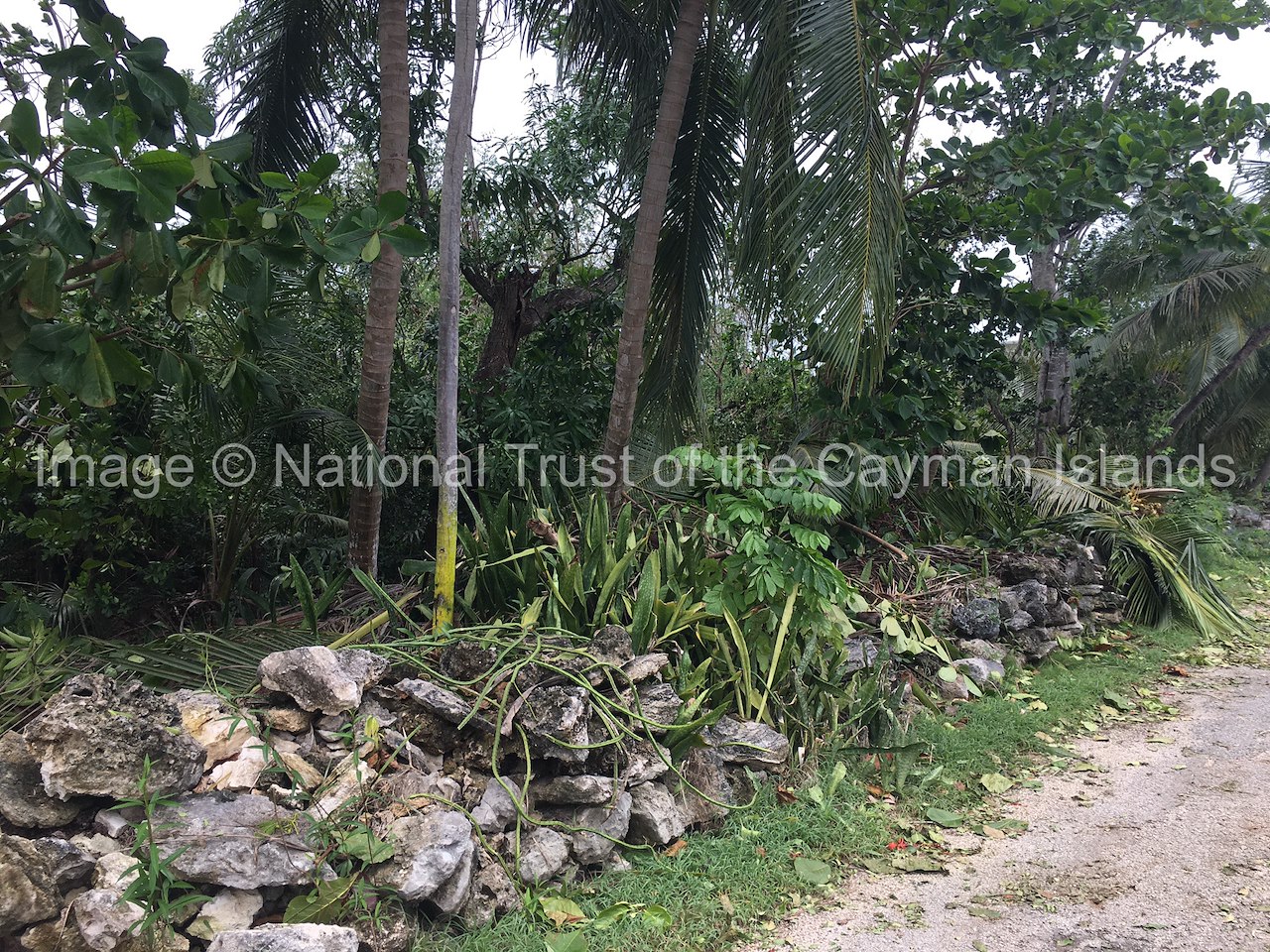
Though listed on the National Trust’s register, the wall does not appear to have any protected status.
Harvey said, given that the wall was built by slaves, it may be time for Cayman to have a conservation about conversation.
“There should be a debate about what we conserve and what we consider something of historical significance. If there’s just a wall that was a boundary put by slaves, what significance would that have? Was it used for our defence?… No. Did a meeting happen there or something else of historical significance? Did anything happen there?” he said.
He added that a conversation should be held to determine what is preserved and what constitutes sites of historical significance.
Otherwise, he said, “Then you’re making the case that you can’t have any kind of progress whatsoever, like, nothing could be disturbed once it’s put in if you go down that logic.”
Dewson said the matter is also in the hands of the police, who are investigating allegations of threats being made against him and trespass.
The RCIPS said its officers had attended several reports between 17 and 20 Aug. concerning the clearing of land and demolition of the wall.
“Investigations are currently being carried out in relation to offences relating to breaches of the peace that were reported to the police during this time period,” police said. “In order to resolve the matter of the demolition of the wall, the RCIPS extends our full support to our partnering agencies.”
Harvey said his family has stopped any further work on the wall and is disputing the trespass claims against them.
Need for legislative protection
Earlier this month, the demolition of two old Caymanian buildings dating back to the 1930s, on North Church Street, at the George Town waterfront were bulldozed to the ground, also elicited a public outcry.
Both homes, Benny Bodden’s House and Ainsley Bodden’s House, were also on the National Trust’s Heritage Register. The first was operating as Da Fish Shack restaurant and the second had until recent years been the site of an art gallery.
The National Trust, in a statement issued earlier this month, said the PACT government had commissioned it to form a sub-committee in January “to inform them on updating the statutory framework for protecting built heritage in our islands, and the National Trust has been in the process of creating a document that will assist the Government in this regard”.
The Compass has reached out to the Premier’s Office for an official position on a legislative framework to protect heritage sites and structures, and is awaiting a response.
Related Videos










Maybe we need to implement some type of listed building status to protect some of our historic gems. We have some architecturally significant homes here in Cayman as well as walls. Not just our traditional Caymanian houses but some of those built in the 70s by world famous architects such as Cayman Sands on West Bay Road (Smurf Houses) and the old British West Indies Club (now owned by Dart)….