


Tourism throughout the Caribbean is rebounding strongly following the pandemic, but challenges from a lack of airlift, looming recession and supply chain problems are still hampering recovery, according to the Caribbean Tourism Organization.
Neil Walters, acting secretary general of the organisation, speaking at press briefing in Barbados Tuesday, stated that by the end of 2022, there had been 28.3 million tourist visits in the Caribbean – 52.4% more than in 2021. This figure was 88.6% of 2019 arrivals, he said, noting that the Caribbean was one of the regions with the quickest recovery rates globally in 2022.
Recovering tourist levels in the region were driven by the relaxation of COVID-related international travel restrictions, as well as strong demand in the US, the region’s top source market for inbound travel, and the restoration of airlift capacity to and from regional destinations, Walters said.
However, he warned that the industry’s recovery and growth were “undermined throughout the year by the negative effects, including rising prices and intermittent supply chain disruptions caused by the pandemic, labour shortages and disputes, global inflation, and heightened geopolitical tension”.
Recovery was stronger in some markets than in others, however.
Just six destinations within the CTO’s 27 members jurisdictions – the US Virgin Islands, St. Maarten, the Turks and Caicos Islands, Puerto Rico, the Dominican Republic, and Curacao – surpassed their pre-pandemic stayover numbers in 2022.
In Cayman, 284,274 stayover visits were recorded for the entire 2022, which accounted for 57% of 2019 figures.
However, the vast majority of the member jurisdictions of the Caribbean Tourism Organization showed an increase in stayover visitors compared to 2021, with increases ranging from 8.3% to 16-fold, Walters said.
According to the World Tourism Organization, around 917 million tourists travelled internationally in 2022, a figure that was double that of 2021 and represented 62.6% of pre-pandemic levels.

Source markets
Walters said the US travel market continued to drive the recovery of Caribbean tourism.
“The results in 2022 were helped by the region’s proximity to its main source market, favourable positioning, and positive image in the marketplaces,” he said.
He noted that there had been an estimated 28.1% increase in visitors coming from the US market to Caribbean destinations in 2022, compared to 2021. At the end of the year, 14.6 million American tourists had visited the region – 3.2 million more than the 11.4 million in 2021.
Another important market for the region is Canada, though this was slower to return than the US, as travel restrictions due to Omicron were tightened there at the start of 2022, making Canadian outbound travel difficult. Those limitations were finally lifted in October, and outbound travel rebounded rapidly.
Tourist visits from Canada in 2022 were 2.1 million, representing 7.2% of the total arrivals to the region. This only accounted for 60% of the pre-pandemic amount, Walters said.
“This market has demonstrated the lowest level of recovery,” he noted.
Meanwhile, there was a “robust resurgence” in European travel, he said, “thanks to reduced and shorter travel restrictions, pent-up demand, and surplus savings accrued during the pandemic”.
Arrivals from Europe increased by 81% in 2022 when compared to 2021, with 5.2 million tourists from this market arriving in the region – a figure almost double the 2.8 million seen in 2021.
This represented 18.3% of all arrivals in the region in 2022, a gain of almost 3 percentage points. The arrivals in 2022 were 87.7% of the European market’s total in 2019.
Intra-regional
Travel within the region also showed some increases compared to 2021, but lagged behind the 2019 figures.
Both Walters and CTO chairman Kenneth Bryan, Cayman’s tourism minister, said connectivity between countries in the region is hampering travel within the Caribbean, as there is insufficient airlift.

“The fact that destinations for whom this market contributes significantly to annual arrivals only recovered between 30% and 50% of the 2019 arrivals is noteworthy,” Walters said, who added that total tourist arrivals within the region from other Caribbean jurisdictions in 2022 were 900,000, up from the 400,000 in 2021, but down from 1.1 million in 2019.
Calling it a “nagging issue”, Bryan said the lack of inter-regional air connectivity continues to pose a risk to the region’s resilience and sustainability.
“It is a situation that has existed, and been talked about for decades, and has worsened due to the economic effects of the COVID pandemic… because the slowdown in tourism has caused airlines to re-evaluate their business structures and routes from a position of profitability more so than connectivity,” he said.
A global shortage of pilots was also “adding another layer of complexity to this longstanding issue”, he noted.
While he said it would be “illogical” for him to promise a solution to this issue during his two-year tenure as CTO chairman, ”what I can, and will commit to, is getting the players around the table to forensically examine what we need to do as a unified region to improve this scenario and starting the ball rolling towards the solution.”
Aside from tourism, improved air routes within the region, he said, would enable and encourage residents across the Caribbean to travel more easily to other islands to visit family and friends.
Future challenges
Walters said the outlook for travel to the region is promising, despite global pressures like high inflation, the war in Ukraine and the ensuing energy crisis, as well as the impending economic recession.
“International travel from other markets will contribute to the region’s already substantial benefits from the United States,” he said, noting that nearly 90% of the region’s travel demand for 2019 has already been recovered, and some destinations have even surpassed their pre-pandemic levels.
“When compared to 2022, it is expected that overall arrivals to the region will increase by between 10% and 15%,” he said. “This means that between 31.2 and 32.6 million tourists can be expected to visit the region this year. Thus, tourist arrivals this year might surpass pre-pandemic arrivals.”
Cruise
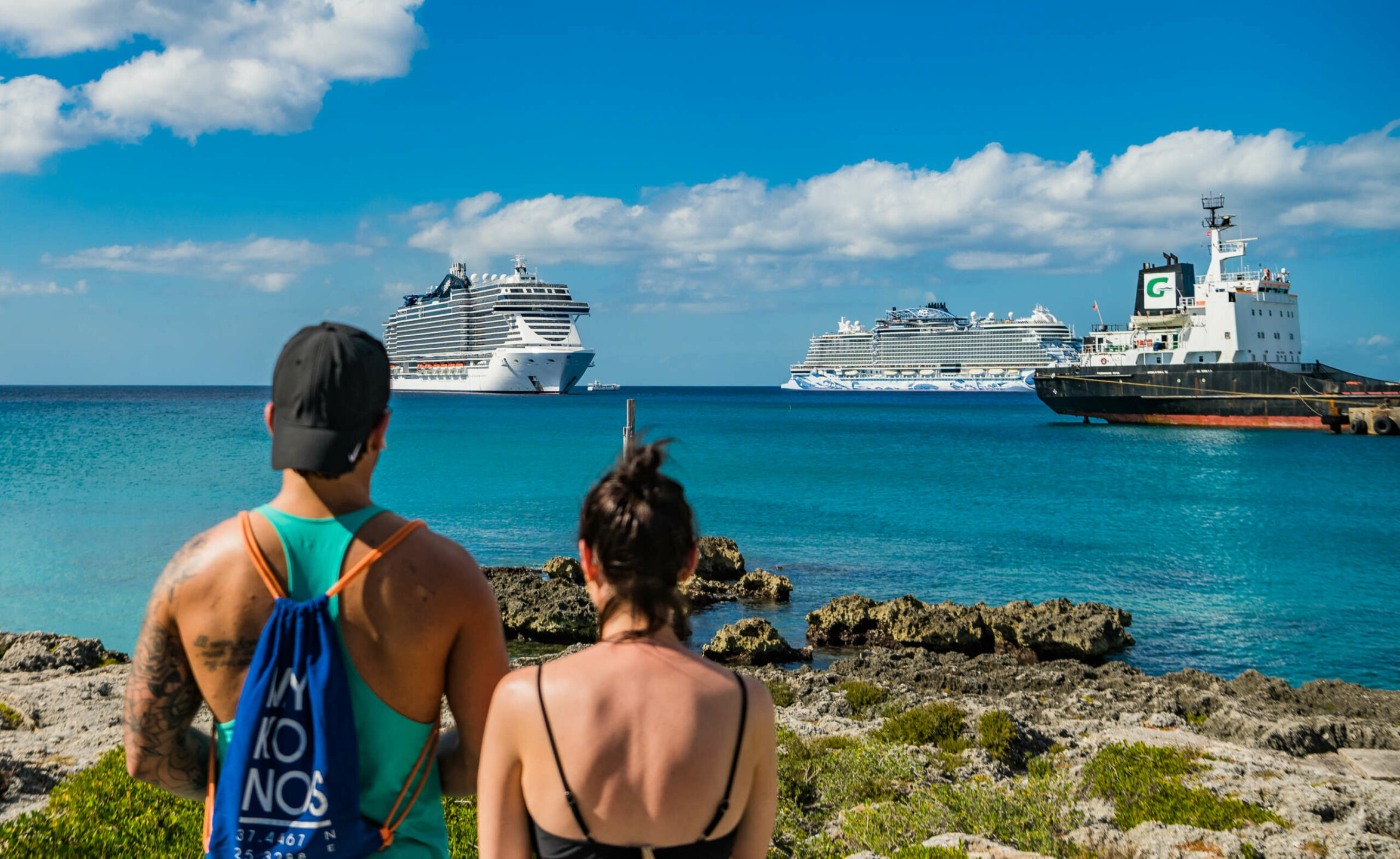
Walters added that in 2023, the cruise industry is also anticipated to continue recovering and expanding.
“As more ships are deployed, the capacity for cruises will rise and demand will stay high,” he said. “All ports in the region have reopened, and some have started homeporting. In the region, there should be between 32 million and 33 million cruise visits overall, which is a 5% to 10% increase over the pre-covid baseline figure.”
‘Hope, strength and determination’
Bryan was also optimistic about this year’s performance within the region’s tourism industry.
“It is clearly apparent that even in the face of the devastating blows delivered by the pandemic, as a region we have responded with hope, strength, and the determination to prevail,” he said. “Great strides have been made and many of our jurisdictions ended 2022 registering higher than predicted visitor arrivals. That is a clear indication that the sector is bouncing back and hopes are high that the robust pace of recovery will continue into 2023 and beyond.”
He added that the World Travel and Tourism Council had forecast 5.5% annual growth for the Caribbean over the next 10 years, and that the Caribbean Development Bank is predicting Caribbean economic growth of 5.7 % in 2023, based, in part, on the continued revival of tourism.
“So, although we have not yet surpassed 2019’s numbers across the board in every jurisdiction, the needle is certainly moving in the right direction,” he said.
See country-by-country 2022 stayover and cruise statistics here.
Related Videos













Rental car costs on the island have exploded in recent years making it difficult to visit your island. We try to visit 3 x a year but you are pricing us out.