

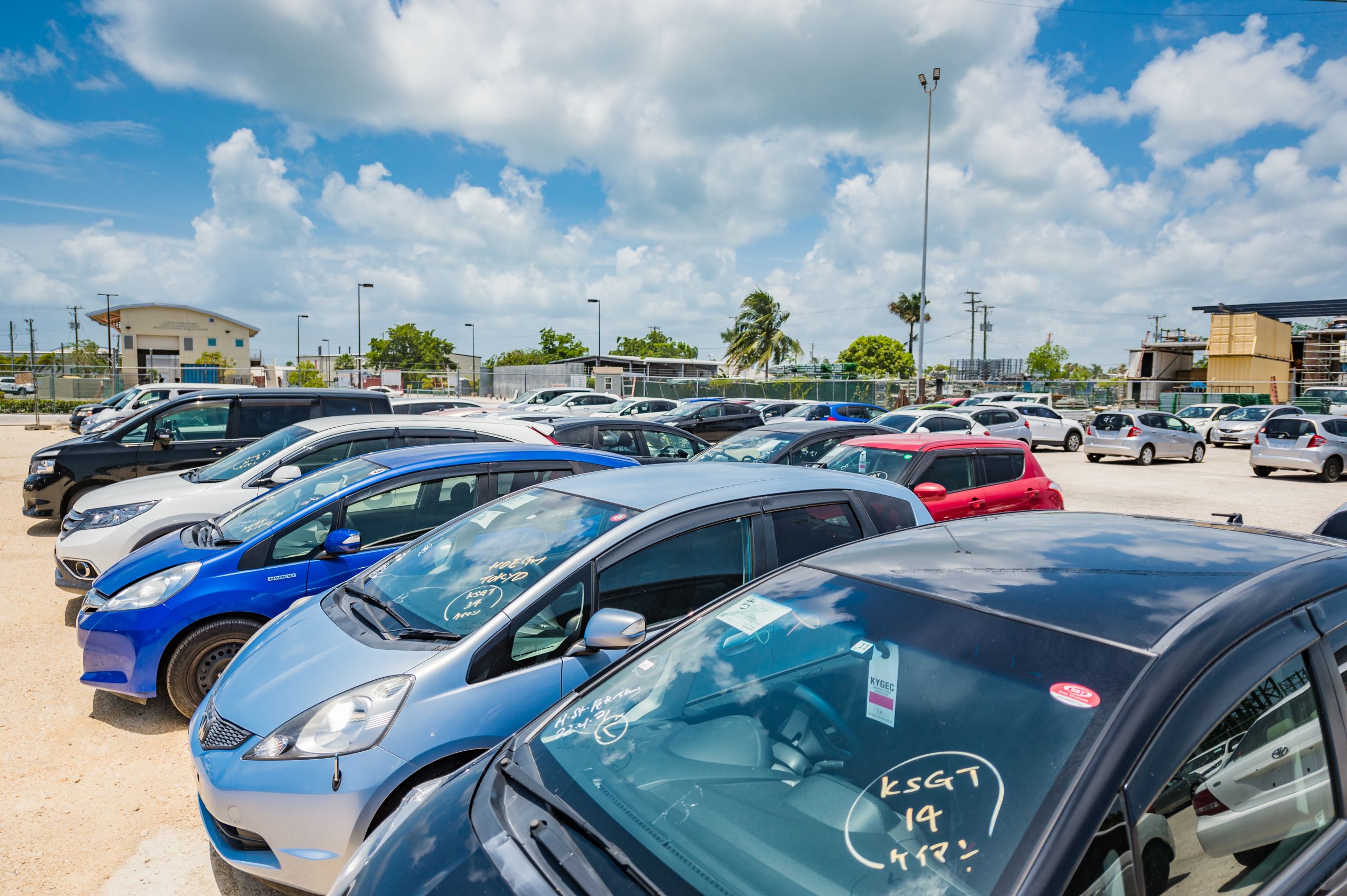
Government, as of today, 1 May, has banned the importation of vehicles that are over eight years old.
Premier Wayne Panton said the new restriction is the first of a series of measures to address Cayman’s growing traffic-congestion problem, which has been exacerbated by the importation of almost 40,000 vehicles over the past decade.
In a statement announcing the restriction on older vehicles, Panton noted that, over the last three years, the percentage of imported cars between 11 and 20 years old nearly doubled, from 32% in 2020 to 63% in 2022.
“These older vehicles are often cheaper to purchase but they are harder to maintain and will drive higher demand for replacement vehicles; these older vehicles end up abandoned and left for government to dispose of,” he said.
He added that the importation restriction is “aimed at reducing traffic congestion and at increasing the fuel efficiency, emission standards, and overall safety of vehicles on our roads. The increase in the number of older cars also increases dangerous emissions as older vehicles are less fuel-efficient and more likely to cause air pollution.”
In the statement, Customs and Border Control Director Charles Clifford said his department will “rigorously enforce” the new ban. Other Caribbean islands limit the age of vehicles that that are allowed to be imported. Jamaica, for example, will not allow any vehicle that is older than five years old to be brought on the island.
A press release issued by the Ministry of Labour and Border Control on Monday originally stated that the restriction applied to cars that were more than seven years old, but this was later amended to correct the information and clarify it applied to vehicles more than eight years old.

Exemptions
Government is allowing exemptions for agricultural, construction, engineering and maintenance vehicles.
Panton said these exemptions for heavy machinery are being allowed because such vehicles are typically confined to work sites and do not usually impact everyday traffic.
Omnibuses are also exempt, as are classic or antique cars.
The restriction also does not apply to people who can provide Customs and Border Control with documentation that proves they ordered and purchased their vehicle before 1 May.
Cabinet, at its last meeting on 25 April, approved the Customs and Border Control (Prohibited Goods) (Amendment) Order, which introduced the new import restriction on any vehicle manufactured before 2016.
4,790 vehicles imported each year
Data from the Vehicle Imports Summary shows that 39,267 vehicles were imported between 2012 and 2022. The majority of those – 23,953 – were imported in the five years between 2018 and 2022, with an average of 4,790 cars being brought on island each year.
Speaking of Radio Cayman’s For The Record show on Monday morning, 1 May, Panton said plans are under way to amend the Traffic Act to “make sure vehicles that are being brought in are up to standard, are roadworthy and reflect appropriate safety standards”.
He noted that there are currently no checks on older imported vehicles to see if they have been subject to recalls by the manufacturer, so “we could be importing vehicles with multiple safety issues… These are the types of issues we are trying to address.”
He said building more roads is not the full solution to the island’s traffic issues.
“We need to have measures in place that provide these alternate solutions. We have had a 10,000 person increase in our population the last two years, and maybe even a little bit more, which has had a major impact. The solution is to control the amount of cars that are coming in, as far as possibly while minimising impacts on people and expanding the level of public transport.”
In response to queries from callers who asked why the ban was not limited to work-permit holders, the premier said government had not ruled out further limiting vehicle importation or ownership for expat workers in the future, but for now, the importation restriction applied to everybody.
Panton told For The Record presenter Orrett Connor that there are a number of other measures being explored to combat Cayman’s traffic problems, including more public transport options, park-and-ride systems for the eastern districts, car-pooling and introducing a school bus system for private schools.
A mandate for private school buses?
A private member’s motion by Opposition MP Alden McLaughlin to mandate private schools use buses was debated in Parliament last week. Describing it as an easy fix, McLaughlin said this would provide a quick, positive impact on traffic congestion.
McLaughlin said the benefit of private school buses may warrant government paying for the service, adding “none of us could think of any other single measure that in one fell swoop would reduce that amount of vehicles from the roads during the customary rush hours, particularly in the morning”.
The motion suggested that duty concessions should be granted to private schools purchasing buses for the purposes of transporting students.
Government supported the motion, although Education Minister Juliana O’Connor-Connolly pointed out that previous negotiations with private schools to voluntarily use buses “didn’t not go quite well” and were “vigorously” opposed.
“So, from a voluntary basis, unless the leaders of the school and the parents of the students have drastically changed, we’re probably going to get the same reception this time,” she said.
Panton said on the Radio Cayman show that his administration would “absolutely be considering” the use of buses in private schools, but added that it would be difficult for government to take a “hard stance” on mandating private schools use buses, as there is currently no such requirement for public schools.
Editor’s note: This story has been amended from the original to reflect a correction in a press release issued by the Ministry of Labour and Border Control, to clarify that the restriction applies to vehicles that are more than eight years old, rather than seven years old.
Related Videos












Taking the last three years that would cut down by about 800, the number of cars imported – will that have any material impact on the horrendous traffic problem – there is possibly no real solution that would not subsequently result in the loss of votes for government.