


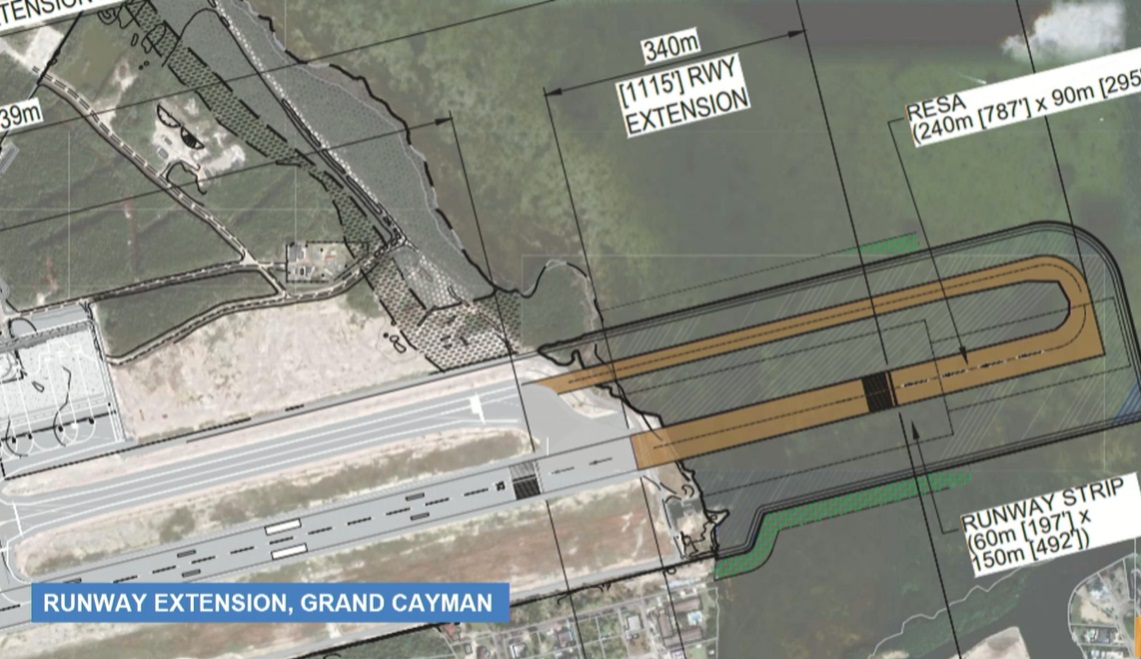
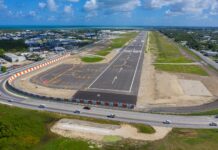
A new Airport Master Plan will involve expanding the Owen Roberts International Airport runway in Grand Cayman 1,900 feet into the North Sound, at a cost of $28 million, officials have confirmed.
Cabinet last week approved an outline business case for four specific airport-related projects, contained within the 20-year master plan, which will cost a total of almost $76 million.
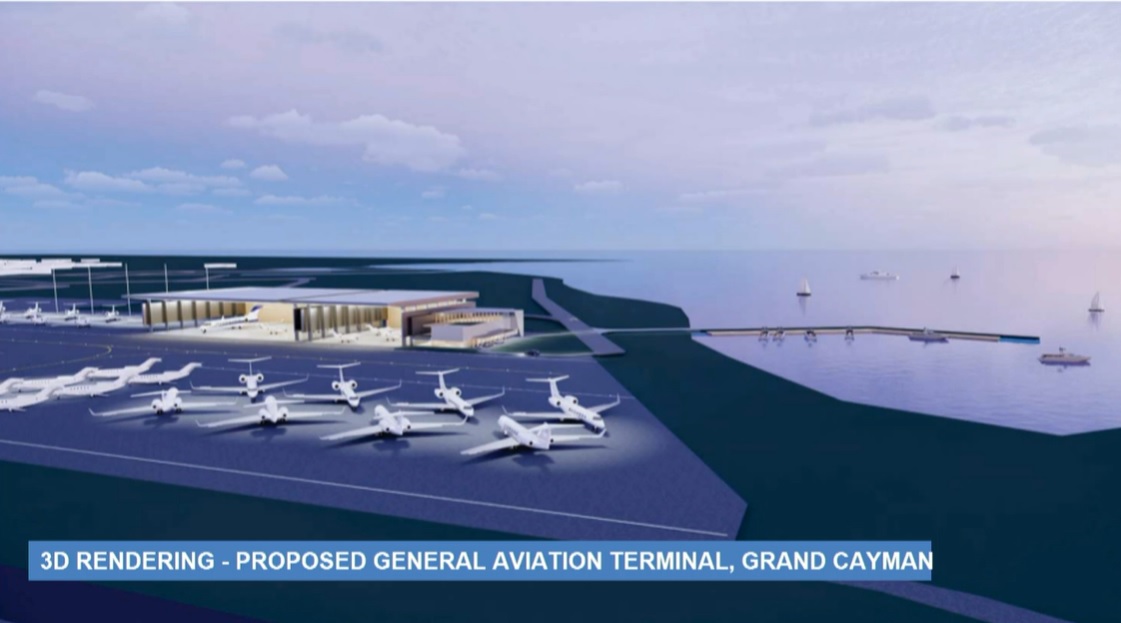
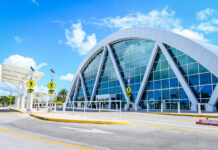
As well as the expansion of the runway to 1,900 feet – to accommodate larger airplanes on long-haul routes – the government plans to build a new $42 million general aviation terminal and spend $4.7 million on air traffic control surveillance at Owen Roberts. It also plans to carry out runway end safety area works at the Charles Kirkconnell International Airport on Cayman Brac at a cost of $1.15 million.
Several other airport-related projects were included in the outline business case, which amounted to an investment of $800 million over 20 years, but Tourism Minister Kenneth Bryan said completing this entire slate of recommendations “is not feasible to consider in the current economic environment”.
US$20 increase in air passenger fees
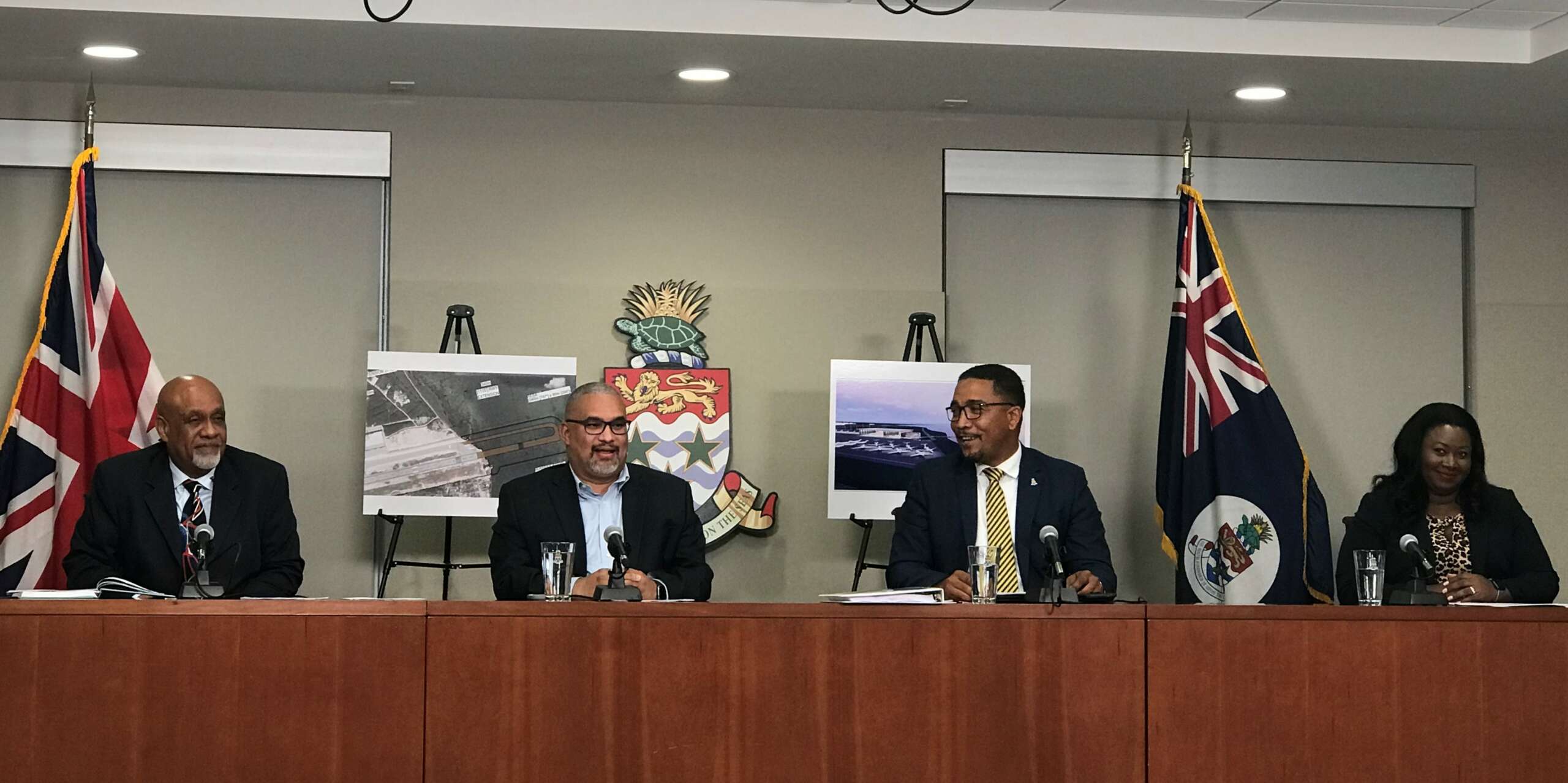
Speaking at a press briefing Tuesday afternoon, 30 May, to announce the plan, Bryan said government would not have to borrow or dip into any reserves to pay for the four approved projects, as a US$20 increase in air passenger fees will cover the costs.
This will include a $5 increase in the terminal fee and a new airport development fee of US$15.
Bryan noted that the airport development fee will only be applied during the construction period, which is estimated to be six years, from 2024 to 2029.
Cayman Islands Airports Authority chief executive officer Albert Anderson said discussions would first be needed with the International Air Transport Association (IATA) about how the airlines could build the additional fees into their ticket prices. “That typically takes about six months, so we’re expecting 1 January,” to introduce the increased fees, he said.
He told the Compass that about 750,000 air passengers, including more than half-a-million tourists, passed through Cayman’s airports in 2019, so once arrivals return to pre-pandemic numbers, the additional $20 fee could earn the government an extra $15 million a year to pay for the expansion and air traffic control projects.
Bryan noted that an analysis of comparable airports in the Caribbean “shows that the Cayman Islands passenger-related airport fees would come more in line with destinations such as Jamaica and the Bahamas. In other words, we would not be pricing ourselves out of the market.”
Environmental impact assessments
An environmental impact assessment will be carried out on the runway projects on both Grand Cayman and Cayman Brac.
Commenting on the EIA for the runway extension into the North Sound, project manager Roy Williams said while that assessment will examine the potential impacts of the work, an earlier exploration by Jacobs Consultancy in 2008 indicated that “the effect of any impacts out there is basically related to seagrass only”.
He said that the Airports Authority sent an EIA scoping application to the Department of Environment on 5 May, and once that has been completed by the Environmental Assessment Board, a request for proposals will be issued to select a consultant to carry out the study.
The four projects and their price tags
- Extend runway at Owen Roberts International Airport: $28 million
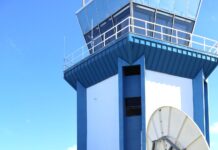
- Improve the air traffic control surveillance at Owen Roberts: $4.7 million
- New general aviation facility: $42 million
- Runway end safety area works, commonly known as RESA, at Cayman Brac’s Charles Kirkconnell International Airport: $1.15 million
Scoping is the stage that sets out what needs to be assessed in an EIA and what information may be needed to identify the likely significant effects from the development.
Bryan added that “previous experience has shown that the probability of the severity of the environmental impact may be minimal, but we won’t know that until it starts”.
Williams said coastal mangroves “will not be touched” as part of the project.
With the EIAs expected to take about 12 months to complete, followed by the design and procurement stage, Williams estimated that construction is unlikely to begin before mid-2025.
The EIA will be funded by money from the Cayman Islands Airports Authority budget, Anderson confirmed, and will not be taken from the Environmental Protection Fund.
He said the EIAs on Cayman Brac and Grand Cayman were expected to be carried out at the same time, and the four projects would be done “in tandem”, though the air traffic management element would have priority.
He noted that, currently, air traffic controllers at Owen Roberts use a manual method called “procedural control”. He said, from a safety perspective, “we’ve now reached a point where modern surveillance systems are necessary, and this project, therefore, is a top priority”.
Larger aircraft on extended runway
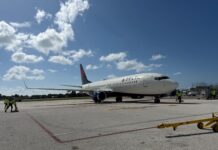
Anderson, in response to questions regarding what types of aircraft would be able to land on the expanded runway, said ‘Code E’ planes, which include the Boeing 777 and 787, and the A350 Airbus, would be able to land fully loaded. Currently, British Airways flies a 777 from London Heathrow to Cayman, via Nassau, Bahamas, but it is not landing or taking off with a full load.
“This will allow a fully loaded, fully fuelled Code E aircraft to depart and land at Owen Roberts,” he said.
Director of Tourism Rosa Harris said, over the past three years, a number of airlines had expressed interest in adding Cayman to their long-haul routes, including Eurowings, which is Germany’s Lufthansa Group’s low-cost airline; Norway’s Norse Atlantic Airways; and the UK’s Virgin Atlantic.
She said discussions with Eurowings and Virgin had faltered because of the current length of the runway.
During the public consultation process last year, consultants had recommended extending the runway at Owen Roberts 1,000 feet into the North Sound – a length that has almost doubled in the latest version of the master plan.
Little Cayman airport not included
Consultants working on the new master had indicated at public consultation meetings held in November last year, that the airport in Little Cayman should also be considered a priority, as it is unlicensed, on privately-owned land, and operates on the basis of special temporary exemptions from the Civil Aviation Authority of the Cayman Islands.
The master plan proposes building a new airport on the island, but Bryan said the government simply does not have the budget to include this in the current outline business case.
Regional competition
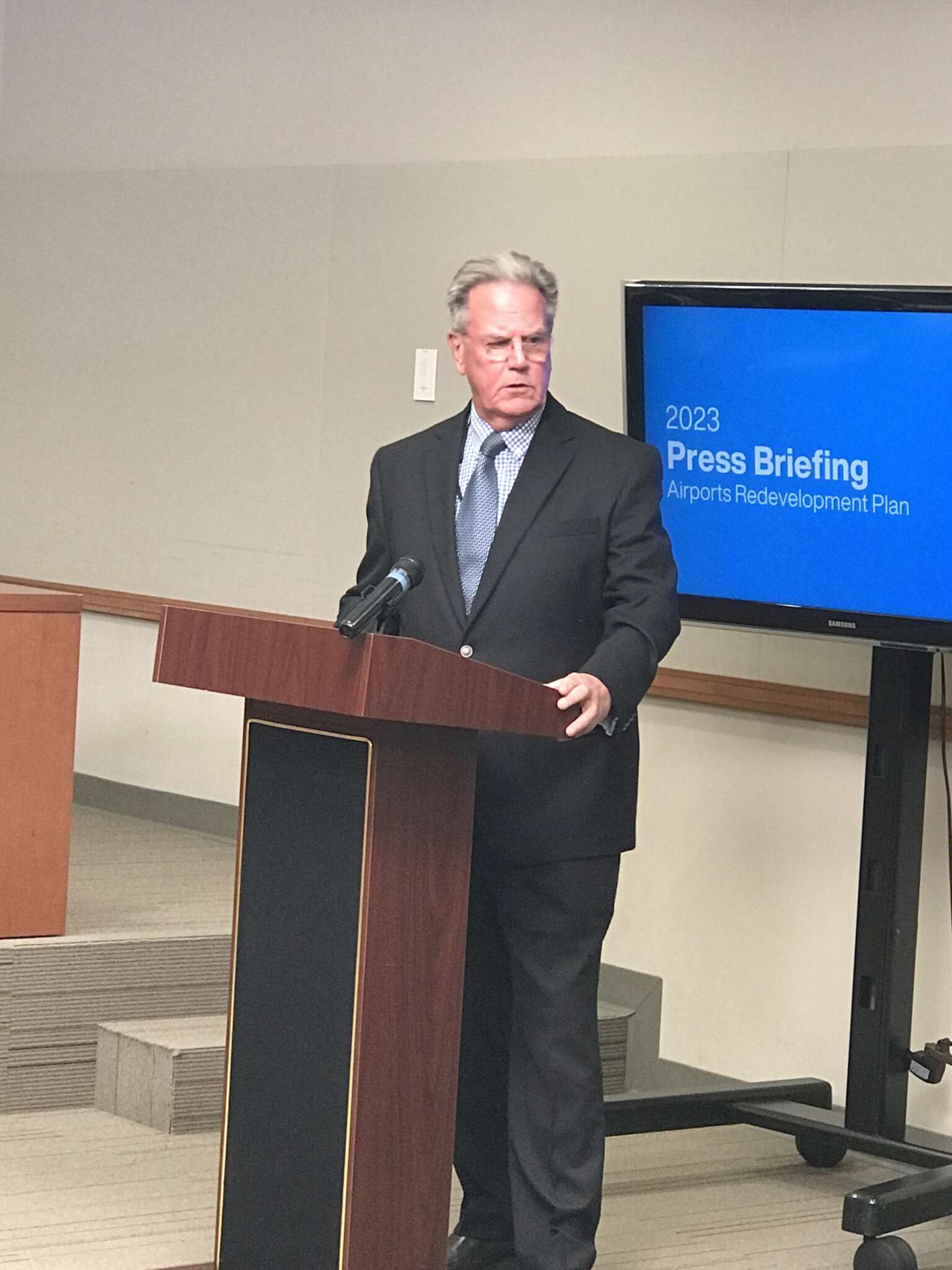
The tourism minister said the 286-page master plan “builds upon previous airport master plans and clearly identifies the opportunities and constraints associated with our existing airport infrastructure and includes recommendations for improvement”.
Pointing out that about a quarter of Cayman’s gross domestic product is derived from tourism, Bryan said airport growth was necessary if Cayman is to compete successfully with islands in the region, such as Anguilla, Antigua, Aruba, Bahamas, Barbados, British Virgin Islands, Jamaica, and the Turks and Caicos Islands, which all have made or are in the process of making airport expansions.
He added that managing the capacity, capability and competitiveness of Cayman’s airports is a strategic imperative that cannot be ignored.
The Ministry of Tourism stated that a copy of the master plan would be released publicly later this week.
Related Videos









Hopefully any new facility will include “ Jetways “ to allow travelers to board in comfort whatever the weather – like the ones most International airports have used for years.
I guess no one asked the homeowners in Tropical Gardens, Grand Harbour and Sailing Club area how they will be impacted?
I see no mention of adding jet bridges for arrivals/departures. Surely this is now an imperative. What a dreadful impression we give tourists when they first arrive, struggling down steps, sometimes in monsoon conditions with no protection from the elements. A truly third world experience.
Was there any consideration to relocate the airport to the east end?