

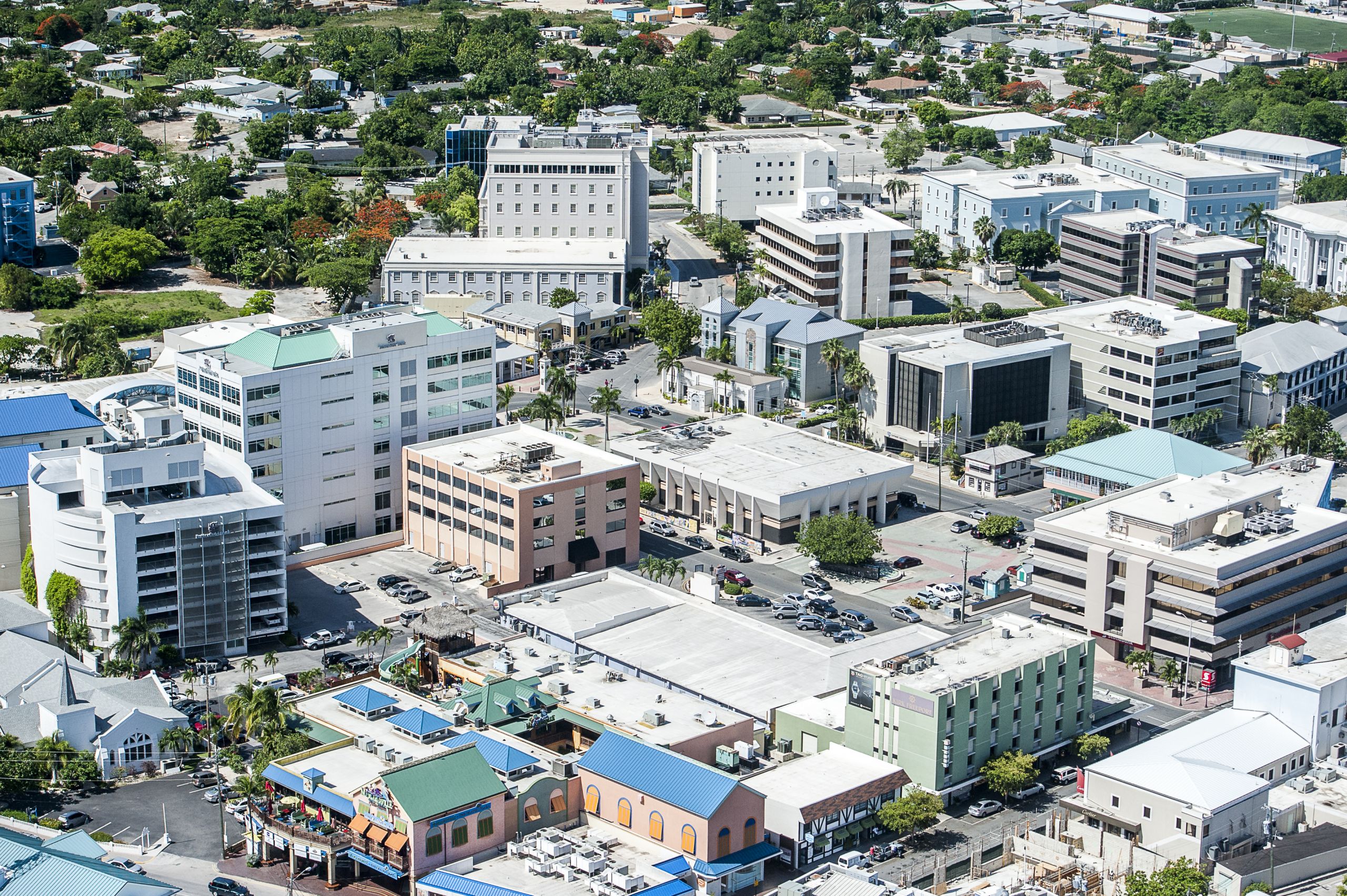
Cayman Islands financial crime cops are currently investigating dozens of international money laundering cases.
The Cayman Islands Financial Bureau of Investigations has 32 open cases – a mix of criminal complaints and civil actions to seize assets believed to be the proceeds of crime.
But bureau chief Victoria Templeman warns it may take several years for any of those inquiries to come to trial in Cayman.
The bureau – which focusss on complex cross-border investigations – was set up in 2020 to remedy one of the most significant weaknesses identified in the Financial Action Task Force’s inspection of the territory’s financial crime fighting arsenal.
Made-up of experienced crimefighters from around the world, the swiftly assembled team includes experts on cryptocurrency and tax evasion, as well as accountants and financial intelligence analysts.
Templeman, herself a former senior manager in the British National Crime Agency’s anti-corruption unit, said the Royal Cayman Islands Police Service had quickly established an experienced team of experts. The unit helped satisfy the global task force that Cayman has the resources to proactively pursue economic crime on the scale that fits its risk profile as hub of international finance.
The last remaining black mark against the islands – out of a list of 63 following the original FATF report in 2019 – centred on the number of money laundering convictions within the jurisdiction. That’s why Cayman remains on a grey list of countries under enhanced scrutiny, something that could change in October, after task force officials accepted Cayman had now satisfied all of its recommendations, pending a final inspection.
But while the crimefighting infrastructure is now in place, Templeman warns it could take much longer to bring a statistically relevant number of cases to trial.
“These investigations can take years and years to even get to the point where we going to charge anybody, which is one of the issues with being on the enhanced monitoring list,” said Templeman.
“At the minute, we have about 32 ongoing money laundering investigations and civil recovery investigations. We also have a number of cases that have technical offences, but not necessarily money laundering.”
Cayman’s reputation doesn’t match risk
She cautions that the relatively high number of inquiries should not be seen as a sign that Cayman is a hotspot for money laundering.
In fact, she has some sympathy for financial industry leaders in the jurisdiction who feel that the islands’ reputation is unjust.
She said the perceived risk profile is likely associated with its past as opposed to the current reality.

“From what we are seeing, and we are focused on finding it, I don’t think there is the same level of money laundering coming through these islands that our reputation would suggest,” she said.
Nonetheless, she said, Cayman’s institutions, like those based anywhere, are susceptible to being used by criminals to hide dirty money. And she believes the unit and its partners can do their bit to stop the crime that does happen here, as well as to aid other jurisdictions and protect the islands’ status as a financial centre.
She said the FATF recommendations had focused Cayman Islands law enforcement on a previously under-resourced area.
“The sort of unique and special thing about Cayman is that you’ve got an international financial centre doing trillions of dollars in terms of movement of money,” she said, “and you’ve got a population that is basically equivalent to a small town in the UK.
“That brings very diverse policing requirements.
“You have community policing and then you’ve got the really sophisticated, complex economic crime, and there’s not a lot in between in terms of serious organised crime. To get the balance right from a law enforcement perspective is interesting, but it is quite difficult.”
How crooks move money
One of the key niches under scrutiny are exempt companies – international businesses of all types that are based in Cayman but do business overseas.
Many of those have a paper office but no physical presence in Cayman.
A typical scam involving Cayman might involve a victim and a perpetrator who are not based on the islands – again making prosecutions complex, but not impossible.
For example, a Middle Eastern company takes a bribe payment for a government contract, moving the proceeds to a bank account in Switzerland, which is owned by an exempt company based in Cayman. A relative of one of the original company directors withdraws funds from the Swiss account using a credit card for lavish spending in the US – completing the circle and converting the proceeds into assets.
In those kind of cases, Cayman is a middle man. But that doesn’t stop investigators from pursuing the company, the enablers and the assets, said Templeman.
It is possible to prosecute a company in the Cayman Islands courts. It is also possible to go after financial service providers who knowingly aid and abet that type of arrangement. Equally, investigations like this can yield fruitful evidence for prosecutions elsewhere.
Seizing assets
One key tool in the bureau’s armoury is the ability to go after assets, potentially using the Proceeds of Crime Act to confiscate everything from jets and houses to virtual cryptocurrency wallets parked in the Cayman Islands.
The Cayman Islands might be a tempting jurisdiction for people who have become wealthy from the proceeds of crime for the same reason it is tempting to legitimately wealthy individuals, she said. Even when the individuals themselves are based elsewhere, it is possible to take their assets – if you can link them to a crime.
Multiple investigations of that type are currently under way, she said.
“That’s a powerful one because they have worked hard at these criminal endeavours to get these condos and flash cars and everything else. It really annoys them whenever you take it from them,” she said.
While those things won’t necessarily help get Cayman off the grey list, most industry analysts believe that the islands has demonstrated it is doing its part to staunch the flow of dirty cash around the global financial system.
National security issue
There’s another huge upside to complying with FATF’s recommendations and to demonstrating high standards of regulation, oversight and enforcement within Cayman.
Ensuring the stability of the financial service industry – fees from which form a significant chunk of government revenue – is an issue of national stability.
“In a jurisdiction like Cayman, if the economy is affected, then that’s a national security issue. It has so many knock-on effects,” said Templeman.
“If the economy fails, because we can’t get our house in order, we stay on the grey list, we go on the blacklist – then jobs fail, the civil service fails, society fails.”
- Victoria Templeman was speaking to the Cayman Compass as part of our ongoing Issues series on the Financial Action Task Force Grey List.
Related Videos













Russian army = bad
Russian money = good
https://www.opendemocracy.net/en/dark-money-investigations/uk-top-destination-for-russians-to-hide-dirty-money-in-property/
Dirty money infests every offshore center in the world and most first world nations banking systems. It’s all one big shell game.