

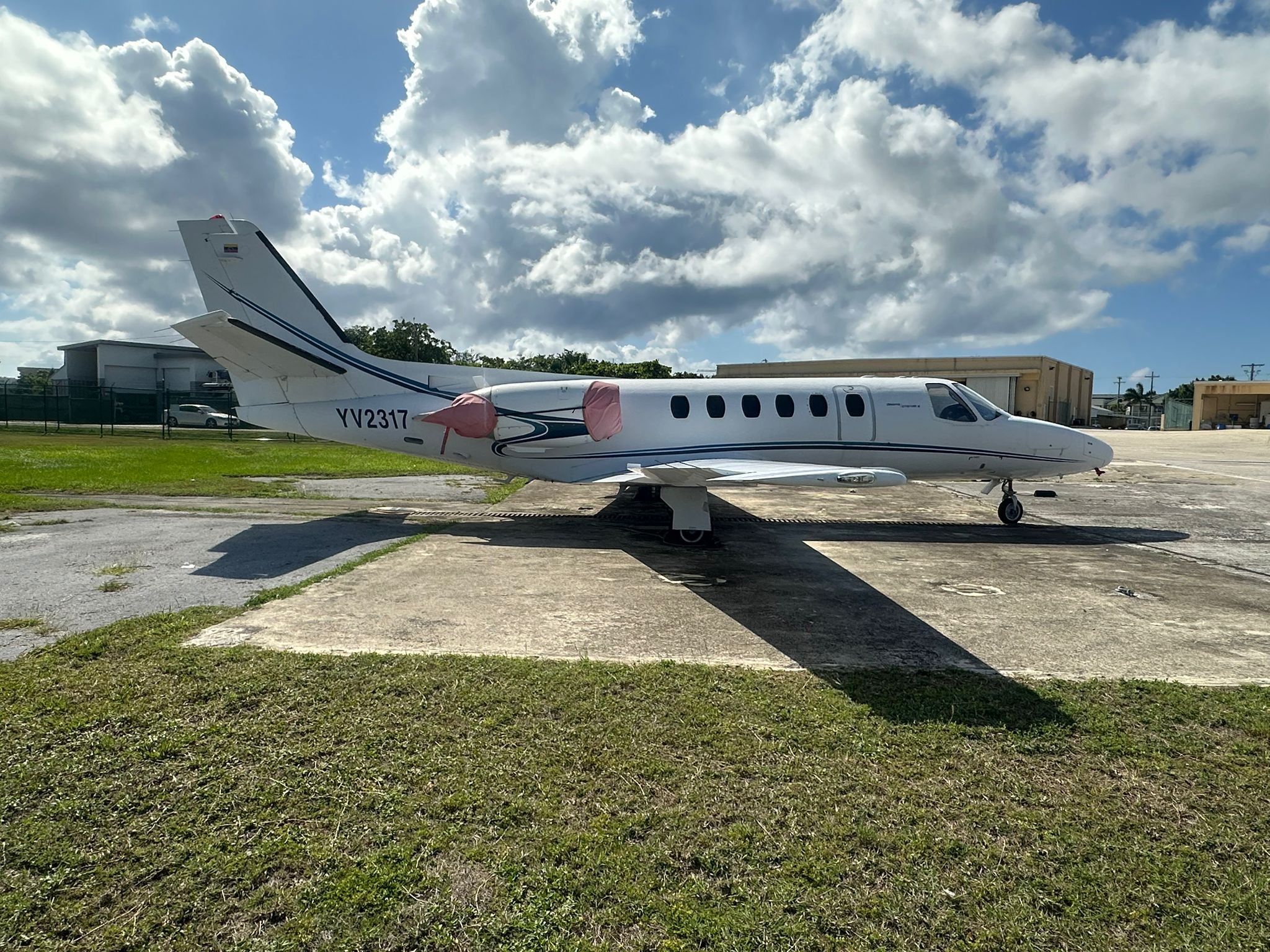
A Venezuelan pilot who has spent more than six years in jail without charge in the Cayman Islands is mounting a fresh legal bid for freedom.
Juan Carlos Infante, 64, has filed a habeas corpus application after studying human rights law in the prison library and working with another inmate to prepare a 10-page petition.
He argues that his prolonged imprisonment is unlawful and the extradition process against him has been riddled with “systemic failures, procedural irregularities and constitutional violations.”
Infante was acquitted in Cayman on gold-smuggling and money-laundering charges after arriving on a private plane in 2019.
But he has remained in HMP Northward ever since, as U.S. authorities seek to extradite him to Florida over drug-smuggling allegations tied to a 20-year-old indictment.
He denies the U.S. charges and says he had no knowledge of the indictment until his arrest in the Cayman Islands on the unrelated criminal matters.
Speaking to the Compass from HMP Northward, Infante said rising geopolitical tensions between Venezuela and the United States have added to his fears he would not receive fair treatment if transferred into U.S. custody.
“I am very worried, because I will be totally discriminated against in the United States of America,” he claimed. “On the other hand, I have no involvement with the government
or any of those groups that the United States is after.”
He is asking the Cayman courts to declare his ongoing detention unlawful and to allow him to return to Venezuela.
Infante argues that the 2023 decision by the governor to order his extradition was legally flawed because it relied on magistrates’ rulings grounded in treaty agreements he argues were repealed or never extended to the Cayman Islands.
He filed an appeal last October against that decision, but Justice Marlene Carter has not yet delivered a ruling.
Infante’s habeas corpus application says the year-long delay in receiving that judgment means the ordinary appeals process has failed and can no longer be considered an effective remedy. Under habeas corpus rules, claims of unlawful detention must receive swift judicial attention.
“The Plaintiff has been deprived of liberty without lawful justification, compounded by inordinate delays in judicial processes, including a one-year-plus inordinate delay in delivering judgment on his extradition appeal,” the document states.
“The appeal is no longer a viable remedy; it is in limbo, suspending the Plaintiff’s liberty indefinitely. Habeas corpus is thus the only live judicial process.”
The application adds that “one year of silence” from the courts, combined with six years and four months of imprisonment, amounts to a “systemic denial” of justice.
Infante says he drafted the application himself with assistance from fellow inmates. It names the governor, the director of prisons, the attorney general and the U.S. Government as defendants.
He expects to face a further investigation in Venezuela relating to the gold-smuggling case there+ and says he will need the Cayman court documents from his acquittals to address that process.
Infante also says his health has deteriorated sharply during his incarceration. He reports symptoms of early-onset dementia and says he has lost access to his youngest child in Venezuela as a result of his prolonged estrangement from his family.
“I have lost my family, my career, my friends… all the hardship that my family has suffered, my children, my business, everything,” he said.
He has written to the Human Rights Commission in Cayman to take up his cause but said he has received no support.
Ben Tonner KC, chair of the HRC, said it had responded to all Infante’s letters
“From the information that Mr. Infante has provided to us (Governor’s letters to Mr. Infante dated 4 August 2025 and 1 October 2025), we understand that a Grand Court decision will be published this year. As we have explained to Mr. Infante in writing, we are continuing to monitor closely his case as it progresses through the Cayman Islands judicial system, and we have asked him to contact us with any further developments,” he said in an emailed response to the Compass.
Related Videos











Bad time to live in Venezuela. The U.S. about to go crazy down there. Better off in prison. Guess he hasn’t seen the news.
This is unacceptable by any standards as are the “efforts” of the HRC. If there is no Grand Court decision forthcoming this year, then, although I do not normally agree that the Governor should be involved in internal affairs, I firmly believe she should step in and end this unending saga. This is comparable with the treatment of some detainees in Guantanamo Bay.
Can Mr. Ben Tonner KC, HRC Chairman, or the Attorney General explain how this is not a human rights violation? This issue appears legally dubious.
This seems to be the same treatment as that of suspected IRA bombers/murderers in the UK in the 1970s. Where’s the comparative crime?
Might CIG face an investigation or lawsuit from detaining someone for six years without charge?