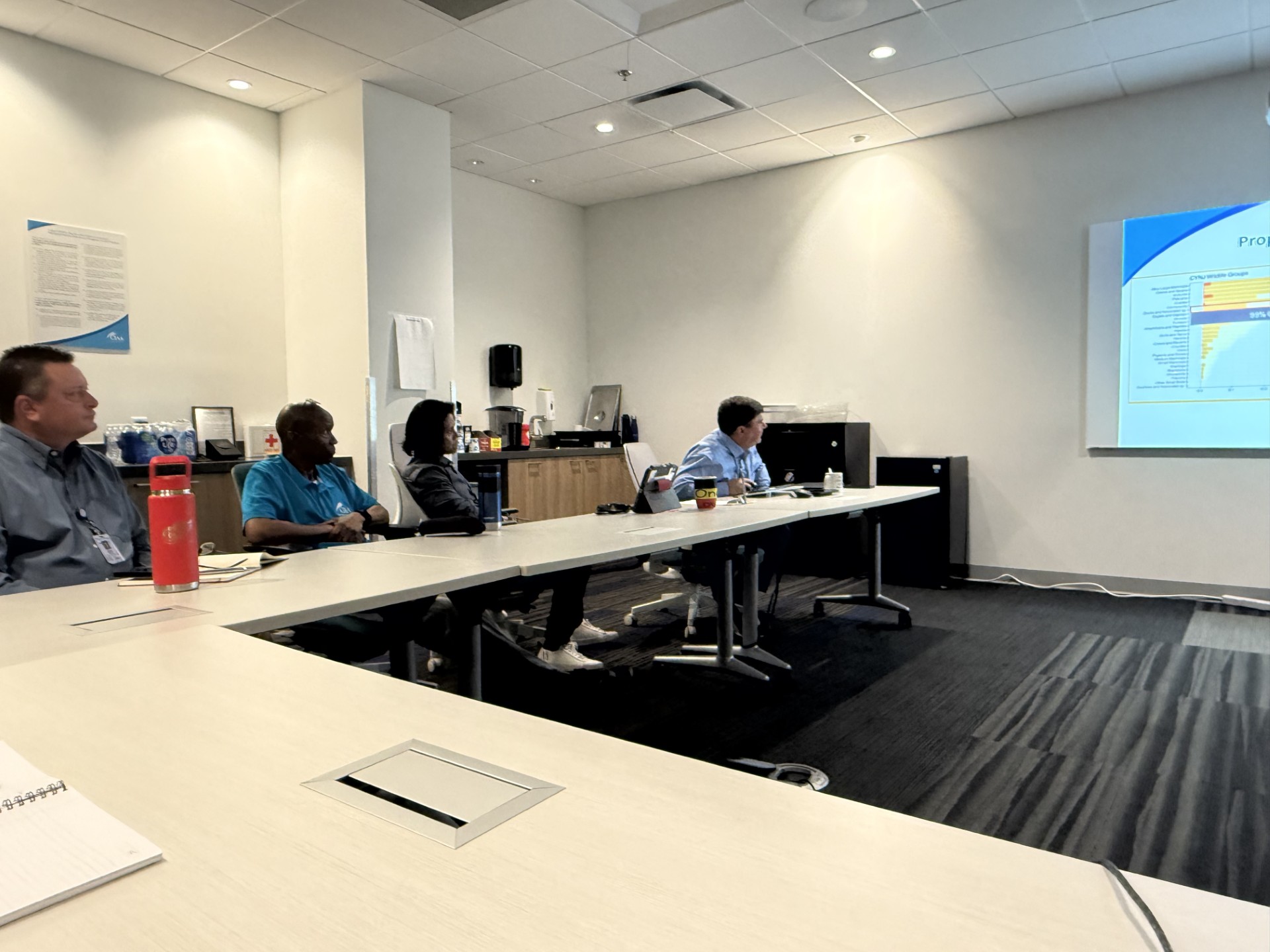
The Cayman Islands Airports Authority held its annual Wildlife Hazard Working Group meeting on 1 Dec. with an agenda focused on mitigating bird strikes.
Gathered in a conference room at the airports authority’s headquarters were safety officers, environmental experts, National Trust representatives and members of the National Conservation Council, including behavioural ornithologist Ian Kirkham.
The session was led by Andrew McLaughlin, chief safety management officer at the airports authority. McLaughlin explained that the wildlife threat to aviation in the Cayman Islands comes from several sources, but the most significant threat was likely from the egrets that tend to gather on the land near the cricket pitch.
He also provided updates on current measures being implemented to reduce hazardous wildlife activity around the airport to ensure safer conditions for all aircraft operations.
Bird strikes can lead to financial loss
The threat of bird strikes is more than a safety issue; a bird strike can also result in a major financial loss; when a large bird is ingested into the engine of an aircraft it can require a complete tear down and in some cases, the damage can be so severe that the engine may be beyond repair, potentially costing the airline millions of dollars.
In 2024, there were a total of nearly 26,000 aircraft movements in and out of Owen Roberts International Airport and out of that total, there were 39 reported bird strikes. None of the incidents in 2024 resulted in any significant damage to aircraft, but back in 2009 an incident did occur that caused reasonably major damage to an engine of a jet aircraft.
Most of the recorded bird strikes here involve barn swallows. “They’re by far the most frequent,” McLaughlin said, “but not the most dangerous.”
The real worry is the big-bodied birds; the raptors and large seabirds and even the chickens that occasionally jump over the airport perimeter fence by the Airport Park.
Global bird-logging app
One thing came through clearly at the wildlife meeting: we no longer have to guess when those waves of birds will arrive.
Kirkham credited the global bird-logging app eBird with nothing less than a revolution. Birders from Cuba to Central America feed sightings into a live database. When swallows and raptors start lighting up eBird checklists in western Cuba, Cayman’s aviation team can now determine that, roughly 48 to 72 hours later, those same waves are likely to be on top of us.
“We absolutely know when they’re coming,” he said. “Not perfectly, but far better than even 10 years ago.”
If eBird shows the wave, the Motus Wildlife Tracking System shows the individual birds in it. Now being installed in West Bay, Little Cayman and Cayman Brac, with an existing station at the Queen Elizabeth II Botanic Park, Motus is a network of triangular antenna towers that listen for tiny radio tags placed on birds elsewhere in the hemisphere. When a tagged bird passes overhead, Cayman’s antennas pick up the signal.
“Combine eBird’s big picture with Motus’ fine detail,” McLaughlin said, “and suddenly we’re not just reacting to birds. We’re anticipating them, almost to the day.”
Mitigation strategies
During the presentation McLaughlin walked through the different mitigation strategies and tools the airport is using with varying success.
- Falconry: The gold-standard natural deterrent, but only when kept lean and hungry. In a tropical environment, the cost and care make them hard to justify and McLaughlin pointed out that if the falcon flew away from its handler, it could present a threat to local wildlife.
- Micro-plastic insecticides: Rejected out of hand. They might thin the insects the Barn swallows feed on, but they’d also poison the wider environment.
- Drainage and bullrush control: Removing standing water and cutting bullrushes below six inches is simple, unglamorous habitat management that quietly works.
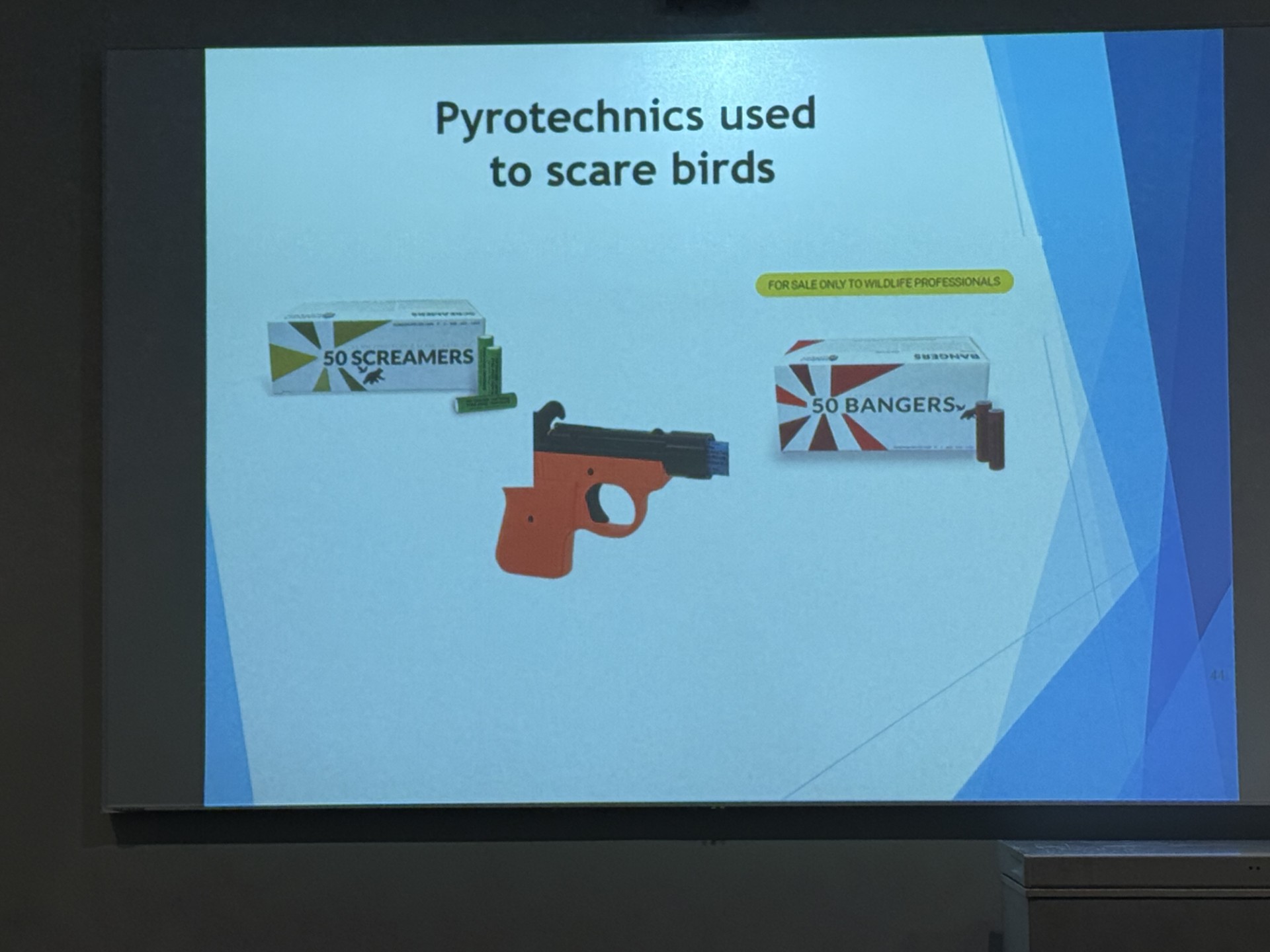
- Big horns and banger flares: Noise tools that can move birds in the short term. However, it was noted that the fogging system tested on Cayman Brac did nothing to the birds; a banger flare, already standard in the UK, took years to gain police approval here but has finally been authorised for use.
- Twelve-gauge shotgun: Used occasionally for culling, but generally not for lethal control, but as a loud scaring device. Effective, but with obvious noise and public perception issues.
- Dogs: Possibly one of the most effective options on the list. Properly trained dogs can keep an airfield clear with minimal harm. However, McLaughlin pointed out they are expensive because the need for a year-round handler when the threat from bird strikes is primarily seasonal.
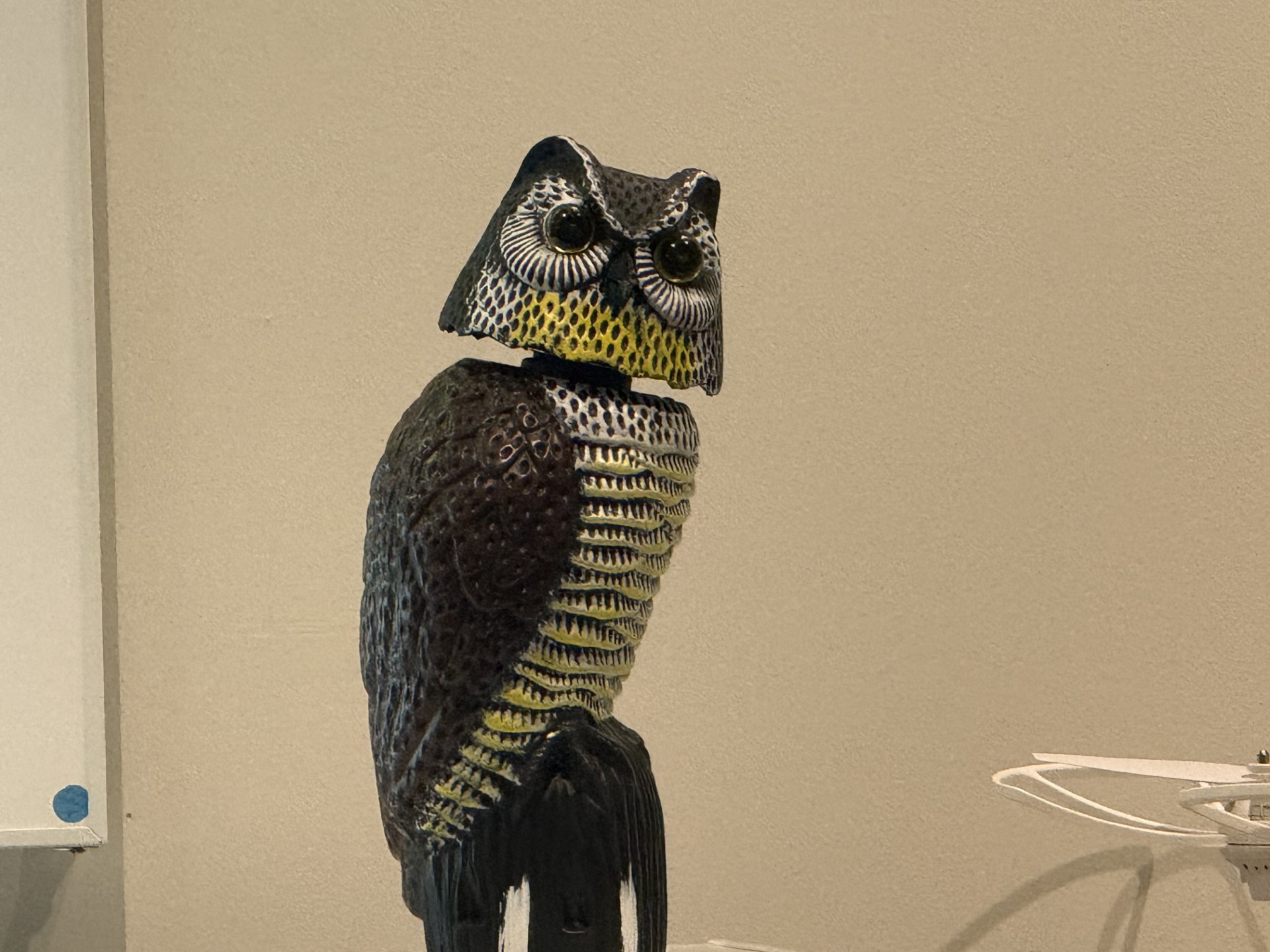
- Decoy owls: Already in use. They help a bit, but not enough on their own.
- Drones: Already in use, but only effective for certain birds and it was pointed out that occasionally the drones are attacked by birds of prey.
- Lasers: Already in use, but they do not appear to be very effective. Ian Kirkham pointed out that rather than acting as a deterrent, some types of birds are actually attracted to the laser lights.
Through it all, one message repeated: No single gadget will solve this. “More can always be done,” McLaughlin said. “And we’ll keep adjusting and improving our mitigation strategies.”
To pull the science, field experience and policy together, a dedicated Bird Aircraft Strike Hazard (BASH) team is now being formed, bringing in interested and informed advisers from across the islands.
Between eBird, Motus, old fashioned drainage work and some creative thinking about landfills, dogs and decoys, Cayman is slowly turning bird strikes from a mysterious act of nature into something we can see coming and plan around.
Related Videos