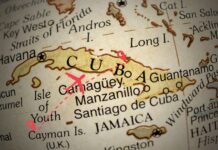
A jet fuel shortage in Cuba has forced airlines to cancel or reroute flights, placing added strain on the island’s collapsing tourism sector, and prompting monitoring by aviation and government officials in the Cayman Islands.
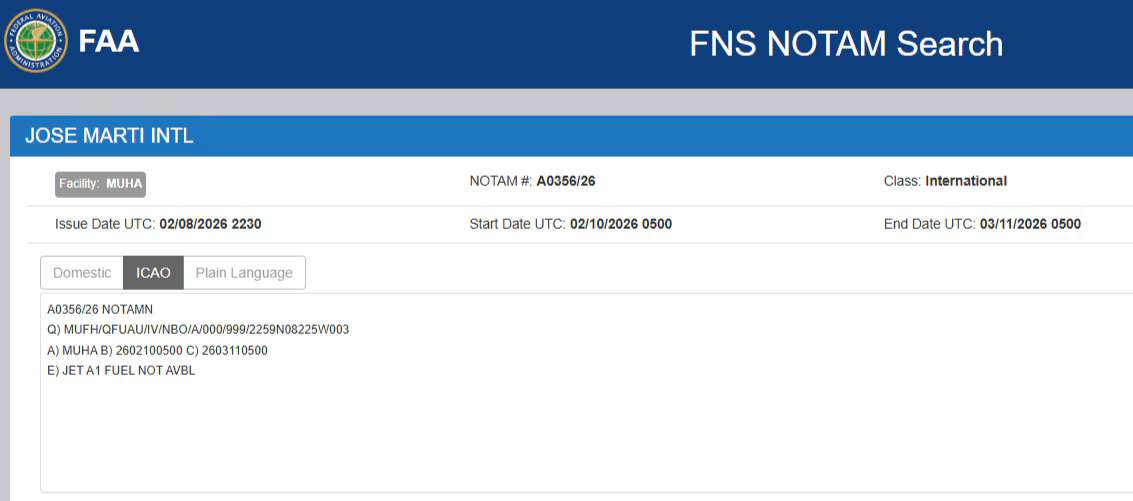
On 8 Feb., Cuban aviation authorities issued a Notice to Air Missions or NOTAM advising that Jet A-1 fuel would not be available at the country’s airports, including José Martí International Airport in Havana, from 10 Feb. through at least 11 March.
NOTAMs are formal alerts used to ensure airlines, air traffic control units and pilots are informed of temporary conditions, restrictions or procedural changes that could affect operations.
The unavailability of fuel at Cuba’s nine international airports alters standard flight planning. Airlines typically refuel before returning to their point of origin. Without that option, carriers must either tanker enough fuel for a round trip, introduce technical stops in third countries or suspend routes entirely.
Several airlines have already adjusted operations. Air Canada announced a temporary suspension of its Cuba services, affecting thousands of passengers, while WestJet said it “has made the decision to begin an orderly wind down of our winter operations to Cuba … inclusive of WestJet, Sunwing Vacations, WestJet Vacations and Vacances WestJet Quebec.” Air Transat has also advised of a temporary suspension of its flights to Cuba.
Air Europa and other European carriers have reportedly planned technical refuelling stops in destinations such as the Dominican Republic.
Some US carriers have continued operating, in part because shorter routes allow them to carry sufficient return fuel.
Implications for Cayman
Cayman officials say they do not currently anticipate significant knock-on impacts from Cuba’s fuel crisis, though they are monitoring the situation closely. Cayman Airways, meanwhile, is considering a temporary suspension of flights during the affected period.
The Governor’s Office confirmed it is monitoring developments and sharing updates with relevant government agencies.
“We do not currently anticipate significant spillover impacts on Cayman’s air traffic,” said Louise Fox, policy advisor in the Office of the Governor, noting that airlines serving Cuba plan their fuel requirements well in advance of flights.
“Airlines operating into Cuba manage their fuel planning at their point of origin and make decisions on tankering fuel or arranging refuelling stops well in advance. As a result, flight diversions to Cayman due to fuel shortages are considered unlikely,” she said.
Should any aircraft request a technical or refuelling stop, the Cayman Islands Airports Authority has advised that it could accommodate such requests within available operational windows.
Industry practice also reduces the likelihood of disruption. Many short-haul carriers flying into Cuba are expected to tanker enough fuel for a full round trip, while long-haul operators would make commercial decisions on whether to proceed, cancel or reroute services during the affected period. Aircraft operators coordinate directly with local fuel suppliers, who assess their own capacity to handle any increase in demand.
Bianca Moore-Downey, chief commercial officer at the Cayman Islands Airports Authority, said private traffic between Cayman and Cuba is rare.
“We very rarely have private flights operating to or from Cuba,” she said. “In the limited instances when such flights do occur, they typically refuel in the Cayman Islands, to the best of our knowledge. However, given how infrequent these flights are, it is difficult to determine whether the fuel crisis in Cuba has had any measurable impact.”
Routine technical fuel stops by carriers not bound for Cayman already operate within established regulatory frameworks, meaning no additional approvals would typically be required for standard refuelling landings.
The Office of the Governor added that any request involving specific diplomatic or security considerations would be assessed on a case-by-case basis.
“From a security and diplomatic perspective, the Governor’s Office remains fully engaged and would assess any sensitive or unusual requests in consultation with the relevant ministries,” Fox said. “Although we do not currently foresee any such issues, we would ensure all appropriate considerations are taken into account before agreeing to support any operations outside normal patterns.”
Fox confirmed that the UK Government has not issued guidance to its Overseas Territories on refuelling or technical landings related to Cuba, though local officials remain in contact with the relevant UK departments. No NOTAMs directly pertaining to Cayman have been issued in connection with the fuel shortage.
Potential suspension of Cayman Airways flights to Cuba
Cayman Airways confirmed that the Cuban-issued NOTAM is affecting its once-weekly service to the Cuban capital.
The airline said the fuel suspension presents “significant operational constraints for CAL’s Havana service, making the route subject to possible cancellation during the affected period, depending on operational feasibility and safety considerations.”
Beyond the Jet A-1 restrictions, the airline also indicated concerns about fuel supplies for ground support equipment and other critical airport services, as well as the availability of accommodation and on-the-ground assistance if an aircraft is delayed or unable to depart as scheduled.
“These are extraordinary circumstances that are evolving daily and are beyond the airline’s control,” said Captain Dave Scott, executive vice president of flight operations and chief operations officer. He said fuel availability is fundamental to operations and that safety, operational integrity and regulatory compliance remain the airline’s priority.
Cayman Airways has implemented a change fee waiver for customers booked on Havana services between 10 Feb. and 31 March 2026, allowing voluntary changes without penalty under specified conditions. Passengers are being advised to monitor official communication channels and ensure their contact details are up to date.
Source of the jet fuel crisis
At the heart of Cuba’s jet fuel crisis is a collapse in the island’s long-standing energy supply relationship with Venezuela. Cuba has for years depended on Venezuela to meet a large share of its fuel needs, but that flow effectively stopped on 3 Jan. after the US carried out a military operation in Venezuela that resulted in the detainment of President Nicolás Maduro.
US authorities followed with an executive order declaring a national emergency and threatening tariffs on countries that continue to export oil to Cuba, a move that prompted suppliers such as Mexico to halt shipments amid concerns over secondary sanctions.
With domestic production unable to make up the shortfall, Cuba now faces critical shortages of both ground and aviation fuel that are disrupting services, with knock-on effects across transport and public services.
Related Videos